


Pharmacist intervention for glycaemic control in the community (the RxING study)
- PMID: 24068762
- PMCID: PMC3787489
- DOI: 10.1136/bmjopen-2013-003154
Pharmacist intervention for glycaemic control in the community (the RxING study)
Erratum in
-
Correction.BMJ Open. 2013 Oct 3;3(10):e003154corr1. doi: 10.1136/bmjopen-2013-003154corr1. BMJ Open. 2013. PMID: 24091421 Free PMC article. No abstract available.
Abstract
Objective: To determine the effect of a community pharmacist prescribing intervention on glycaemic control in patients with poorly controlled type 2 diabetes.
Design: Pragmatic, before-after design.
Setting: 12 community pharmacies in Alberta, Canada.
Participants: Type 2 diabetes receiving oral hypoglycaemic medications and with glycated haemoglobin (HbA1c) of 7.5-11%.
Intervention: Pharmacists systematically identified potential candidates by inviting patients with type 2 diabetes to test their HbA1c using validated point-of-care technology. Pharmacists prescribed 10 units of insulin glargine at bedtime, adjusted by increments of 1 unit daily to achieve a morning fasting glucose of ≤5.5 mmol/L. The patients were followed up at 2, 4, 8, 14, 20 and 26 weeks.
Primary outcome: Change in HbA1c from baseline to week 26.
Secondary outcomes: Proportion of patients achieving target HbA1c, changes in oral hypoglycaemic agents, quality of life and patient satisfaction, persistence on insulin glargine, number of insulin dosage adjustments per patient and number of hypoglycaemic episodes.
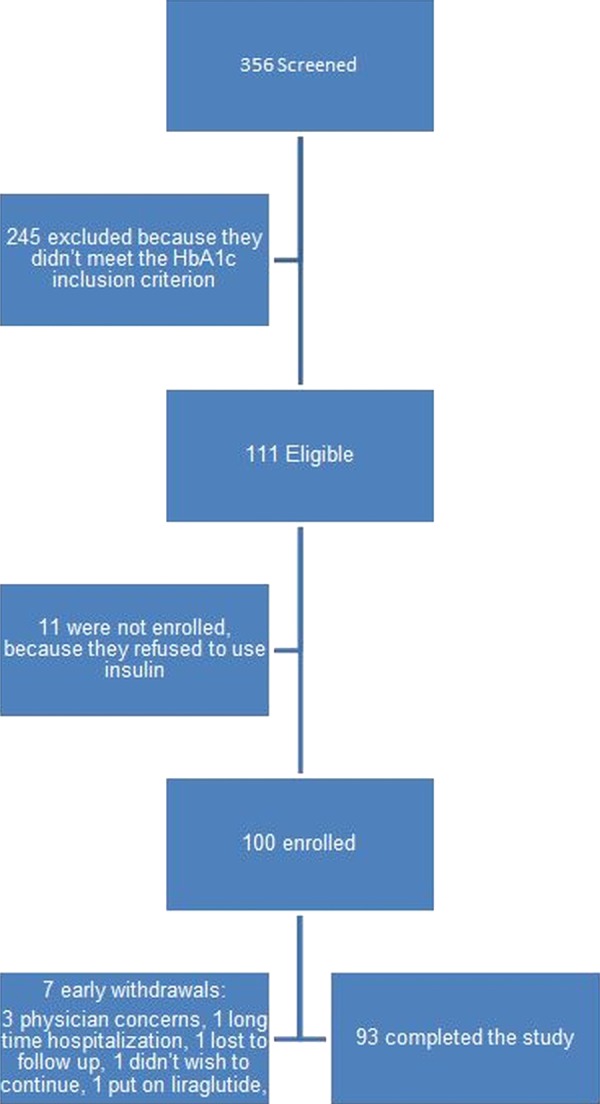
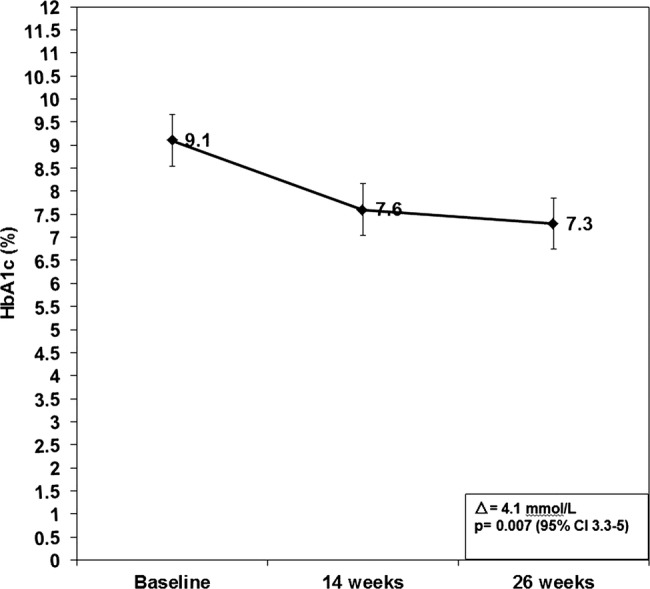
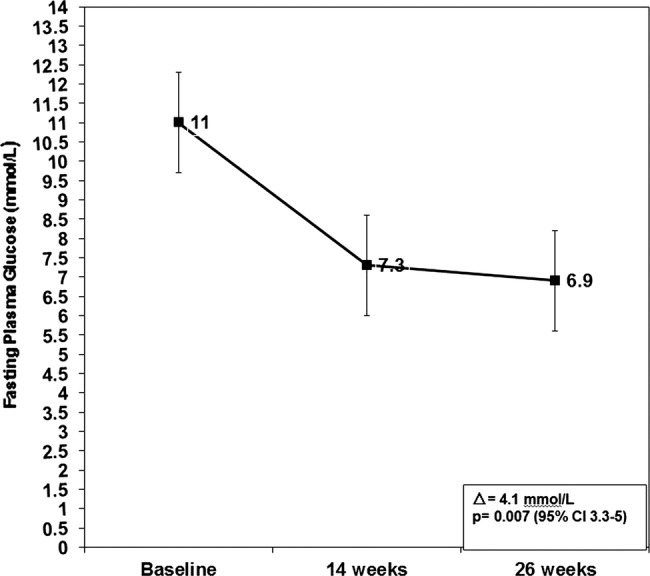
Results: We screened 365 patients of whom 111 were eligible. Of those, 100 (90%) were enrolled in the study; all 11 patients who did not consent refused to use insulin. Average age was 64 years (SD 10.4), while average diabetes duration was 10.2 years (SD 7). HbA1c was reduced from 9.1% (SD 1) at baseline to 7.3% (SD 0.9); a change of 1.8% (95% CI 1.4 to 2, p<0.001). Fasting plasma glucose was reduced from 11 (SD 3.3) to 6.9 mmol/L (SD 1.8); a change of 4.1 mmol/L (95% CI of 3.3 to 5, p=0.007). Fifty-one per cent of the patients achieved the target HbA1c of ≤7% at the end of the study.
Conclusions: This is the first completed study of independent prescribing by pharmacists. Our results showed similar improvements in glycaemic control as previous physician-led studies. RxING provides further evidence for the benefit of pharmacist care in diabetes.
Trial registration: clinicaltrials.gov; Identifier: NCT01335763.
Keywords: Diabetes; HbA1c; Pharmacist; insulin glargine.
Figures
References
-
- World Health Organization Diabetes. 2012. http://www.who.int/mediacentre/factsheets/fs312/en/ (accessed Feb 2013)
-
- Lipscombe LL, Hux JE. Trends in diabetes prevalence, incidence and mortality in Ontario, Canada 1995–2005: a population based study. Lancet 2007;369:750–6 - PubMed
-
- World Health Organization Diabetes: the cost of diabetes. 2012. http://www.who.int/mediacentre/factsheets/fs236/en/ (accessed Feb 2013)
-
- Lebovitz HE. Insulin secretagogues: old and new. Diabetes Rev 1999;7:139–53
Associated data
LinkOut - more resources
Full Text Sources
Other Literature Sources
Medical
