


Ketogenic diet improves motor performance but not cognition in two mouse models of Alzheimer's pathology
- PMID: 24069439
- PMCID: PMC3771931
- DOI: 10.1371/journal.pone.0075713
Ketogenic diet improves motor performance but not cognition in two mouse models of Alzheimer's pathology
Abstract
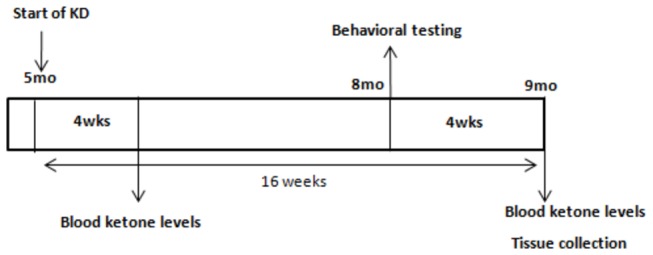
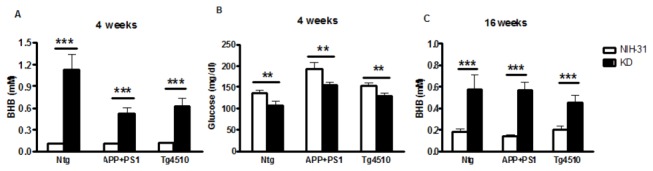
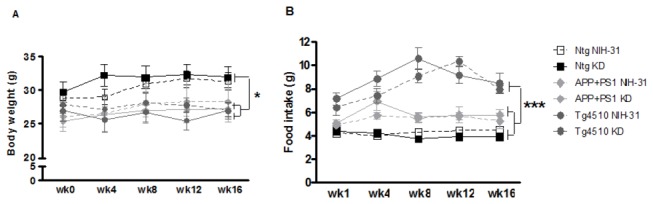
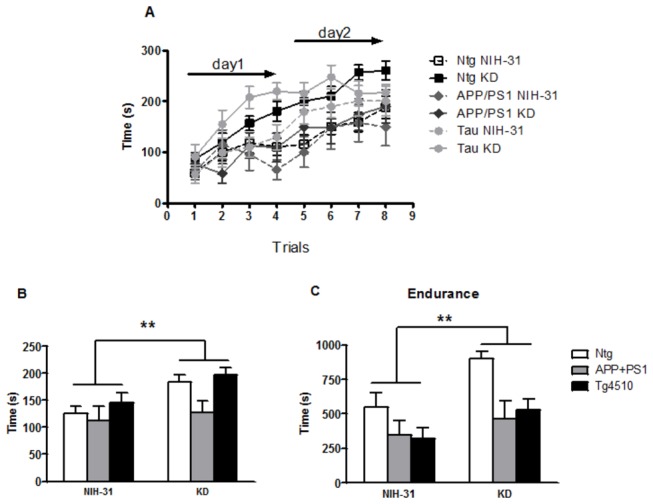
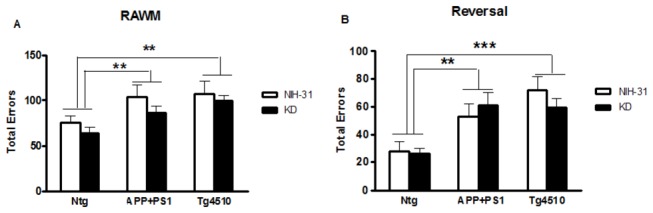
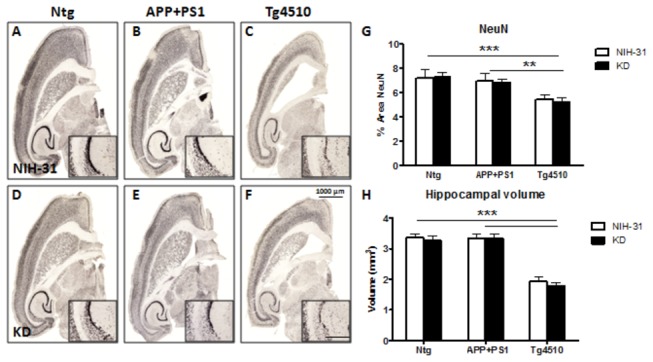
Dietary manipulations are increasingly viewed as possible approaches to treating neurodegenerative diseases. Previous studies suggest that Alzheimer's disease (AD) patients present an energy imbalance with brain hypometabolism and mitochondrial deficits. Ketogenic diets (KDs), widely investigated in the treatment and prevention of seizures, have been suggested to bypass metabolic deficits present in AD brain by providing ketone bodies as an alternative fuel to neurons. We investigated the effects of a ketogenic diet in two transgenic mouse lines. Five months old APP/PS1 (a model of amyloid deposition) and Tg4510 (a model of tau deposition) mice were offered either a ketogenic or a control (NIH-31) diet for 3 months. Body weight and food intake were monitored throughout the experiment, and blood was collected at 4 weeks and 4 months for ketone and glucose assessments. Both lines of transgenic mice weighed less than nontransgenic mice, yet, surprisingly, had elevated food intake. The ketogenic diet did not affect these differences in body weight or food consumption. Behavioral testing during the last two weeks of treatment found that mice offered KD performed significantly better on the rotarod compared to mice on the control diet independent of genotype. In the open field test, both transgenic mouse lines presented increased locomotor activity compared to nontransgenic, age-matched controls, and this effect was not influenced by KD. The radial arm water maze identified learning deficits in both transgenic lines with no significant differences between diets. Tissue measures of amyloid, tau, astroglial and microglial markers in transgenic lines showed no differences between animals fed the control or the ketogenic diet. These data suggest that ketogenic diets may play an important role in enhancing motor performance in mice, but have minimal impact on the phenotype of murine models of amyloid or tau deposition.
Conflict of interest statement
Figures


References
-
- Foster NL, Chase TN, Fedio P, Patronas NJ, Brooks RA et al. (1983) Alzheimer’s disease: focal cortical changes shown by positron emission tomography. Neurology 33: 961-965. doi:10.1212/WNL.33.8.961. PubMed: 6603596. - DOI - PubMed
-
- Costantini LC, Barr LJ, Vogel JL, Henderson ST (2008) Hypometabolism as a therapeutic target in Alzheimer’s disease. BMC Neurosci 9 Suppl 2: S16. doi:10.1186/1471-2202-9-S2-S16. PubMed: 19090989. - DOI - PMC - PubMed
-
- Diehl J, Grimmer T, Drzezga A, Riemenschneider M, Förstl H et al. (2004) Cerebral metabolic patterns at early stages of frontotemporal dementia and semantic dementia. A PET study. Neurobiol Aging 25: 1051-1056. doi:10.1016/j.neurobiolaging.2003.10.007. PubMed: 15212830. - DOI - PubMed
-
- Diehl-Schmid J, Grimmer T, Drzezga A, Bornschein S, Riemenschneider M et al. (2007) Decline of cerebral glucose metabolism in frontotemporal dementia: a longitudinal 18F-FDG-PET-study. Neurobiol Aging 28: 42-50. doi:10.1016/j.neurobiolaging.2005.11.002. PubMed: 16448722. - DOI - PubMed
-
- Blass JP, Sheu RK, Gibson GE (2000) Inherent abnormalities in energy metabolism in Alzheimer disease. Interaction with cerebrovascular compromise. Ann N Y Acad Sci 903: 204-221. doi:10.1111/j.1749-6632.2000.tb06370.x. PubMed: 10818509. - DOI - PubMed
Publication types
MeSH terms
Substances
LinkOut - more resources
Full Text Sources
Other Literature Sources
Medical
Molecular Biology Databases
