. 2013 Sep 19;8(9):e75725.
doi: 10.1371/journal.pone.0075725. eCollection 2013.

Interactions between parents and parents and pups in the monogamous California mouse (Peromyscus californicus)

Affiliations

Interactions between parents and parents and pups in the monogamous California mouse (Peromyscus californicus)

Cheryl S Rosenfeld et al. PLoS One. .

Abstract

The California mouse (Peromyscuscalifornicus) may be a valuable animal model to study parenting as it is one of the few monogamous and biparental rodent species. By using automated infra-red imaging and video documentation of established pairs spanning two days prior to birth of the litter until d 5 of post natal development (PND), it was possible to follow interactions between parents and between parents and pups. The paired males were attentive to their partners in the form of grooming and sniffing throughout the time period studied. Both these and other activities of the partners, such as eating and drinking, peaked during late light/ mid-dark period. Beginning the day before birth, and most significantly on PND 0, the female made aggressive attempts to exclude the male from nest-attending, acts that were not reciprocated by the male, although he made repeated attempts to mate his partner during that period. By PND 1, males were permitted to return to the nest, where they initiated grooming, licking, and huddling over the litter, although time spent by the male on parental care was still less than that of the female. Male and female pups were of similar size and grew at the same rate. Pups, which are believed to be exothermic for at least the first two weeks post-natally, maintained a body temperature higher than that of their parents until PND 16. Data are consistent with the inference that the male California mouse parent is important in helping retain pup body heat and permit dams increased time to procure food to accommodate her increased energy needs for lactation. These assessments provide indices that may be used to assess the effects of extrinsic factors, such as endocrine disrupting chemicals, on biparental behaviors and offspring development.


Conflict of interest statement

Competing Interests: The authors have declared that no competing interests exist.

Figures

Figure 1
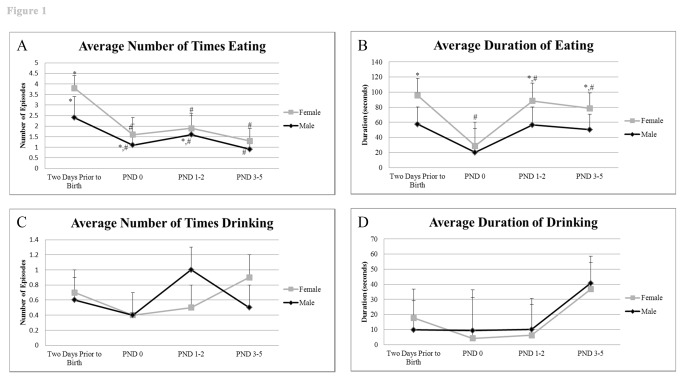
Figure 1. Frequency and duration of eating and drinking prior to and after birth.
A) Average frequency of eating for both parents prior to and after birth. B) Average duration of eating for both parents prior to and after birth. C) Average frequency of drinking for both parents prior to and after birth. D) Average duration of drinking prior to and after birth. *,# indicates significant differences within sex across days examined (P < 0.05).
Figure 2
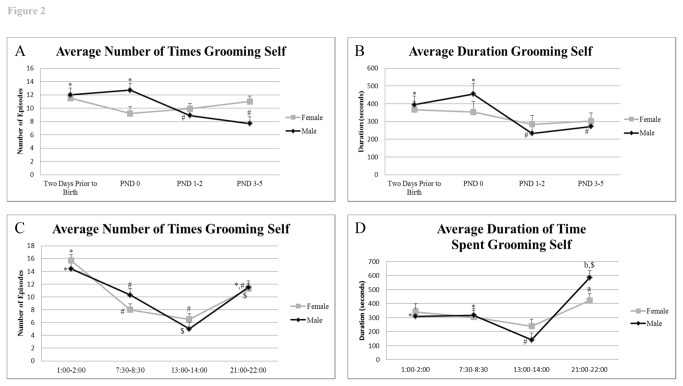
Figure 2. Frequency and duration of self-grooming behaviors prior to and after birth and throughout the timepoints examined.
A) Average frequency of self-grooming across trial days. B) Average duration of self-grooming across trial days, C) Average frequency of self-grooming based on time of day, and D) Average duration of self-grooming based on time of day. *, #, $ indicates significant differences within sex across days or times examined (P < 0.05). a,b indicates significant differences between sexes at the same time of day examined (P < 0.05).
Figure 3
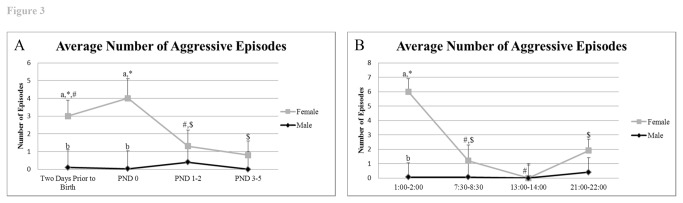
Figure 3. Frequency of aggressive episodes prior to and after birth and throughout the timepoints examined.
A) Average number of aggressive episodes across days. B) Average number of aggressive episodes based on time of day. *, #, $ indicates significant differences within sex across days or times examined (P < 0.05). a,b indicates significant differences between sexes on the same day or time examined (P < 0.05).
Figure 4
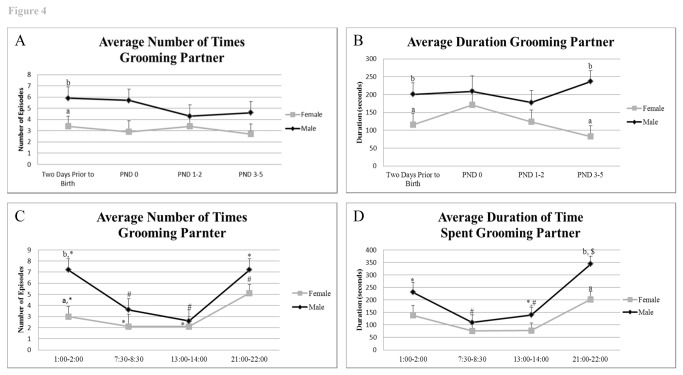
Figure 4. Frequency and duration of partner grooming behaviors prior to and after birth and throughout the timepoints examined.
A) Average frequency of grooming partner across trial days. B) Average duration of grooming partner across trial days, C) Average frequency of grooming partner based on time of day, and D) Average duration of grooming partner based on time of day. *, #, $ indicates significant differences within sex across days or times examined (P < 0.05). a,b indicates significant differences between sexes on the same day or time examined (P < 0.05).
Figure 5
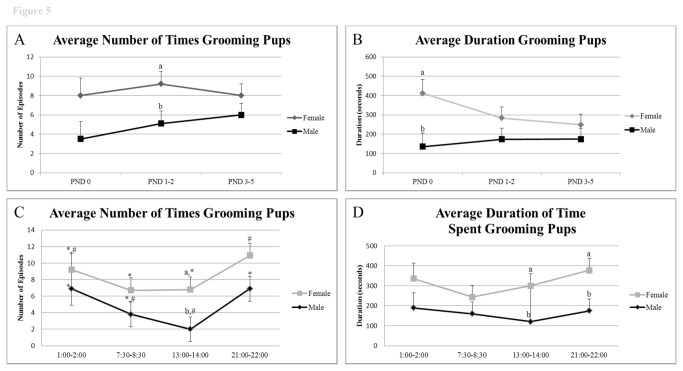
Figure 5. Frequency and duration of grooming pups from PND 0 to 5 and throughout the timepoints examined.
A) Average frequency of grooming pups across trial days. B) Average duration of grooming pups across trial days, C) Average frequency of grooming pups based on time of day, and D) Average duration of grooming pups based on time of day. *, # indicates significant differences within sex across days or times examined (P < 0.05). a,b indicates significant differences between sexes on the same day or time examined (P < 0.05).
Figure 6
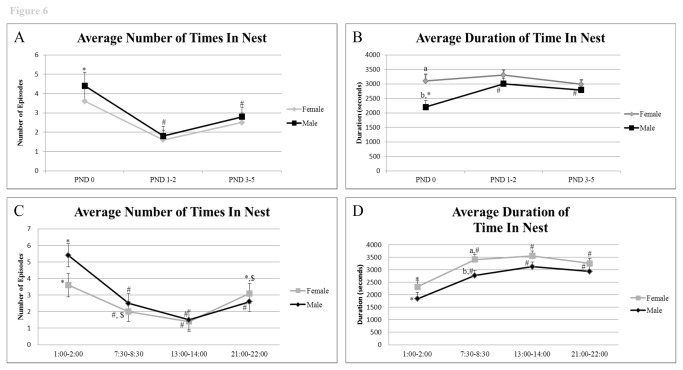
Figure 6. Frequency and duration of time in nest with pups from PND 0-5 and throughout the timepoints examined.
A) Average frequency of time in nest across trial days. B) Average duration of time in nest across trial days, C) Average frequency of time in nest based on time of day, and D) Average duration of time in nest based on time of day. *, #, $ indicates significant differences within sex across days or times examined (P < 0.05). a,b indicates significant differences between sexes on the same day or time examined (P < 0.05).
Figure 7
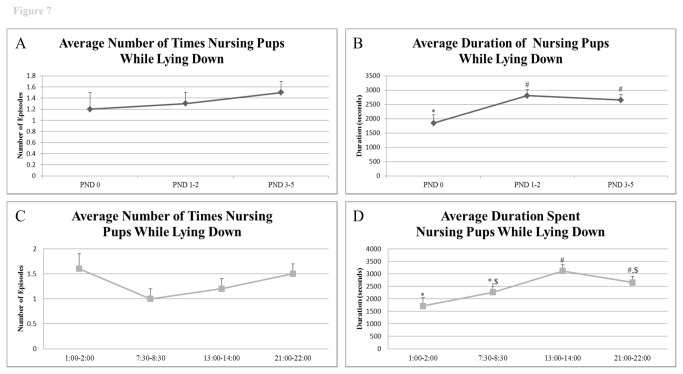
Figure 7. Frequency and duration of time nursing from PND 0-5 and throughout the timepoints examined.
A) Average frequency of nursing across trial days. B) Average duration of nursing across trial days, C) Average frequency of time nursing based on time of day, and D) Average duration of time nursing based on time of day. *, #, $ indicates significant differences for females across days or times examined (P < 0.05).
Figure 8
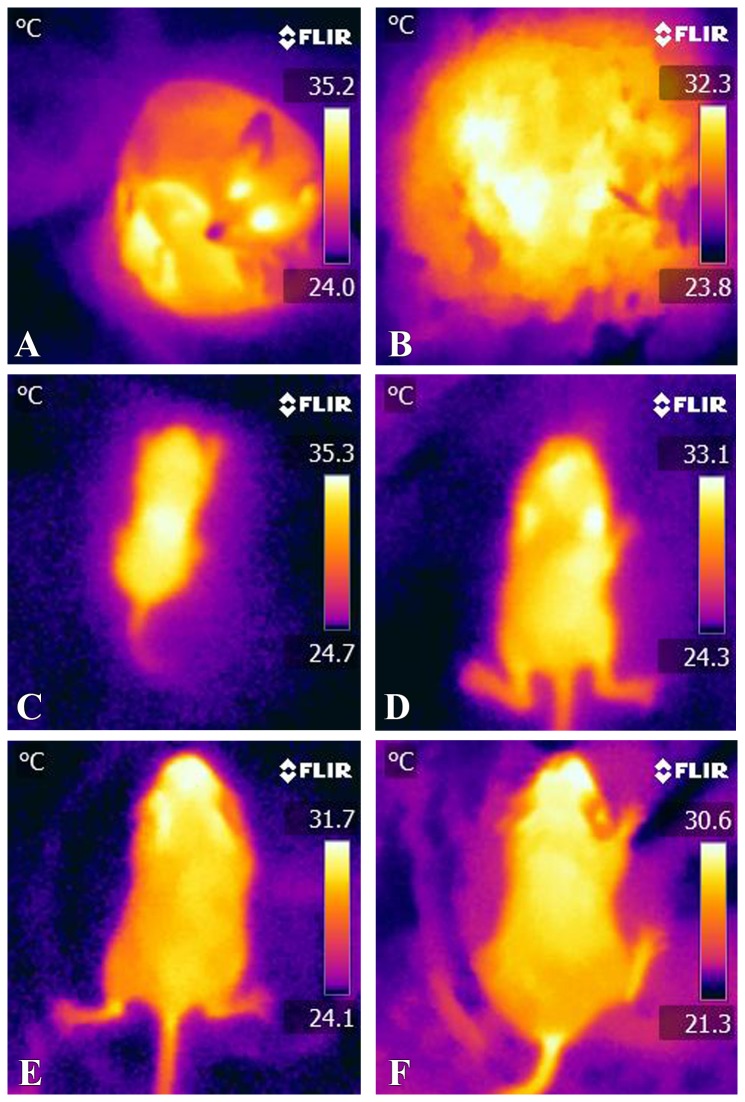
Figure 8. Example thermal images of pups and nest.
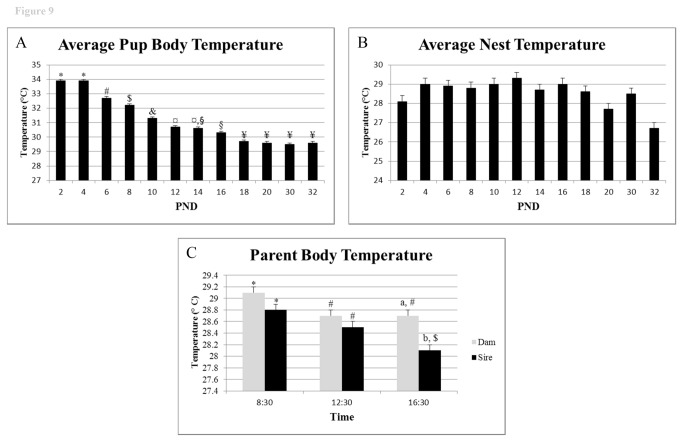
A. Newborn (PND 2) pups latched on and suckling from dam. Thermal imaging analysis with increased degree of white correlating with increased heat reveals that the exothermic pups exhibit at this age a higher body temperature than the dam. B. Thermal image of nest temperature that was measured to determine the impact of biparental care. Thermal imaging analysis of representative pups at PND 2 (C), PND 10 (D), PND 20 (E), and PND 30 (prior to weaning, F). Panels C-F reveal that the pup body temperature decreases significantly from PND 2 to PND 20 (P < 0.0001).
Figure 9
Figure 9. Pup, nest, and parent body temperature.
A) Average pup body temperature across days. B) Average nest temperature across days. C) Average parent body temperature based on time of day. *, #, $, &, °, §, ¥ indicates significant differences in temperature across days or times examined for pups (A) or between parents (C) (P < 0.05).

References

    1. Cameron NM, Soehngen E, Meaney MJ (2011) Variation in maternal care influences ventromedial hypothalamus activation in the rat. J Neuroendocrinol 23: 393-400. doi:10.1111/j.1365-2826.2011.02124.x. PubMed: 21418337. - DOI - PubMed
    1. Parent CI, Del Corpo A, Cameron NM, Meaney MJ (2012) Maternal care associates with play dominance rank among adult female rats. Dev Psychobiol. PubMed: 22786820 - PubMed
    1. Caldji C, Tannenbaum B, Sharma S, Francis D, Plotsky PM et al. (1998) Maternal care during infancy regulates the development of neural systems mediating the expression of fearfulness in the rat. Proc Natl Acad Sci U S A 95: 5335-5340. doi:10.1073/pnas.95.9.5335. PubMed: 9560276. - DOI - PMC - PubMed
    1. Bredy TW, Grant RJ, Champagne DL, Meaney MJ (2003) Maternal care influences neuronal survival in the hippocampus of the rat. Eur J Neurosci 18: 2903-2909. doi:10.1111/j.1460-9568.2003.02965.x. PubMed: 14656341. - DOI - PubMed
    1. Champagne FA, Meaney MJ (2006) Stress during gestation alters postpartum maternal care and the development of the offspring in a rodent model. Biol Psychiatry 59: 1227-1235. doi:10.1016/j.biopsych.2005.10.016. PubMed: 16457784. - DOI - PubMed

Publication types

LinkOut - more resources