


How should we define STAT3 as an oncogene and as a potential target for therapy?
- PMID: 24069560
- PMCID: PMC3772112
- DOI: 10.4161/jkst.24716
How should we define STAT3 as an oncogene and as a potential target for therapy?
Abstract
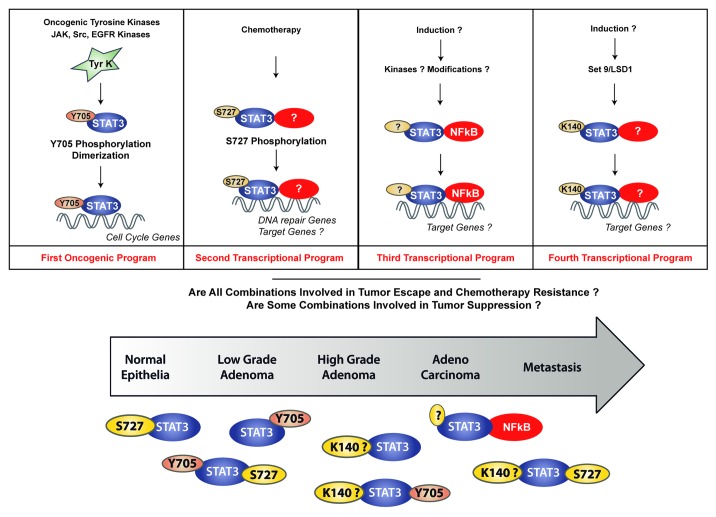
Aberrant activation of the STAT3 transcription factor has been reported in a large group of tumors and a strong biological basis now defines this protein as an oncogenic driver. Consequently, STAT3 is considered to be a promising target in the field of cancer therapy. For its inhibition to result in a successful therapeutic approach, the definition of a target tumor population identified by specific and detectable alterations is critical. The canonical activation model of STAT3 relies on a constitutive phosphorylation on its 705 tyrosine site, resulting in its dimerization, nuclear translocation, and the consequent activation of cancer genes. Therefore, it is expected that tumors expressing this phosphorylated form are addicted to STAT3 and will be sensitive to existing drugs which are targeting this dimeric form. However, recent results have shown that STAT3 can function as an oncogene in the absence of this tyrosine phosphorylation. This indicates that different forms of the transcription factor also play an important role in tumor growth and chemotherapy resistance. This complicates the definition of STAT3 as an oncogene and as a potential prognosis and predictive biomarker. The obligation to target a defined tumor type implies that future clinical trials should use a precise definition of STAT3 activation. This will allow tumors addicted to this oncogene to be identified correctly, leading to a strong rationale for patient stratification.
Keywords: NFκB; STAT3; chemotherapy; resistance; targeted therapy.
Figures
References
Publication types
LinkOut - more resources
Full Text Sources
Other Literature Sources
Miscellaneous
