


Use and satisfaction with key functions of a common commercial electronic health record: a survey of primary care providers
- PMID: 24070335
- PMCID: PMC3750656
- DOI: 10.1186/1472-6947-13-86
Use and satisfaction with key functions of a common commercial electronic health record: a survey of primary care providers
Abstract
Background: Despite considerable financial incentives for adoption, there is little evidence available about providers' use and satisfaction with key functions of electronic health records (EHRs) that meet "meaningful use" criteria.
Methods: We surveyed primary care providers (PCPs) in 11 general internal medicine and family medicine practices affiliated with 3 health systems in Texas about their use and satisfaction with performing common tasks (documentation, medication prescribing, preventive services, problem list) in the Epic EHR, a common commercial system. Most practices had greater than 5 years of experience with the Epic EHR. We used multivariate logistic regression to model predictors of being a structured documenter, defined as using electronic templates or prepopulated dot phrases to document at least two of the three note sections (history, physical, assessment and plan).
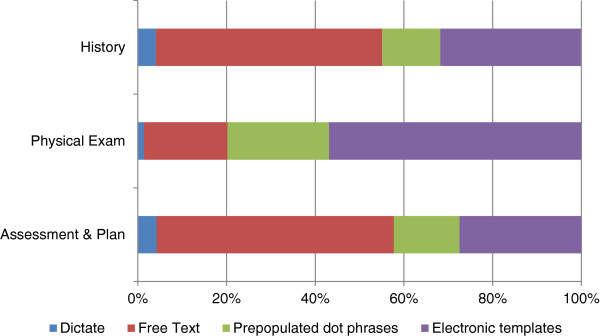
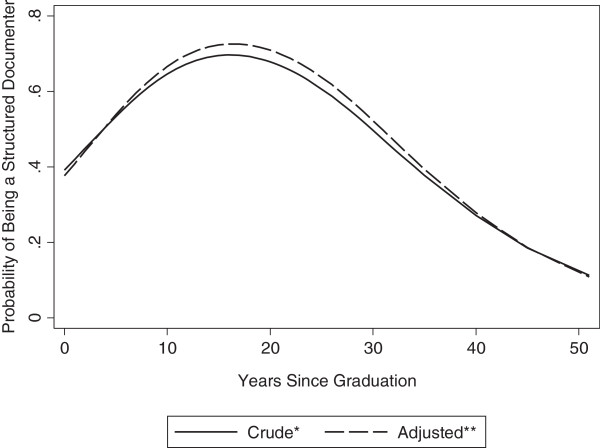
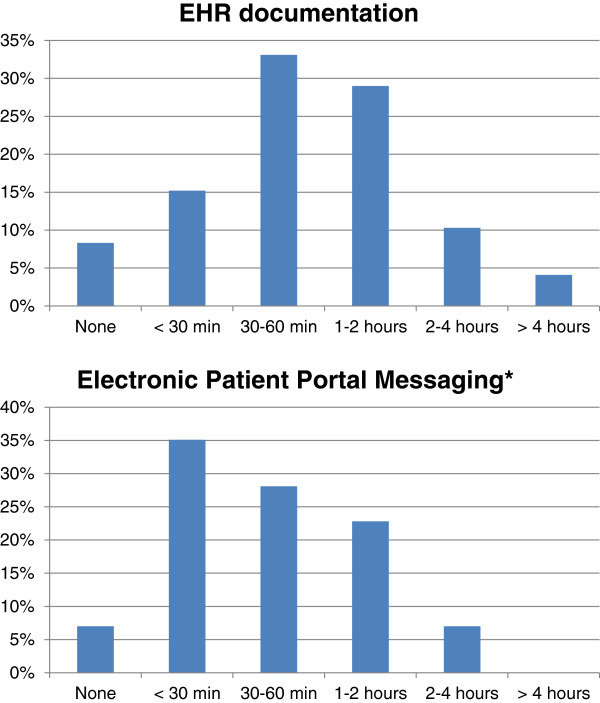
Results: 146 PCPs responded (70%). The majority used free text to document the history (51%) and assessment and plan (54%) and electronic templates to document the physical exam (57%). Half of PCPs were structured documenters (55%) with family medicine specialty (adjusted OR 3.3, 95% CI, 1.4-7.8) and years since graduation (nonlinear relationship with youngest and oldest having lowest probabilities) being significant predictors. Nearly half (43%) reported spending at least one extra hour beyond each scheduled half-day clinic completing EHR documentation. Three-quarters were satisfied with documenting completion of pneumococcal vaccinations and half were satisfied with documenting cancer screening (57% for breast, 45% for colorectal, and 46% for cervical). Fewer were satisfied with reminders for overdue pneumococcal vaccination (48%) and cancer screening (38% for breast, 37% for colorectal, and 31% for cervical). While most believed the problem list was helpful (70%) and kept an up-to-date list for their patients (68%), half thought they were unreliable and inaccurate (51%).
Conclusions: Dissatisfaction with and suboptimal use of key functions of the EHR may mitigate the potential for EHR use to improve preventive health and chronic disease management. Future work should optimize use of key functions and improve providers' time efficiency.
Figures
References
-
- Jamoom E, Beatty P, Bercovitz A, Woodwell D, Palso K, Rechsteiner E. Physician Adoption of Electronic Health Record Systems: United States, 2011. NCHS Data Brief. 2012;98 - PubMed
Publication types
MeSH terms
Grants and funding
LinkOut - more resources
Full Text Sources
Other Literature Sources
