. 2013 Sep 20;8(9):e74707.
doi: 10.1371/journal.pone.0074707. eCollection 2013.

Structural, biochemical and genetic characterization of dissimilatory ATP sulfurylase from Allochromatium vinosum

Affiliations

Structural, biochemical and genetic characterization of dissimilatory ATP sulfurylase from Allochromatium vinosum

Kristian Parey et al. PLoS One. .

Abstract

ATP sulfurylase (ATPS) catalyzes a key reaction in the global sulfur cycle by reversibly converting inorganic sulfate (SO4 (2-)) with ATP to adenosine 5'-phosphosulfate (APS) and pyrophosphate (PPi). In this work we report on the sat encoded dissimilatory ATP sulfurylase from the sulfur-oxidizing purple sulfur bacterium Allochromatium vinosum. In this organism, the sat gene is located in one operon and co-transcribed with the aprMBA genes for membrane-bound APS reductase. Like APS reductase, Sat is dispensible for growth on reduced sulfur compounds due to the presence of an alternate, so far unidentified sulfite-oxidizing pathway in A. vinosum. Sulfate assimilation also proceeds independently of Sat by a separate pathway involving a cysDN-encoded assimilatory ATP sulfurylase. We produced the purple bacterial sat-encoded ATP sulfurylase as a recombinant protein in E. coli, determined crucial kinetic parameters and obtained a crystal structure in an open state with a ligand-free active site. By comparison with several known structures of the ATPS-APS complex in the closed state a scenario about substrate-induced conformational changes was worked out. Despite different kinetic properties ATPS involved in sulfur-oxidizing and sulfate-reducing processes are not distinguishable on a structural level presumably due to the interference between functional and evolutionary processes.


Conflict of interest statement

Competing Interests: The authors have declared that no competing interests exist.

Figures

Figure 1
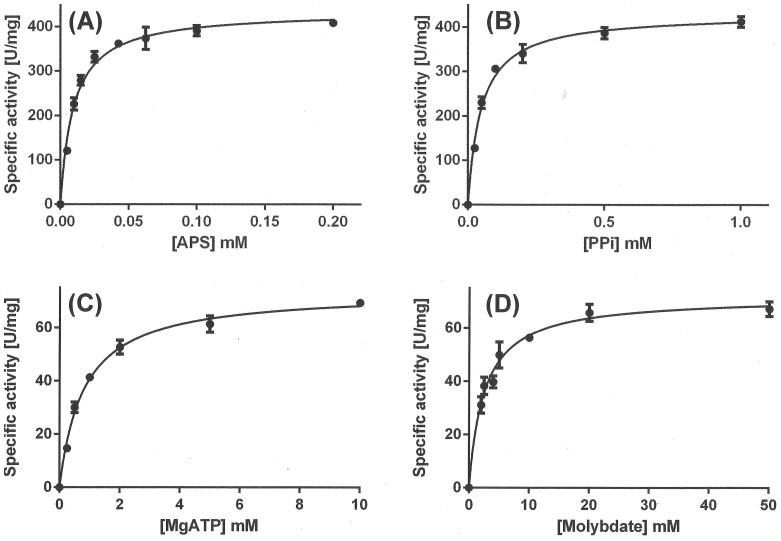
Figure 1. Kinetics of recombinant ATP sulfurylase from A. vinosum.
[A] v versus [APS] in the ATP synthesis reaction at 1 mM pyrophosphate. [B] v versus [PPi] at 0.2 mM APS. [C] v versus [MgATP] in the molybdolysis reaction at 50 mM MoO4 2−. [D] v versus [molybdate] in the molybdolysis reaction at 10 mM MgATP. Each data point is the mean ± standard deviation of three assays on the same batch of protein but in some cases the error bars are too small to be seen. The solid lines through the data points are the fits to the Michaelis-Menten equation using non-linear regression as described in Materials and Methods.
Figure 2
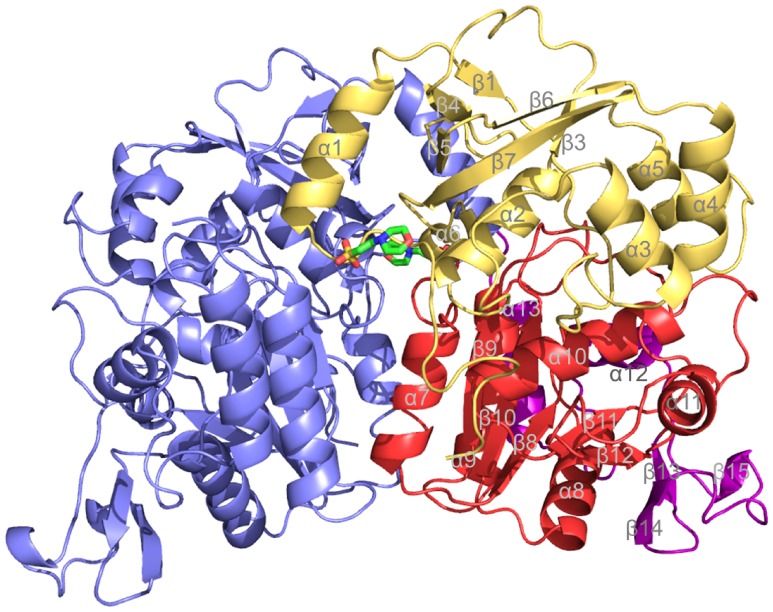
Figure 2. Structure of ATPS from A. vinosum organized as a homodimer with a size of 70 × 50 × 50 Å3.
The subunits are drawn in blue and red/orange; domains I, II and III of one subunit in orange, red and dark red. 2N-Morpholino-ethansulfonic acid (MES) is shown as stick model.
Figure 3
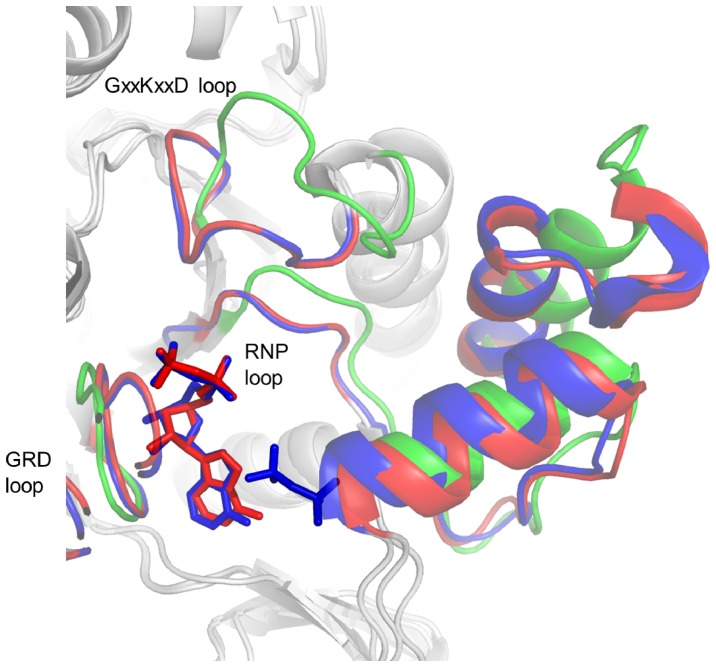
Figure 3. The substrate binding site.
The structures of the ligand-free ATPS of A. vinosum (red), the ATPS-APS of P. chrysogenum (green) and the ATPS-APS-PPi of S. cerevisiae (blue) are superimposed thereby focusing on the pronounced loop segments that are subjected to a conformational change upon substrate binding. As a result, the substrate binding groove is shrunk from an open form characterized in the A. vinosum and “Candidatus E. persephone” ATPS structures to a more closed form found in the structures of S. cerevisiae, P. chrysogenum, Aquifex aeolicus and T. thermophilus ATPS in complex with the substrates (or substrate analogues).
Figure 4
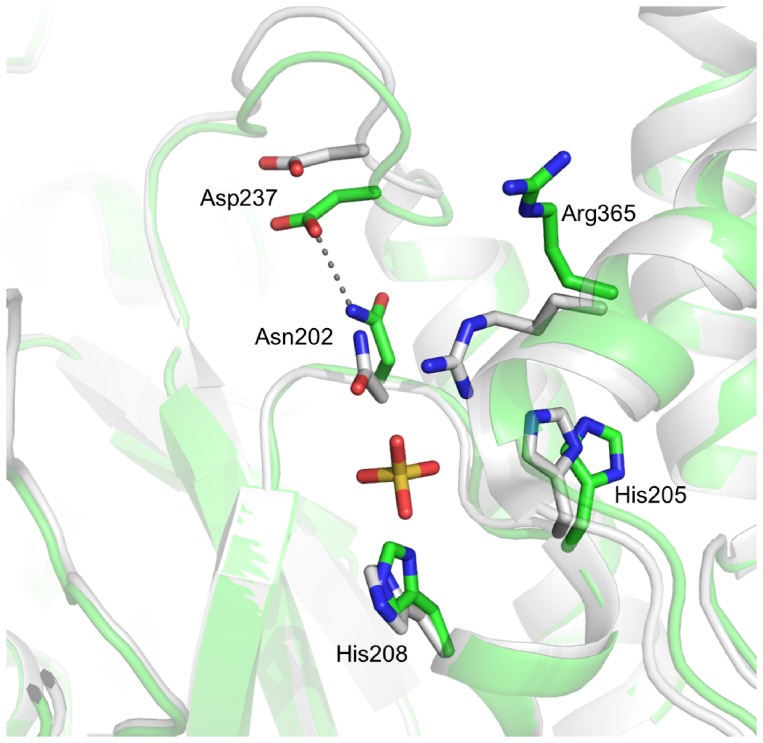
Figure 4. Pyrophosphate binding regions in A.vinosum (green) and of “Candidatus E. persephone” (grey) ATPS.
Phosphate binding found in “Candidatus E. persephone” ATPS induces conformational changes of His208 of the 205HXXH208 motif, Asn202 that influences the conformation of the “GxxKxxD” loop and of Arg365 that moves into the PPi binding site.
Figure 5
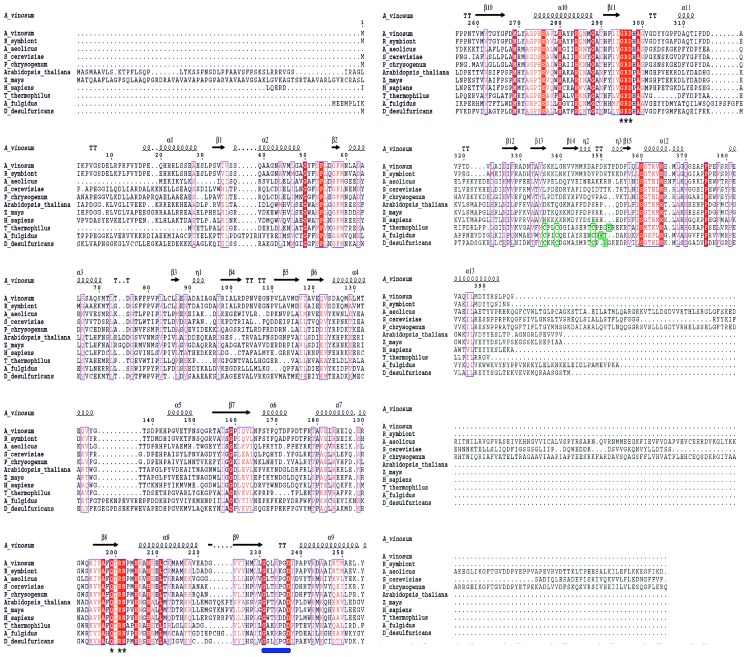
Figure 5. Sequence alignment of ATP sulfurylases from sulfur oxidizing and sulfate assimilating and dissimilating organisms.
Residues of the highly conserved RNP and GRD motif and the mobile loop are indicated by asterisks and a blue stripe, respectively. The three cysteines and one histidine of the conserved zinc-binding motif are marked with red boxes. The secondary structure symbols are illustrated according the ATPS structure of A. vinosum. The alignment figure was made using the programs ClustalX and ESPript . Species: Allochromatium vinosum DSM 180T (A_vinosum, Alvin_1117, ADC62057), “Candidatus Endoriftia Persephone” (R_symbiont, PDB: 1JHD_A), Aquifex aeolicus VF5 (A_aeolicus, PDB: 2GKS_A), Saccharomyces cerevisiae (S_cerevisiae, Met3p, AAU09752), Penicillium chrysogenum (P_chrysogenum, MET3_PENCH, Q12650), Arabidopsis thaliana (Arabidopsis_thaliana, AAA21570), Zea mays (Z_mays, NP_001104877), Homo sapiens (H_sapiens, PDB: 2QJF_A), Thermus thermophilus (T_thermophilus, YP_004282.1), Archaeoglobus fulgidus (A_fulgidus, SAT_ARCFU, SP: O28606.2), Desulfovibrio desulfuricans ATCC 27774 (D_desulfuricans, YP_002479044.1).

References

    1. Schwenn JD (1997) Assimilatory reduction of inorganic sulphate. In: Cram WJ, et al..., editors. Sulphur metabolism in higher plants. Leiden: Backhuys Publishers. 39–57.
    1. Hansen TA (1994) Metabolism of sulfate-reducing prokaryotes. Antonie van Leeuwenhoek Int J Gen Mol Microbiol 66: 165–185. - PubMed
    1. Hipp WM, Pott AS, Thum-Schmitz N, Faath I, Dahl C, et al. (1997) Towards the phylogeny of APS reductases and sirohaem sulfite reductases in sulfate-reducing and sulfur-oxidizing prokaryotes. Microbiology 143: 2891–2902. - PubMed
    1. Dahl C, Trüper HG (1994) Enzymes of dissimilatory sulfide oxidation in phototrophic bacteria. Meth Enzymol 243: 400–421.
    1. Postgate JR (1984) The sulphate reducing bacteria. Cambridge: Cambridge University Press.

Publication types

MeSH terms

LinkOut - more resources