


doi: 10.1186/gm490.
eCollection 2013.
Cancer mutation signatures, DNA damage mechanisms, and potential clinical implications
Affiliations
- PMID: 24073723
- PMCID: PMC3978439
- DOI: 10.1186/gm490
Item in Clipboard
Cancer mutation signatures, DNA damage mechanisms, and potential clinical implications
Genome Med.
.
Abstract
Knowledge of cancer genomic DNA sequences has created unprecedented opportunities for mutation studies. Computational analyses have begun to decipher mutational signatures that identify underlying causes. A recent analysis encompassing 30 cancer types reported 20 distinct mutation signatures, resulting from ultraviolet light, deficiencies in DNA replication and repair, and unexpectedly large contributions from both spontaneous and APOBEC-catalyzed DNA cytosine deamination. Mutational signatures have the potential to become diagnostic, prognostic, and therapeutic biomarkers as well as factors in therapy development.
Figures
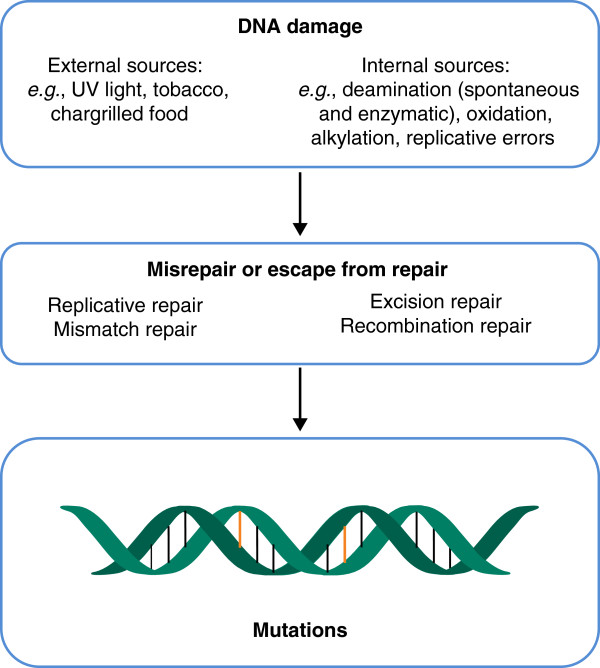
External and internal sources of mutation in cancer. A schematic depiction of major external and internal sources of DNA damage, a variety of DNA repair mechanisms that serve to counteract damage, and mutation as an outcome of unrepaired DNA damage.
References
-
- Lawrence MS, Stojanov P, Polak P, Kryukov GV, Cibulskis K, Sivachenko A, Carter SL, Stewart C, Mermel CH, Roberts SA, Kiezun A, Hammerman PS, McKenna A, Drier Y, Zou L, Ramos AH, Pugh TJ, Stransky N, Helman E, Kim J, Sougnez C, Ambrogio L, Nickerson E, Shefler E, Cortés ML, Auclair D, Saksena G, Voet D, Noble M, DiCara D. et al. Mutational heterogeneity in cancer and the search for new cancer-associated genes. Nature. 2013;5:214–218. - PMC - PubMed
-
- Alexandrov LB, Nik-Zainal S, Wedge DC, Aparicio SA, Behjati S, Biankin AV, Bignell GR, Bolli N, Borg A, Børresen-Dale AL, Boyault S, Burkhardt B, Butler AP, Caldas C, Davies HR, Desmedt C, Eils R, Eyfjörd JE, Foekens JA, Greaves M, Hosoda F, Hutter B, Ilicic T, Imbeaud S, Imielinsk M, Jäger N, Jones DT, Jones D, Knappskog S, Kool M. et al. Signatures of mutational processes in human cancer. Nature. 2013;5:415–421. - PMC - PubMed
-
- Cleaver JE, Crowley E. UV damage, DNA repair and skin carcinogenesis. Front Biosci. 2002;5:d1024–d1043. - PubMed
LinkOut - more resources
Full Text Sources
Other Literature Sources
