


How effective is continuing care for substance use disorders? A meta-analytic review
- PMID: 24075796
- PMCID: PMC3840113
- DOI: 10.1016/j.jsat.2013.08.022
How effective is continuing care for substance use disorders? A meta-analytic review
Abstract
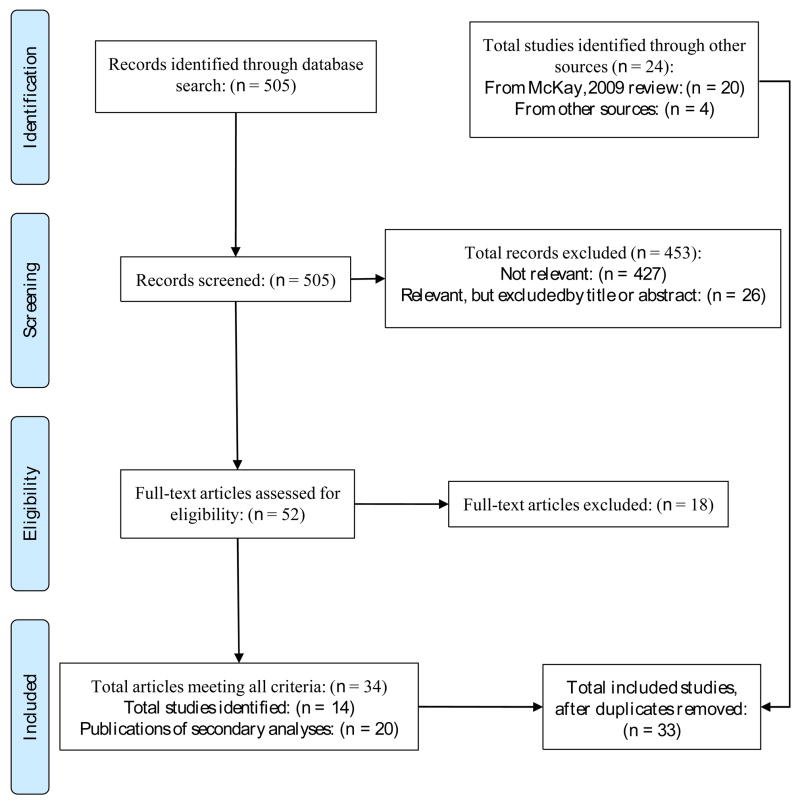
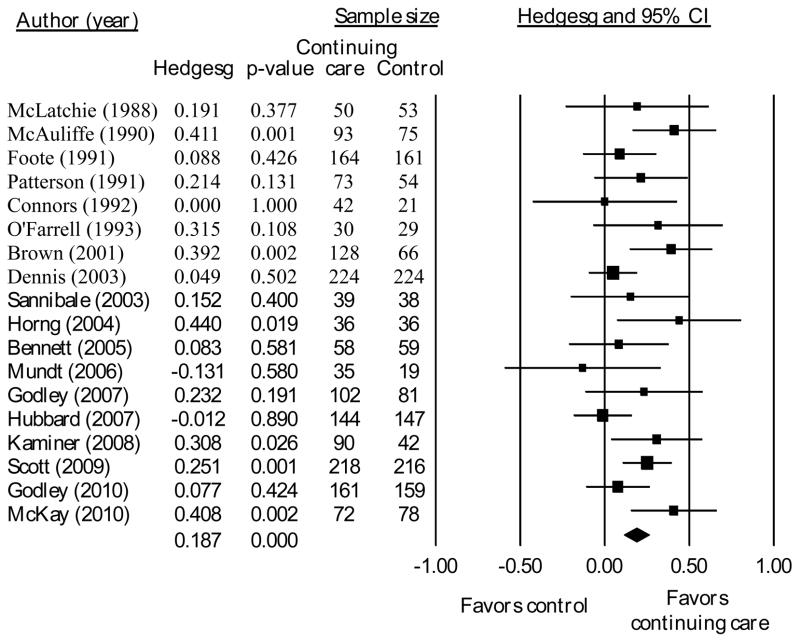
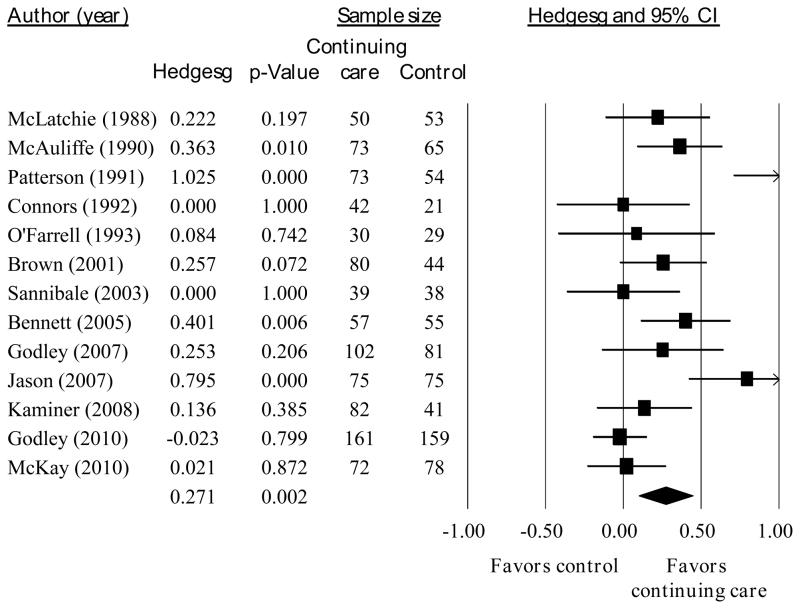
Given the often chronic nature of substance use disorders, patients sometimes receive less intensive continuing care following an initial period of more intensive treatment. This meta-analysis estimated the effect of continuing care and formally tested several proposed moderators (intervention duration, intensity, modality, and setting) of that effect. A systematic search identified 33 controlled trials of continuing care; 19 included a no/minimal treatment condition and were analyzed to assess the overall effect of continuing care versus control. Continuing care had a small, but significant, positive effect size, both at the end of the continuing care interventions (g=0.187, p<0.001) and at follow-up (g=0.271, p<0.01). Limited by a small number of studies, analyses did not identify any significant moderators of overall effects. These results show that continuing care can provide at least modest benefit after initial treatment. We discuss study characteristics that may have reduced the magnitude of the overall continuing care effect estimate.
Keywords: Aftercare; Continuing care; Meta-analysis; Substance use disorders; Treatment.
© 2013.
Conflict of interest statement
Conflict of Interest: None.
Figures
References
-
- American Psychiatric Association. American Psychiatric Association practice guidelines for the treatment of psychiatric disorders: Compendium 2006. Arlington, VA: American Psychiatric Pub; 2006.
-
- Bennett GA, Withers J, Thomas PW, Higgins DS, Bailey J, Parry L. A randomised trial of early warning signs relapse prevention training in the treatment of alcohol dependence. Addictive Behaviors. 2005;30:1111–1124. - PubMed
-
- Borenstein M. Effect sizes for continuous data. In: Cooper H, Hedges LV, Valentine JC, editors. The handbook of research synthesis and meta-analysis. 2. New York: Russell Sage Foundation; 2009. pp. 221–235.
-
- Borenstein M, Hedges LV. Introduction to meta-analysis. Hoboken, NJ: John Wiley & Sons Inc; 2009.
Publication types
MeSH terms
Grants and funding
LinkOut - more resources
Full Text Sources
Other Literature Sources
Medical
