


Current status of interleukin-10 and regulatory T-cells in cancer
- PMID: 24076584
- PMCID: PMC4322764
- DOI: 10.1097/CCO.0000000000000006
Current status of interleukin-10 and regulatory T-cells in cancer
Abstract
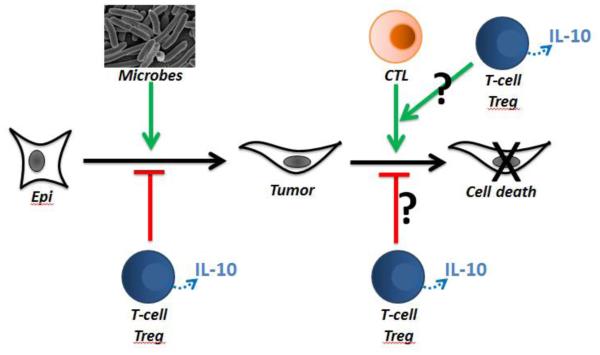
Purpose of review: Tumor growth elicits antigen-specific cytotoxic as well as immune suppressive responses. Interleukin-10 (IL-10) is a key immune-suppressive cytokine produced by regulatory T-cells and by helper T-cells. Here, we review pleiotropic functions of IL-10 that impact the immune pathology of cancer.
Recent findings: The role of IL-10 in cancer has become less certain with the knowledge of its immune stimulatory functions. IL-10 is needed for T-helper cell functions, T-cell immune surveillance, and suppression of cancer-associated inflammation. By promoting tumor-specific immune surveillance and hindering pathogenic inflammation, IL-10 is emerging as a key cytokine in the battle of the host against cancer.
Summary: IL-10 functions at the cross-roads of immune stimulation and immune suppression in cancer. Immunological mechanisms of action of IL-10 can be ultimately exploited to develop novel and effective cancer therapies.
Figures
References
Publication types
MeSH terms
Substances
Grants and funding
LinkOut - more resources
Full Text Sources
Other Literature Sources
Research Materials
