


Diabetic hyperglycaemia activates CaMKII and arrhythmias by O-linked glycosylation
- PMID: 24077098
- PMCID: PMC3801227
- DOI: 10.1038/nature12537
Diabetic hyperglycaemia activates CaMKII and arrhythmias by O-linked glycosylation
Abstract
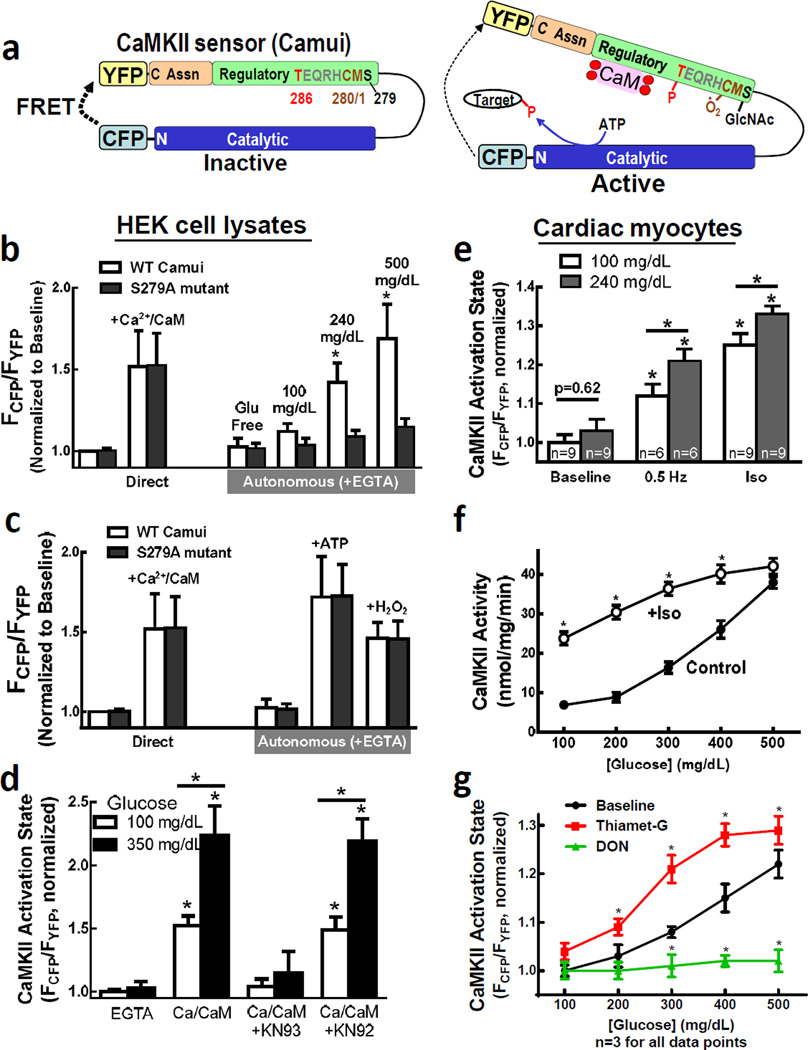
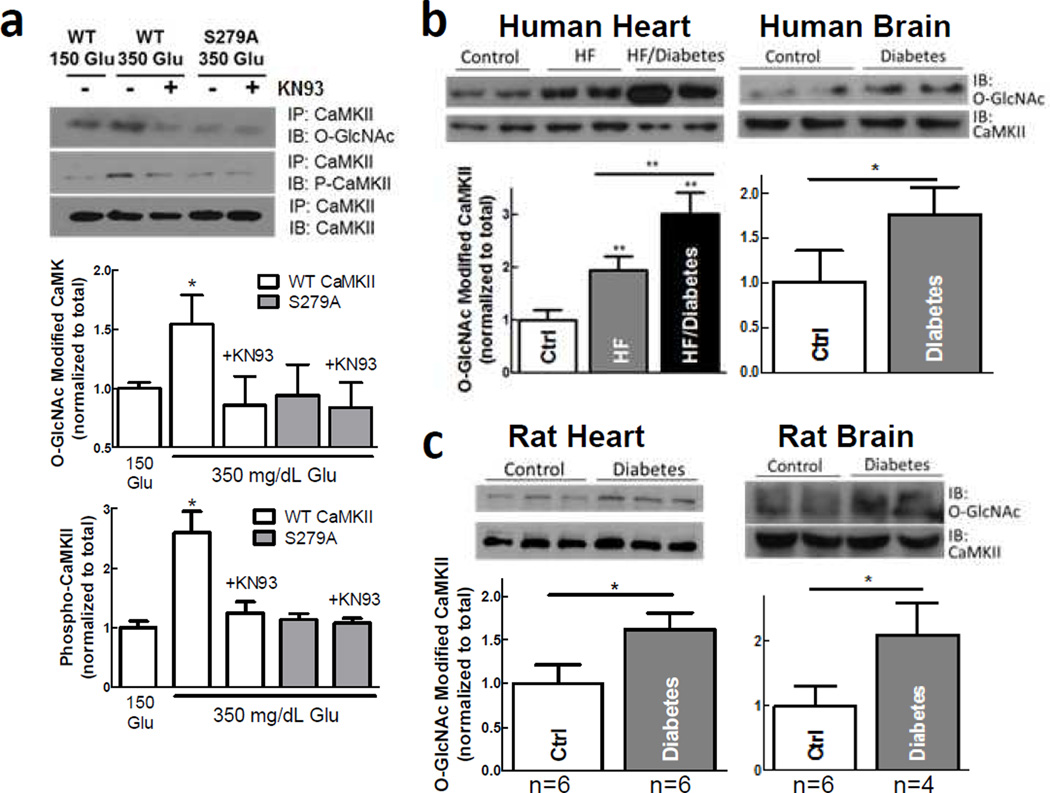
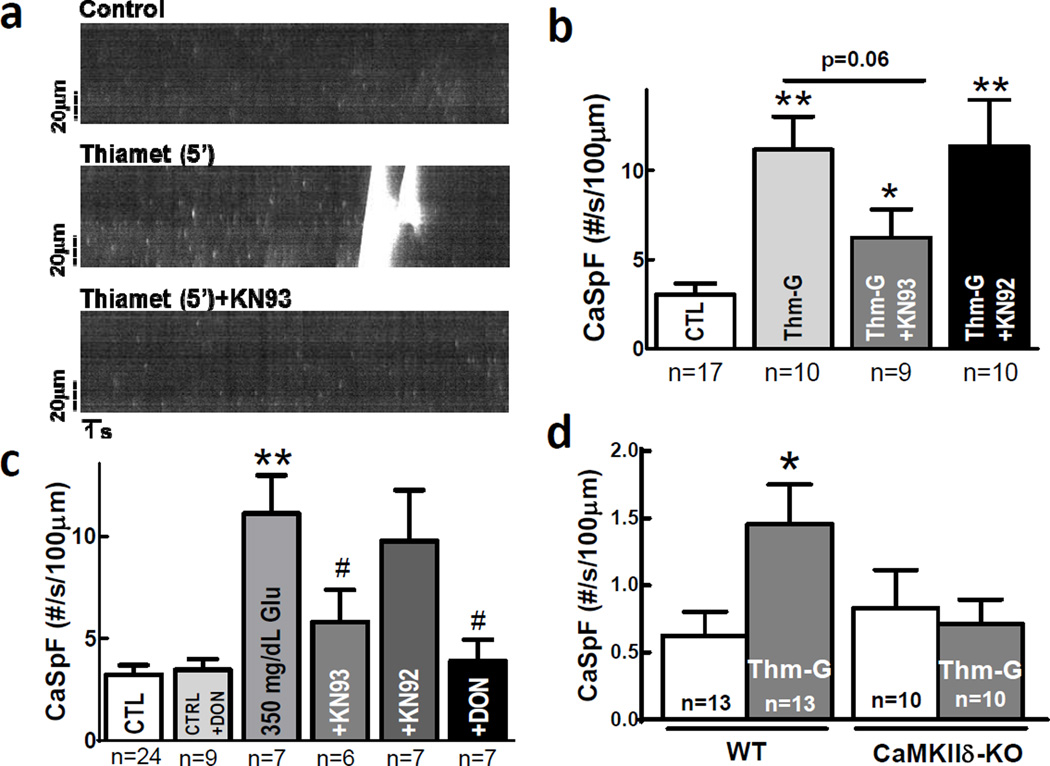
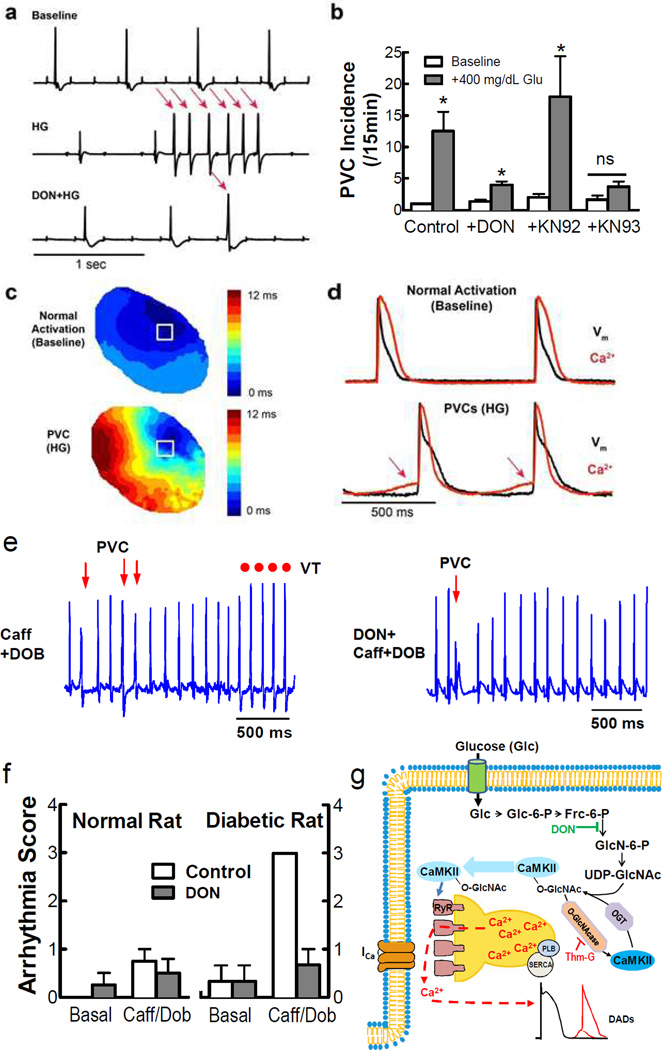
Ca(2+)/calmodulin-dependent protein kinase II (CaMKII) is an enzyme with important regulatory functions in the heart and brain, and its chronic activation can be pathological. CaMKII activation is seen in heart failure, and can directly induce pathological changes in ion channels, Ca(2+) handling and gene transcription. Here, in human, rat and mouse, we identify a novel mechanism linking CaMKII and hyperglycaemic signalling in diabetes mellitus, which is a key risk factor for heart and neurodegenerative diseases. Acute hyperglycaemia causes covalent modification of CaMKII by O-linked N-acetylglucosamine (O-GlcNAc). O-GlcNAc modification of CaMKII at Ser 279 activates CaMKII autonomously, creating molecular memory even after Ca(2+) concentration declines. O-GlcNAc-modified CaMKII is increased in the heart and brain of diabetic humans and rats. In cardiomyocytes, increased glucose concentration significantly enhances CaMKII-dependent activation of spontaneous sarcoplasmic reticulum Ca(2+) release events that can contribute to cardiac mechanical dysfunction and arrhythmias. These effects were prevented by pharmacological inhibition of O-GlcNAc signalling or genetic ablation of CaMKIIδ. In intact perfused hearts, arrhythmias were aggravated by increased glucose concentration through O-GlcNAc- and CaMKII-dependent pathways. In diabetic animals, acute blockade of O-GlcNAc inhibited arrhythmogenesis. Thus, O-GlcNAc modification of CaMKII is a novel signalling event in pathways that may contribute critically to cardiac and neuronal pathophysiology in diabetes and other diseases.
Figures
References
-
- Haan MN. Therapy Insight: type 2 diabetes mellitus and the risk of late-onset Alzheimer's disease. Nat Clin Pract Neurol. 2006;2:159–166. - PubMed
-
- Biessels GJ, Staekenborg S, Brunner E, Brayne C, Scheltens P. Risk of dementia in diabetes mellitus: a systematic review. Lancet Neurol. 2006;5:64–74. - PubMed
-
- Rosenberg OS, Deindl S, Sung RJ, Nairn AC, Kuriyan J. Structure of the autoinhibited kinase domain of CaMKII and SAXS analysis of the holoenzyme. Cell. 2005;123:849–860. - PubMed
Methods References
-
- van Oort RJ, McCauley MD, Dixit SS, Pereira L, Yang Y, Respress JL, Wang Q, De Almeida AC, Skapura DG, Anderson ME, Bers DM, Wehrens XH. Ryanodine receptor phosphorylation by calcium/calmodulin-dependent protein kinase II promotes life-threatening ventricular arrhythmias in mice with heart failure. Circulation. 2010;122:2669–2679. - PMC - PubMed
-
- Curtis MJ, Walker MJ. Quantification of arrhythmias using scoring systems: an examination of seven scores in an in vivo model of regional myocardial ischaemia. Cardiovasc Res. 1988;22:656–665. - PubMed
Publication types
MeSH terms
Substances
Grants and funding
- P30AG010129/AG/NIA NIH HHS/United States
- R01 HL111600/HL/NHLBI NIH HHS/United States
- T32 HL086350/HL/NHLBI NIH HHS/United States
- P01 HL080101/HL/NHLBI NIH HHS/United States
- 1R01HL118474-01A1/HL/NHLBI NIH HHS/United States
- P30 DK079637/DK/NIDDK NIH HHS/United States
- R37HL30077/HL/NHLBI NIH HHS/United States
- R01 HL030077/HL/NHLBI NIH HHS/United States
- P30 AG010129/AG/NIA NIH HHS/United States
- P01 HL107153/HL/NHLBI NIH HHS/United States
- R01 DK061671/DK/NIDDK NIH HHS/United States
- R01DK61671/DK/NIDDK NIH HHS/United States
- R01HL111600/HL/NHLBI NIH HHS/United States
- R01 HL105242/HL/NHLBI NIH HHS/United States
- R24 DK084949/DK/NIDDK NIH HHS/United States
- T32HL86350/HL/NHLBI NIH HHS/United States
- R01 HL118474/HL/NHLBI NIH HHS/United States
- P01HL080101/HL/NHLBI NIH HHS/United States
- R37 HL030077/HL/NHLBI NIH HHS/United States
- P01HL107153/HL/NHLBI NIH HHS/United States
LinkOut - more resources
Full Text Sources
Other Literature Sources
Medical
Molecular Biology Databases
Miscellaneous
