No Evidence of Significant Levels of Toxigenic V. cholerae O1 in the Haitian Aquatic Environment During the 2012 Rainy Season
- PMID: 24077904
- PMCID: PMC3783635
- DOI: 10.1371/currents.outbreaks.7735b392bdcb749baf5812d2096d331e
No Evidence of Significant Levels of Toxigenic V. cholerae O1 in the Haitian Aquatic Environment During the 2012 Rainy Season
Abstract
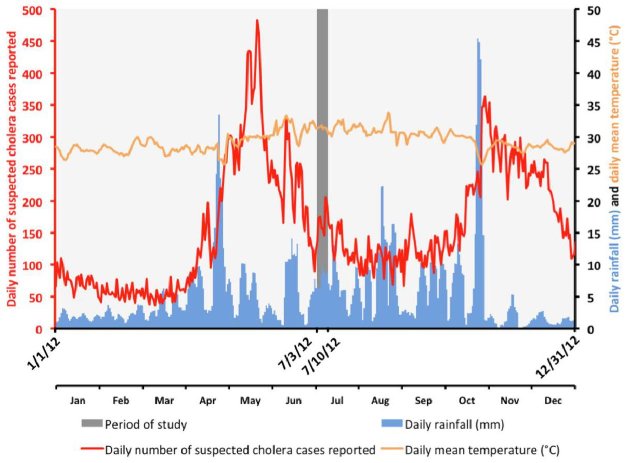
Background: On October 21, 2010, Haiti was struck by a cholera epidemic for the first time in over a century. Epidemiological and molecular genetic data have clearly demonstrated that the bacterium was imported. Nevertheless, the persistence of the epidemic for more than two years, the high incidence rates in some coastal areas and the seasonal exacerbations of the epidemic during the rainy seasons have prompted us to examine the levels of toxigenic Vibrio cholerae in the Haitian aquatic environment.
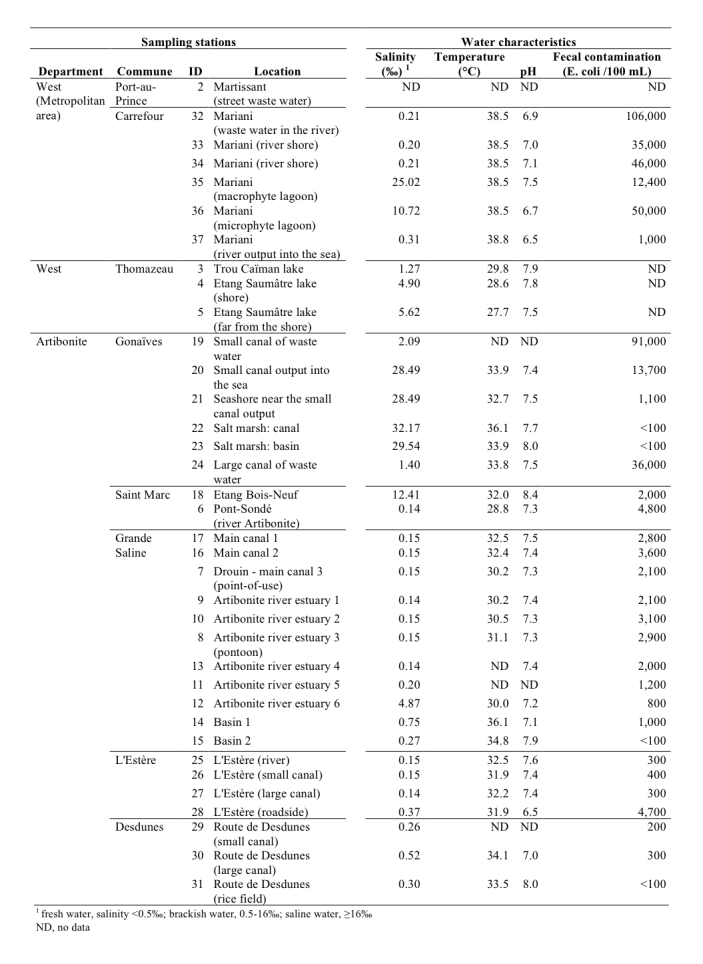
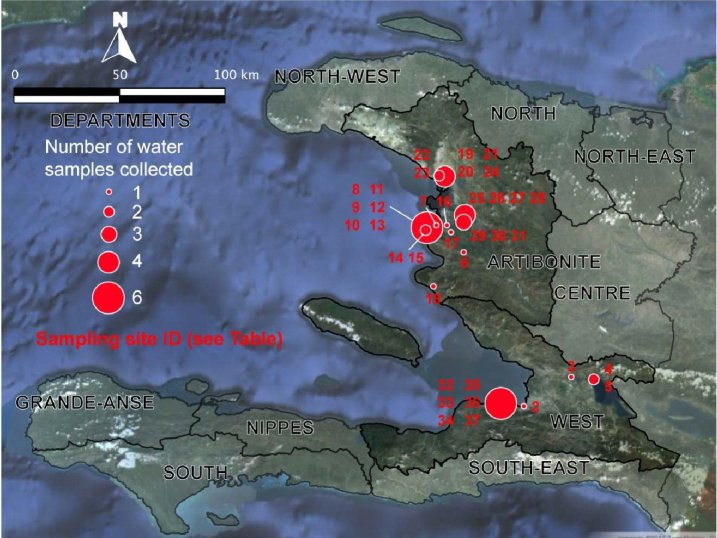
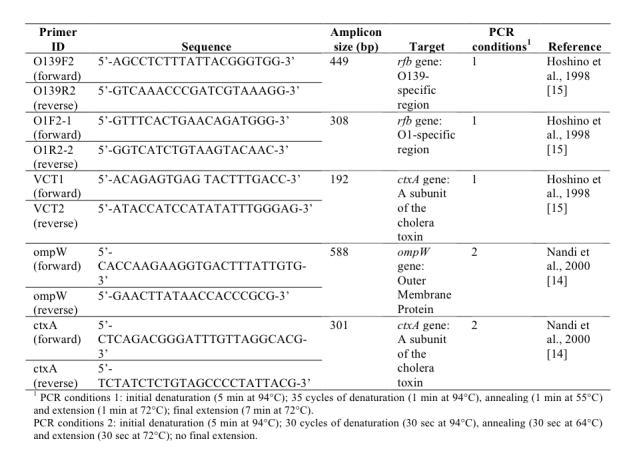
Methods: In July 2012, during the warm and rainy season, 36 aquatic stations were sampled to search for toxigenic V. cholerae. These stations included fresh, brackish and saline surface waters as well as waste water; the sampling sites were located in both rural and urban areas (around Port-au-Prince and Gonaïves) located in the West and Artibonite Departments. V. cholerae bacteria were detected in enrichment cultures of water samples (sample volumes included 1 L, 100 mL, 10 mL, 1 mL, 0.1 mL, 0.01 mL and 0.001 mL depending on the context). Detection methods included both culture on selective agar (for strain isolation) and PCR assays targeting the genes ompW (V. cholerae species), O1-rfb and O139-rfb (O1 and O139 V. cholerae serogroups, respectively), and the cholera toxin gene ctxA, which is present exclusively in toxigenic cholera strains.
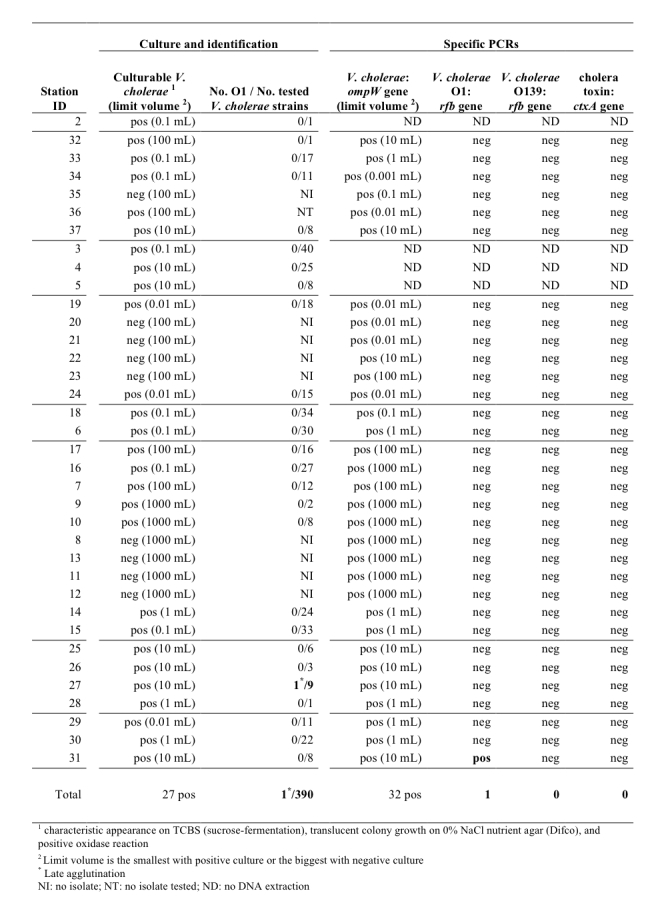
Results: A total of 411 culturable V. cholerae isolates from 29 stations were obtained via selective culture; however, only one of these isolates displayed a late positive reaction with polyvalent anti-O1 serum. Positive V. cholerae PCR results were obtained from each of the 32 tested stations (a total of 77 enrichments out of 107 yielded a positive result); only one sample yielded a positive V. cholerae O1 PCR result. The cholera toxin gene ctxA was never detected via PCR with either primer pair, which includes samples derived from the two stations yielding positive O1 culture or positive O1 PCR results. Therefore, we could not demonstrate the presence of toxigenic V. cholerae O1 among the 36 stations sampled. This suggests that all water samples analyzed contained less than 10 toxigenic V. cholerae O1 bacteria per liter, a level 1000-fold below the dose that has been shown to provoke cholera in healthy adults.
Conclusions: Currently, there is no evidence of a significant level of contamination of the aquatic environment in Haiti by the imported toxigenic V. cholerae O1 strain. The reemergence of cholera outbreaks in Haiti during rainy seasons is therefore more likely due to persisting outbreaks insufficiently tackled during the dry periods rather than the commonly suspected aquatic reservoir of toxigenic bacteria.
Figures
References
-
- Barzilay EJ, Schaad N, Magloire R, Mung KS, Boncy J, et al. (2013) Cholera Surveillance during the Haiti Epidemic - The First 2 Years. N Engl J Med 368 599–609. 10.1056/NEJMoa1204927. - PubMed
-
- Frerichs RR, Keim PS, Barrais R, Piarroux R (2012) Nepalese origin of cholera epidemic in Haiti. Clin Microbiol Infect Off Publ Eur Soc Clin Microbiol Infect Dis 18 E158–163. 10.1111/j.1469-0691.2012.03841.x. - PubMed
-
- Centers for Disease Control and Prevention (CDC) (2010) Cholera outbreak --- Haiti, October 2010. Mmwr Morb Mortal Wkly Rep 59: 1411. - PubMed
LinkOut - more resources
Full Text Sources
Other Literature Sources