


Congenital cardiac, aortic arch, and vascular bed anomalies in PHACE syndrome (from the International PHACE Syndrome Registry)
- PMID: 24079520
- PMCID: PMC4057998
- DOI: 10.1016/j.amjcard.2013.08.025
Congenital cardiac, aortic arch, and vascular bed anomalies in PHACE syndrome (from the International PHACE Syndrome Registry)
Abstract
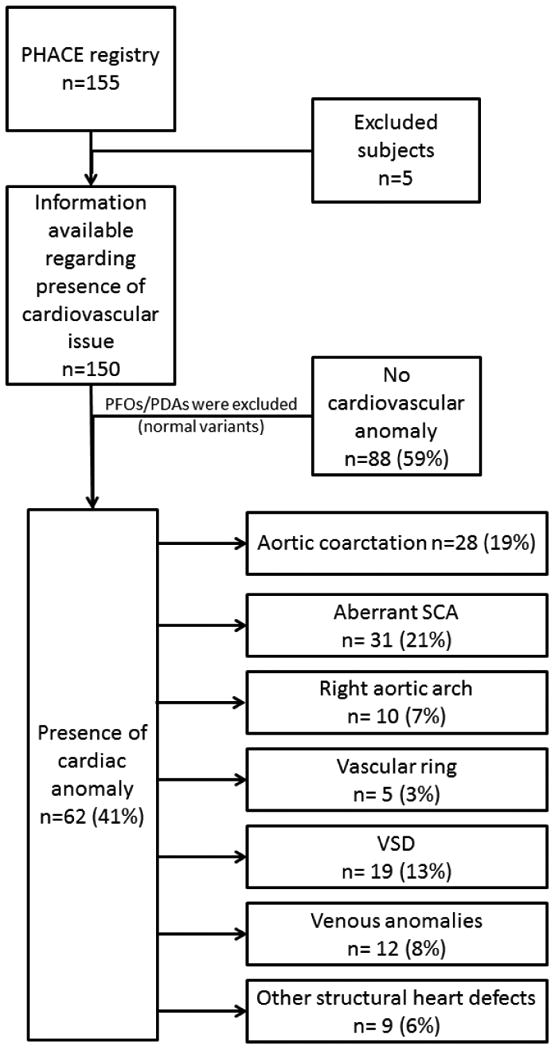
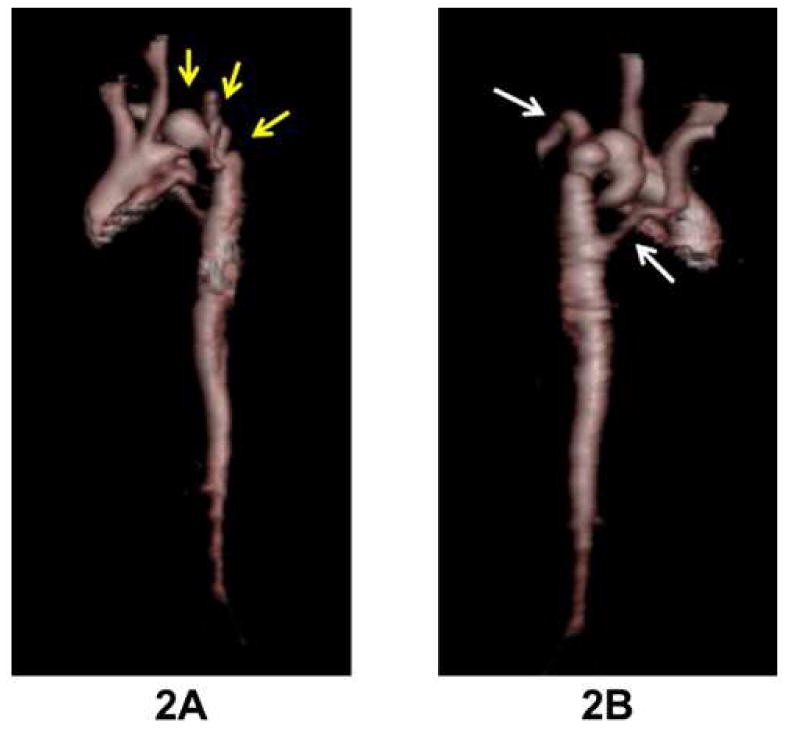
PHACE syndrome represents the association of large infantile hemangiomas of the head and neck with brain, cerebrovascular, cardiac, ocular, and ventral or midline defects. Cardiac and cerebrovascular anomalies are the most common extracutaneous features of PHACE, and they also constitute the greatest source of potential morbidity. Congenital heart disease in PHACE is incompletely described, and this study was conducted to better characterize its features. This study of the International PHACE Syndrome Registry represents the largest central review of clinical, radiologic, and histopathologic data for cardiovascular anomalies in patients with PHACE to date. Sixty-two (41%) of 150 subjects had intracardiac, aortic arch, or brachiocephalic vessel anomalies. Aberrant origin of a subclavian artery was the most common cardiovascular anomaly (present in 31 (21%) of 150 subjects). Coarctation was the second most common anomaly, identified in 28 (19%) of 150 subjects, and can be missed clinically in patients with PHACE because of the frequent association of arch obstruction with aberrant subclavian origin. Twenty-three (37%) of 62 subjects with cardiovascular anomalies required procedural intervention. A greater percentage of hemangiomas were located on the left side of the head and neck in patients with coarctation (46% vs 39%); however, hemangioma distribution did not predict the presence of cardiovascular anomalies overall. In conclusion, PHACE is associated with a high risk of congenital heart disease. Cardiac and aortic arch imaging with detailed assessment of arch patency and brachiocephalic origins is essential for any patient suspected of having PHACE. Longitudinal investigation is needed to determine the long-term outcomes of cardiovascular anomalies in PHACE.
Copyright © 2013 Elsevier Inc. All rights reserved.
Figures
References
-
- Pascual-Castroviejo I. Vascular and nonvascular intracranial malformation associated with external capillary hemangiomas. Neuroradiology. 1978;16:82–84. - PubMed
-
- Frieden IJ, Reese V, Cohen D. PHACE syndrome. The association of posterior fossa brain malformations, hemangiomas, arterial anomalies, coarctation of the aorta and cardiac defects, and eye abnormalities. Arch Dermatol. 1996;132:307–311. - PubMed
-
- Schneeweiss A, Blieden LC, Shem-Tov A, Motro M, Feigel A, Neufeld HN. Coarctation of the aorta with congenital hemangioma of the face and neck and aneurysm or dilatation of a subclavian or innominate artery. A new syndrome? Chest. 1982;82:186–187. - PubMed
-
- Haggstrom AN, Garzon MC, Baselga E, Chamlin SL, Frieden IJ, Holland K, Maguiness S, Mancini AJ, McCuaig C, Metry DW, Morel K, Powell J, Perkins SM, Siegel D, Drolet BA. Risk for PHACE syndrome in infants with large facial hemangiomas. Pediatrics. 2010;126:e418–426. - PubMed
Publication types
MeSH terms
Supplementary concepts
Grants and funding
LinkOut - more resources
Full Text Sources
Other Literature Sources
Medical
