


Organ-specific function of adhesion G protein-coupled receptor GPR126 is domain-dependent
- PMID: 24082093
- PMCID: PMC3801000
- DOI: 10.1073/pnas.1304837110
Organ-specific function of adhesion G protein-coupled receptor GPR126 is domain-dependent
Erratum in
- Proc Natl Acad Sci U S A. 2014 Jan 21;111(3):1222
Abstract
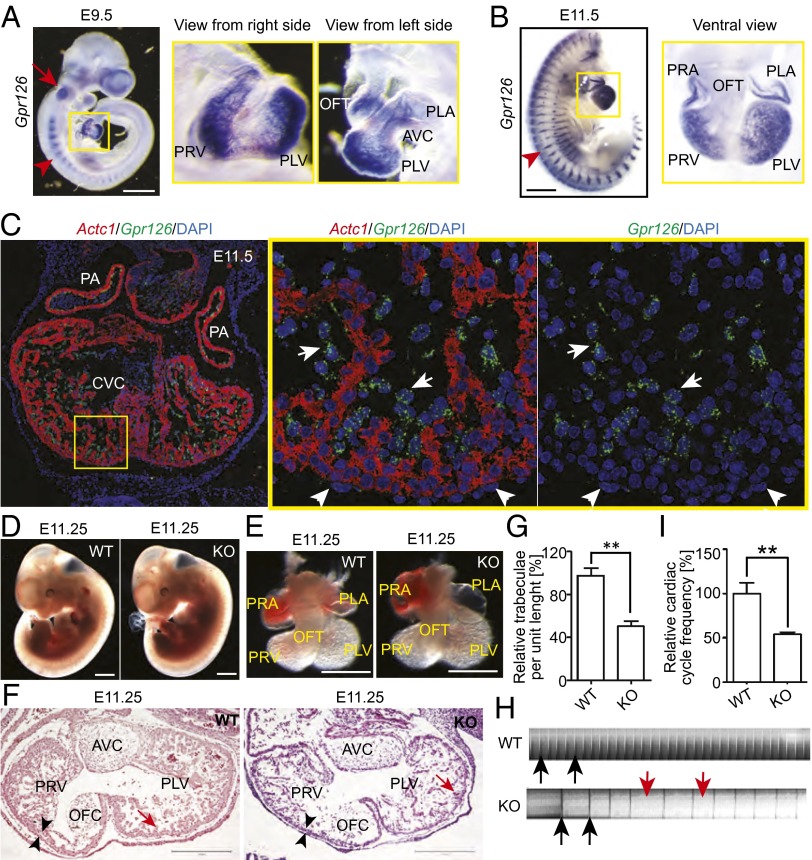
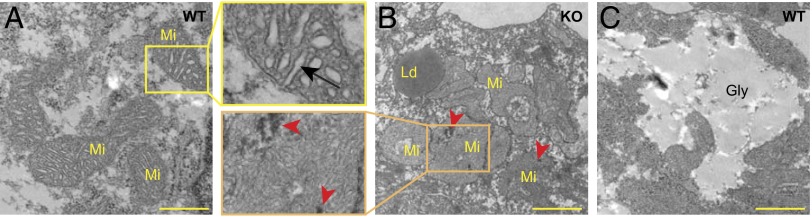
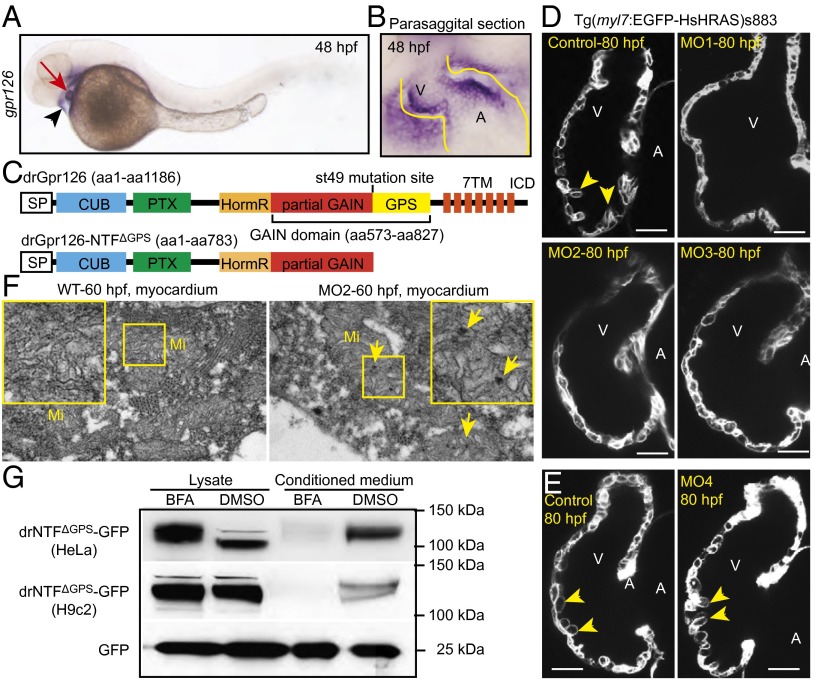
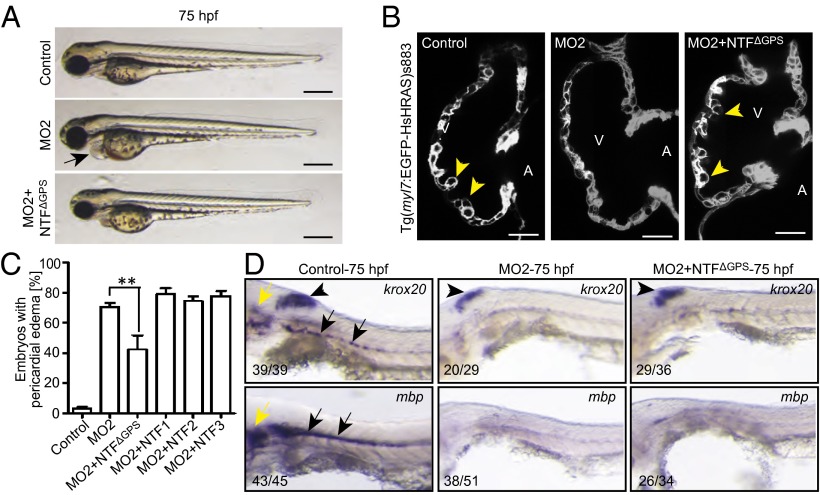
Despite their abundance and multiple functions in a variety of organ systems, the function and signaling mechanisms of adhesion G protein-coupled receptors (GPCRs) are poorly understood. Adhesion GPCRs possess large N termini containing various functional domains. In addition, many of them are autoproteolytically cleaved at their GPS sites into an N-terminal fragment (NTF) and C-terminal fragment. Here we demonstrate that Gpr126 is expressed in the endocardium during early mouse heart development. Gpr126 knockout in mice and knockdown in zebrafish caused hypotrabeculation and affected mitochondrial function. Ectopic expression of Gpr126-NTF that lacks the GPS motif (NTF(ΔGPS)) in zebrafish rescued the trabeculation but not the previously described myelination phenotype in the peripheral nervous system. These data support a model in which the NTF of Gpr126, in contrast to the C-terminal fragment, plays an important role in heart development. Collectively, our analysis provides a unique example of the versatile function and signaling properties of adhesion GPCRs in vertebrates.
Conflict of interest statement
The authors declare no conflict of interest.
Figures
References
-
- Bjarnadóttir TK, et al. The human and mouse repertoire of the adhesion family of G-protein-coupled receptors. Genomics. 2004;84(1):23–33. - PubMed
-
- Moriguchi T, et al. DREG, a developmentally regulated G protein-coupled receptor containing two conserved proteolytic cleavage sites. Genes Cells. 2004;9(6):549–560. - PubMed
-
- Kaur B, Brat DJ, Devi NS, Van Meir EG. Vasculostatin, a proteolytic fragment of brain angiogenesis inhibitor 1, is an antiangiogenic and antitumorigenic factor. Oncogene. 2005;24(22):3632–3642. - PubMed
-
- Koh JT, et al. Extracellular fragment of brain-specific angiogenesis inhibitor 1 suppresses endothelial cell proliferation by blocking alphavbeta5 integrin. Exp Cell Res. 2004;294(1):172–184. - PubMed
Publication types
MeSH terms
Substances
Grants and funding
LinkOut - more resources
Full Text Sources
Other Literature Sources
Molecular Biology Databases
Miscellaneous
