


Midlife sleep characteristics associated with late life cognitive function
- PMID: 24082313
- PMCID: PMC3773203
- DOI: 10.5665/sleep.3052
Midlife sleep characteristics associated with late life cognitive function
Abstract
Study objectives: Previous studies with limited follow-up times have suggested that sleep-related traits are associated with an increased risk of incident dementia or cognitive decline. We investigated the association between midlife sleep characteristics and late life cognitive function.
Design: A follow-up study with a median follow-up time of 22.5 (range 15.8-25.7) years assessing the association between midlife sleep characteristics and later cognitive function.
Setting: Questionnaire data from 1981 were used in the assessment of sleep characteristics, use of hypnotics, and covariates at baseline. Between 1999 and 2007, participants were assigned a linear cognitive score with a maximum score of 51 based on a telephone interview (mean score 38.3, SD 6.1). Linear regression analyses were controlled for age, sex, education, ApoE genotype, and follow-up time.
Participants: 2,336 members of the Finnish Twin cohort who were at least 65 years of age.
Interventions: N/A.
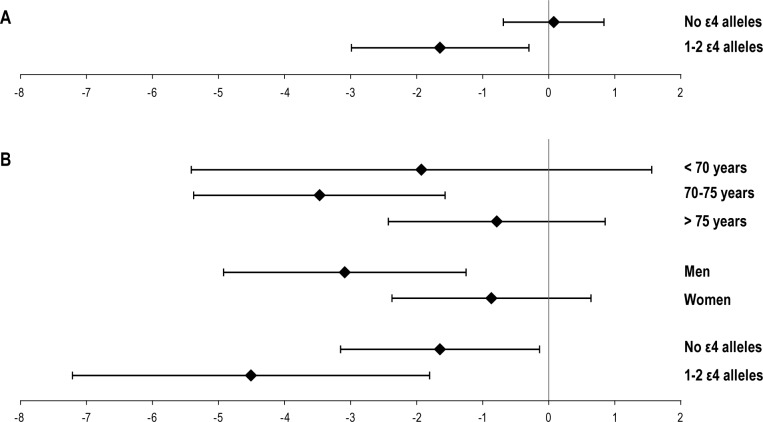
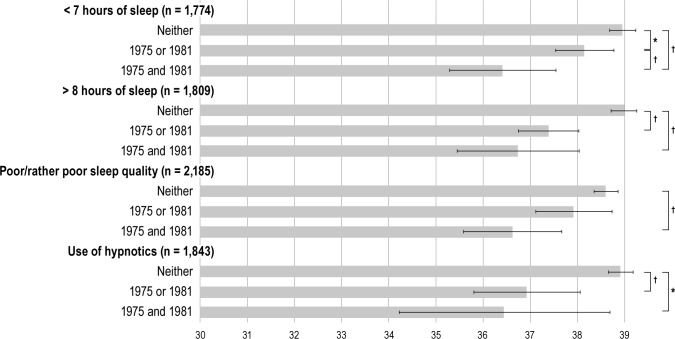
Measurements and results: Baseline short (< 7 h/day) and long (> 8 h/day) sleepers had lower cognitive scores than participants sleeping 7-8 h/ day (β = -0.84, P = 0.014 and β = -1.66, P < 0.001, respectively). As compared to good sleep quality, poor or rather poor sleep quality was associated with a lower cognitive score (β = -1.00, P = 0.011). Also, the use of hypnotics ≥ 60 days per year was associated with poorer cognitive function (β = -1.92, P = 0.002).
Conclusions: This is the first study indicating that midlife sleep length, sleep quality, and use of hypnotics are associated with late life cognitive function. Further confirmation is needed, but sleep-related characteristics may emerge as new risk factors for cognitive impairment.
Keywords: Cognition; cohort studies; hypnotics and sedatives; risk factors; sleep.
Figures
References
-
- Kivipelto M, Ngandu T, Laatikainen T, Winblad B, Soininen H, Tuomilehto J. Risk score for the prediction of dementia risk in 20 years among middle aged people: a longitudinal, population-based study. Lancet Neurol. 2006;5:735–41. - PubMed
-
- Blackwell T, Yaffe K, Ancoli-Israel S, et al. Poor sleep is associated with impaired cognitive function in older women: the study of osteoporotic fractures. J Gerontol A Biol Sci Med Sci. 2006;61:405–10. - PubMed
-
- Spira AP, Blackwell T, Stone KL, et al. Sleep-disordered breathing and cognition in older women. J Am Geriatr Soc. 2008;56:45–50. - PubMed
-
- Bombois S, Derambure P, Pasquier F, Monaca C. Sleep disorders in aging and dementia. J Nutr Health Aging. 2010;14:212–7. - PubMed
-
- Foley D, Monjan A, Masaki K, et al. Daytime sleepiness is associated with 3-year incident dementia and cognitive decline in older Japanese-American men. J Am Geriatr Soc. 2001;49:1628–32. - PubMed
Publication types
MeSH terms
Substances
LinkOut - more resources
Full Text Sources
Other Literature Sources
Medical
Research Materials
Miscellaneous
