


Prevalence of hypertension and obesity in patients with type 2 diabetes mellitus in observational studies: a systematic literature review
- PMID: 24082791
- PMCID: PMC3785394
- DOI: 10.2147/DMSO.S51325
Prevalence of hypertension and obesity in patients with type 2 diabetes mellitus in observational studies: a systematic literature review
Abstract
Background: Hypertension and obesity are known to contribute, directly or indirectly, to the development of long-term complications of type 2 diabetes mellitus (T2DM). Knowing the prevalence of these comorbidities is important for determining the size of the population that may benefit from strategies that reduce blood pressure and weight while controlling blood glucose.
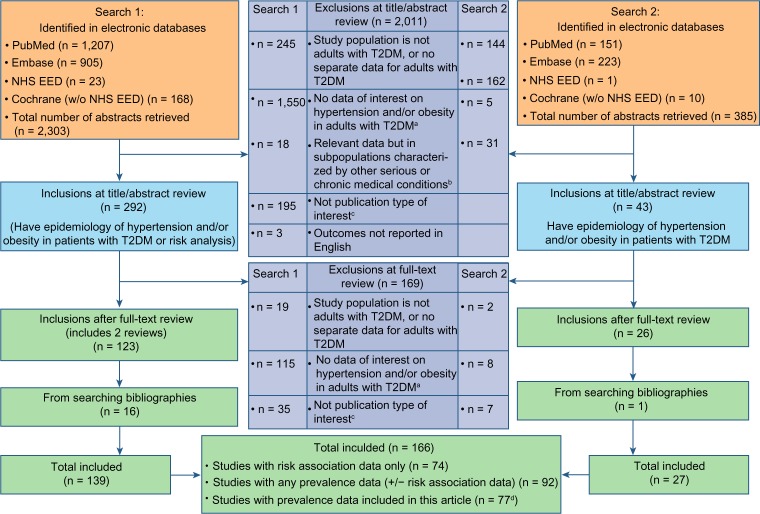
Methods: In this systematic literature review, electronic searches of PubMed, Embase, and the Cochrane Library were conducted to identify observational studies of hypertension and/or obesity prevalence in patients with T2DM throughout the world. The searches were limited to studies reported in English from January 1, 2001 to February 16, 2012.
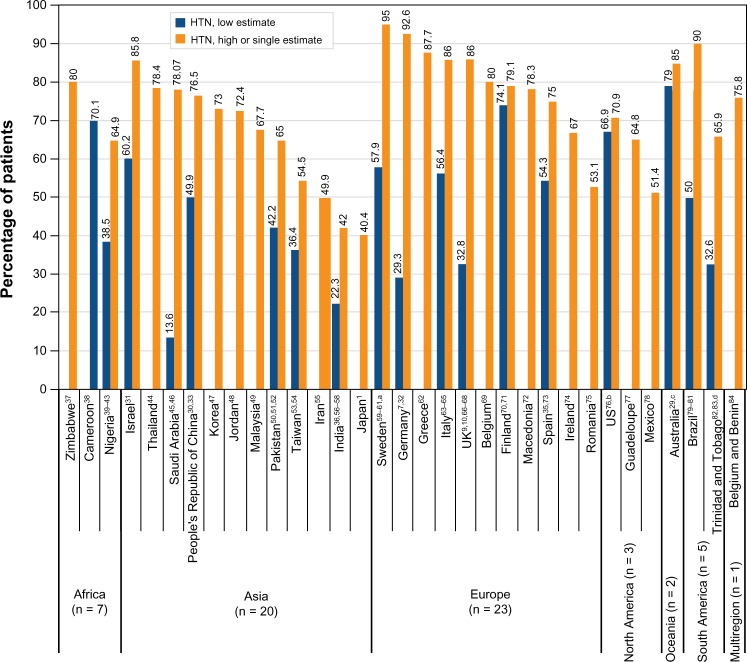
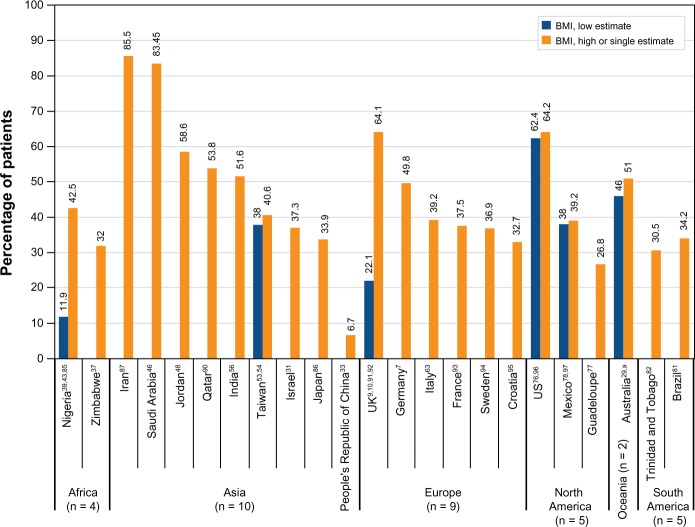
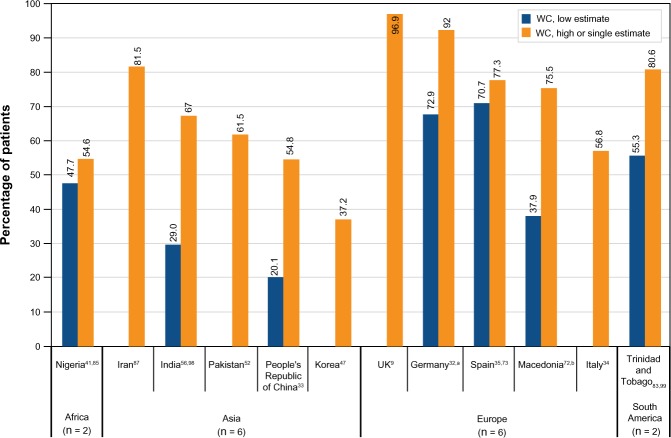
Results: From a total of 2,688 studies, 92 observational studies provided prevalence rates for hypertension and/or obesity specifically in adults with T2DM. Fifteen studies of specific subtypes of hypertension or subpopulations with T2DM were subsequently excluded, leaving 78 studies (in 77 articles) for inclusion in this article. Of these, 61studies reported hypertension prevalence, 44 reported obesity prevalence, and 12 reported the prevalence of hypertension with obesity. Most studies had a low risk of bias regarding diagnosis of T2DM (70/78), hypertension (59/69), or obesity (45/47). The continental regions with the most observational studies of hypertension or obesity prevalence were Europe (n = 30) and Asia (n = 26). Hypertension rates typically were high in all regions; most studies presented rates above 50%, and many presented rates above 75%. Obesity rates exceeded 30% in 38 of 44 studies and 50% in 14 of 44 studies, especially those assessing central obesity (based on waist circumference). Among obese adults, hypertension rates were at or above 70% in Asia and above 80% in Europe; rates were lower in North and South America but still above 30%.
Conclusion: Around the world, hypertension and obesity, separately or together, are common comorbidities in adults with T2DM.
Keywords: T2DM; blood pressure; body mass index; epidemiology; waist circumference.
Figures

References
-
- Nakano S, Ito T, Furuya K, et al. Ambulatory blood pressure level rather than dipper/nondipper status predicts vascular events in type 2 diabetic subjects. Hypertens Res. 2004;27(9):647–656. - PubMed
-
- Salman RA, Al-Rubeaan KA. Incidence and risk factors of hypertension among Saudi type 2 diabetes adult patients: an 11-year prospective randomized study. J Diabetes Complications. 2009;23(2):95–101. - PubMed
-
- Stratton IM, Cull CA, Adler AI, Matthews DR, Neil HA, Holman RR. Additive effects of glycaemia and blood pressure exposure on risk of complications in type 2 diabetes: a prospective observational study (UKPDS 75) Diabetologia. 2006;49(8):1761–1769. - PubMed
-
- Gaede P, Lund-Andersen H, Parving HH, Pedersen O. Effect of a multifactorial intervention on mortality in type 2 diabetes. N Engl J Med. 2008;358(6):580–591. - PubMed
Publication types
LinkOut - more resources
Full Text Sources
Other Literature Sources
