


Occult hepatitis C virus infection in candidates for liver transplant with cryptogenic cirrhosis
- PMID: 24082889
- PMCID: PMC3785931
- DOI: 10.5812/hepatmon.11290
Occult hepatitis C virus infection in candidates for liver transplant with cryptogenic cirrhosis
Abstract
Background: Occult hepatitis C virus (HCV) infection is a new entity described by the presence of HCV-RNA in liver biopsy and/or peripheral blood mononuclear cell (PBMC) specimens, and undetectable levels or absence of HCV-RNA and in the absence or presence of anti HCV antibodies in plasma by current laboratory methods.
Objectives: To evaluate the detection of HCV-RNA in PBMC specimens of the liver transplant candidates with cryptogenic cirrhosis by reverse transcriptase-nested polymerase chain reaction (RT-nested PCR).
Patients and methods: From November 2007 to March 2013, 45 patients from Liver Transplant Center of Imam Khomeini Hospital, Tehran, were enrolled in this cross sectional study. PBMC specimens were separated from the peripheral blood sample. After extraction of RNA from plasma and PBMC specimens, HCV-RNA status was tested by RT-nested PCR. The 5'-untranslated region (5'-UTR) genotyping of HCV-RNA amplified from PBMC specimens was performed by a standard methodology with the INNO-LiPA(TM) HCV II kit. The PCR products of 5'-UTR were sequenced after cloning into the pJET1.2 / blunt cloning vector.
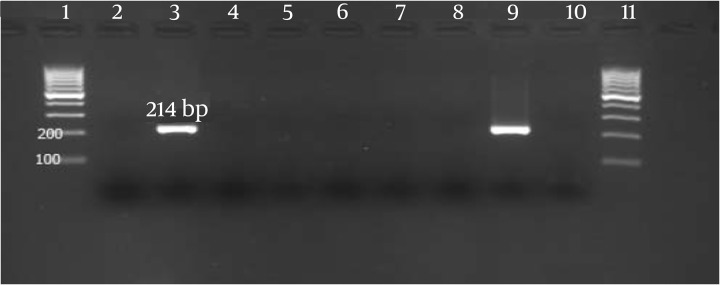
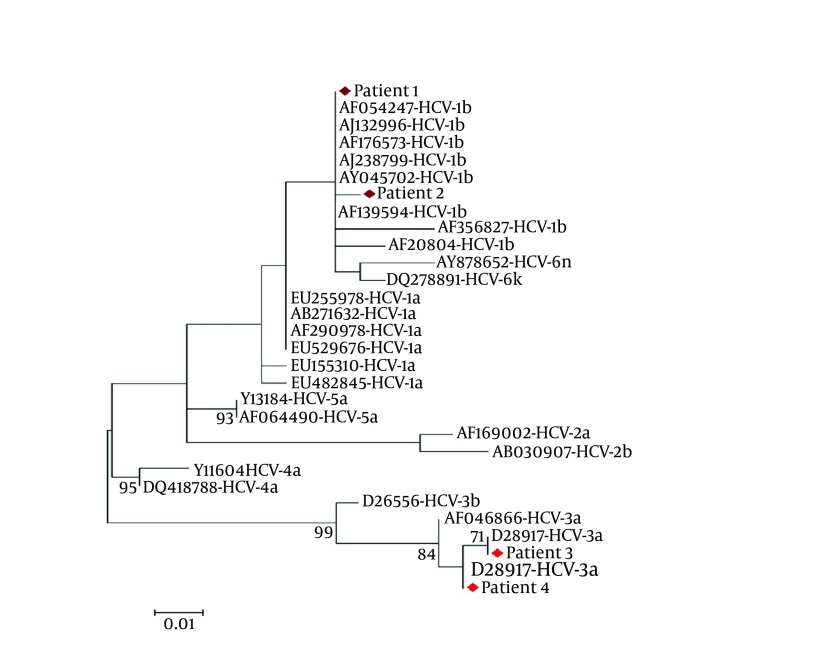
Results: Of 45 patients, 4 (8.9% [95% CI: 4.4-15.6]) had detectable genomic HCV-RNA in their PBMC specimens. HCV genotypes were determined in the PBMCs of these subjects showed that 2 (50.0%) subjects with occult HCV infection had HCV subtype 3a, and 2 (50.0%) had HCV subtype 1b.
Conclusions: This study found that 8.9 % of the Iranian candidates for liver transplant with cryptogenic cirrhosis had occult HCV infection. Therefore, designing prospective studies focusing on the diagnosis of occult HCV infection in these subjects prior to liver transplantation could be valuable.
Keywords: Cirrhosis; Cryptogenic; Hepatitis C Virus; Liver Transplantation; Occult Infection; Peripheral Blood Mononuclear Cells.
Figures
References
LinkOut - more resources
Full Text Sources
Other Literature Sources