


Contraception and fertility awareness among women with solid organ transplants
- PMID: 24084538
- PMCID: PMC5600476
- DOI: 10.1097/AOG.0b013e3182a5eda9
Contraception and fertility awareness among women with solid organ transplants
Abstract
Objective: To assess the contraception and fertility counseling provided to women with solid organ transplants.
Methods: A telephone survey of 309 women aged 19-49 years who had received a solid organ transplant at the University of Nebraska Medical Center was performed. Of the 309 eligible women, 183 responded. Patients were asked 19 questions regarding pretransplant and posttransplant fertility awareness and contraception counseling. Data were summarized using descriptive statistics.
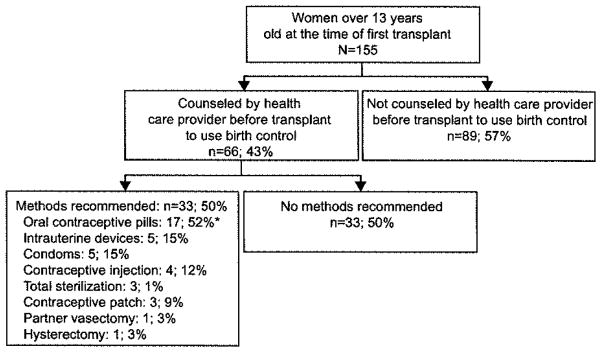
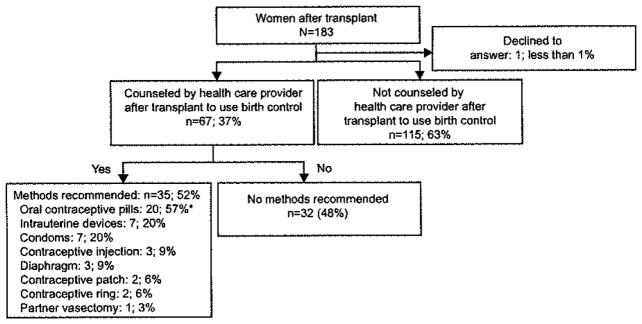
Results: Patients had undergone a variety of solid organ transplantations: 40% kidney (n=73); 32% liver (n=59); 6% pancreas (n=11); 5% heart (n=9); 3% intestine (n=5); and 14% multiple organs (n=26). Before their transplantations, 79 women (44%) reported they were not aware that a woman could become pregnant after transplantation. Only 66 women aged 13 and older at the time of transplantation reported that a health care provider discussed contraception before transplantation. Approximately half of women surveyed were using a method of contraception. Oral contraceptive pills were the most commonly recommended method. Twenty-two of the 31 pregnancies after organ transplantation were planned, which is higher than that of the general population.
Conclusion: Few women with transplants are educated regarding the effect of organ transplantation on fertility and are not routinely counseled about contraception or the potential for posttransplant pregnancy. Health care providers should incorporate contraceptive and fertility counseling as part of routine care for women with solid organ transplants.
Level of evidence: : II.
Figures
References
-
- Organ Procurement and Transplantation Network. Organ Procurement and Transplantation Network, HRSA, DHHS. 9 A.D Available at: http://optn.transplant.hrsa.gov/latestData/rptData.asp. Retrieved November 29, 2012.
-
- Surti B, Tan J, Saab S. Pregnancy and liver transplantation. Liver Int. 2008;28:1200–6. - PubMed
-
- Watnick S, Rueda J. Reproduction and contraception after kidney transplantation. Curr Opin Obstet Gynecol. 2008;20:308–12. - PubMed
-
- Mastrobattista JM, Katz AR. Pregnancy after organ transplant. Obstet Gynecol Clin North Am. 2004;31:415–28. - PubMed
-
- Krajewski CM, Geetha D, Gomez-Lobo V. Contraceptive options for women with a history of solid organ transplantation. Transplantation. 2013;95:1183–6. - PubMed
Publication types
MeSH terms
Grants and funding
LinkOut - more resources
Full Text Sources
Other Literature Sources
Medical
Research Materials
