


Interplay between cartilage and subchondral bone contributing to pathogenesis of osteoarthritis
- PMID: 24084727
- PMCID: PMC3821588
- DOI: 10.3390/ijms141019805
Interplay between cartilage and subchondral bone contributing to pathogenesis of osteoarthritis
Abstract
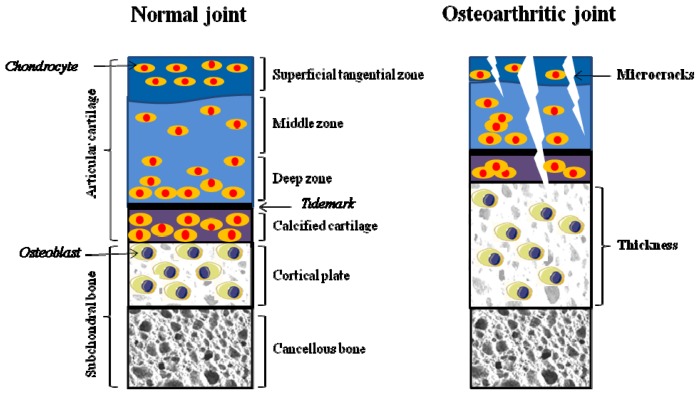
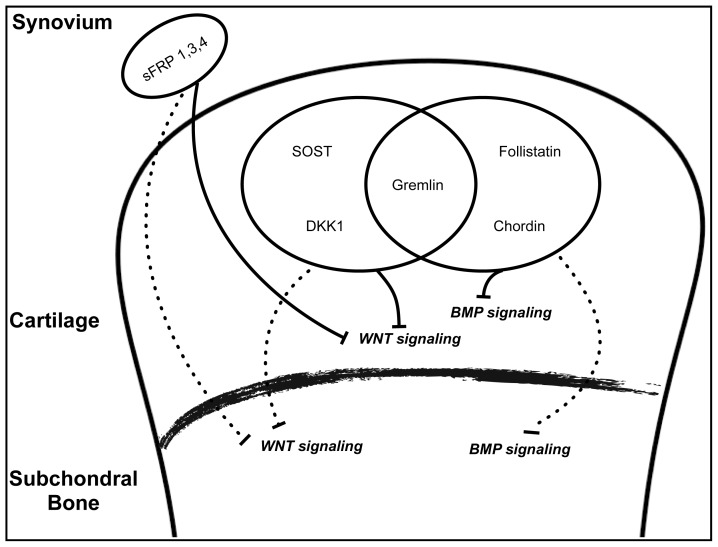
Osteoarthritis (OA) is a common debilitating joint disorder, affecting large sections of the population with significant disability and impaired quality of life. During OA, functional units of joints comprising cartilage and subchondral bone undergo uncontrolled catabolic and anabolic remodeling processes to adapt to local biochemical and biological signals. Changes in cartilage and subchondral bone are not merely secondary manifestations of OA but are active components of the disease, contributing to its severity. Increased vascularization and formation of microcracks in joints during OA have suggested the facilitation of molecules from cartilage to bone and vice versa. Observations from recent studies support the view that both cartilage and subchondral bone can communicate with each other through regulation of signaling pathways for joint homeostasis under pathological conditions. In this review we have tried to summarize the current knowledge on the major signaling pathways that could control the cartilage-bone biochemical unit in joints and participate in intercellular communication between cartilage and subchondral bone during the process of OA. An understanding of molecular communication that regulates the functional behavior of chondrocytes and osteoblasts in both physiological and pathological conditions may lead to development of more effective strategies for treating OA patients.
Figures
References
-
- Castaneda S., Roman-Blas J.A., Largo R., Herrero-Beaumont G. Subchondral bone as a key target for osteoarthritis treatment. Biochem. Pharmacol. 2012;83:315–323. - PubMed
-
- Felson D.T. Clinical practice. Osteoarthritis of the knee. N. Engl. J. Med. 2006;354:841–848. - PubMed
-
- Felson D.T., Anderson J.J., Meenan R.F. The comparative efficacy and toxicity of second-line drugs in rheumatoid arthritis. Results of two metaanalyses. Arthritis Rheum. 1990;33:1449–1461. - PubMed
Publication types
MeSH terms
LinkOut - more resources
Full Text Sources
Other Literature Sources
Medical
