


Functional genomics of novel secondary metabolites from diverse cyanobacteria using untargeted metabolomics
- PMID: 24084783
- PMCID: PMC3826126
- DOI: 10.3390/md11103617
Functional genomics of novel secondary metabolites from diverse cyanobacteria using untargeted metabolomics
Abstract
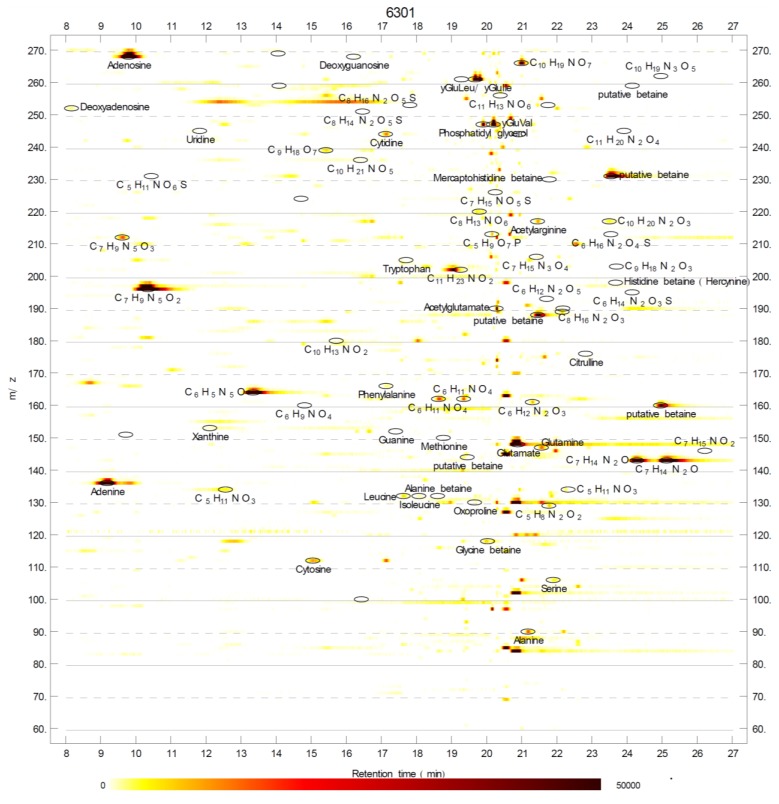
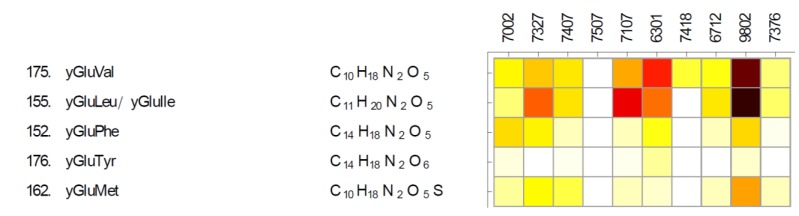
Mass spectrometry-based metabolomics has become a powerful tool for the detection of metabolites in complex biological systems and for the identification of novel metabolites. We previously identified a number of unexpected metabolites in the cyanobacterium Synechococcus sp. PCC 7002, such as histidine betaine, its derivatives and several unusual oligosaccharides. To test for the presence of these compounds and to assess the diversity of small polar metabolites in other cyanobacteria, we profiled cell extracts of nine strains representing much of the morphological and evolutionary diversification of this phylum. Spectral features in raw metabolite profiles obtained by normal phase liquid chromatography coupled to mass spectrometry (MS) were manually curated so that chemical formulae of metabolites could be assigned. For putative identification, retention times and MS/MS spectra were cross-referenced with those of standards or available sprectral library records. Overall, we detected 264 distinct metabolites. These included indeed different betaines, oligosaccharides as well as additional unidentified metabolites with chemical formulae not present in databases of metabolism. Some of these metabolites were detected only in a single strain, but some were present in more than one. Genomic interrogation of the strains revealed that generally, presence of a given metabolite corresponded well with the presence of its biosynthetic genes, if known. Our results show the potential of combining metabolite profiling and genomics for the identification of novel biosynthetic genes.
Figures


References
-
- Seckbach J., Oren A. Oxygenic Photosynthetic Microorganisms in Extreme Environments. In: Seckbach J., editor. Algae and Cyanobacteria in Extreme Environments. Springer; Dordrecht, The Netherlands: 2007. pp. 5–25.
-
- Whitton B.A., Potts M. Introduction to the Cyanobacteria. In: Whitton B.A., editor. Ecology of Cyanobacteria II. Springer; Dordrecht, The Netherlands: 2012. pp. 1–13.
-
- Garcia-Pichel F., Belnap J., Neuer S., Schanz F. Estimates of global cyanobacterial biomass and its distribution. Algol. Stud. 2003;109:213–227. doi: 10.1127/1864-1318/2003/0109-0213. - DOI
Publication types
MeSH terms
Substances
LinkOut - more resources
Full Text Sources
Other Literature Sources
