. 2013 Sep 24;8(9):e75543.
doi: 10.1371/journal.pone.0075543. eCollection 2013.

Spinal actions of lipoxin A4 and 17(R)-resolvin D1 attenuate inflammation-induced mechanical hypersensitivity and spinal TNF release

Affiliations

Spinal actions of lipoxin A4 and 17(R)-resolvin D1 attenuate inflammation-induced mechanical hypersensitivity and spinal TNF release

Sally Abdelmoaty et al. PLoS One. .

Abstract

Lipoxins and resolvins have anti-inflammatory and pro-resolving actions and accumulating evidence indicates that these lipid mediators also attenuate pain-like behavior in a number of experimental models of inflammation and tissue injury-induced pain. The present study was undertaken to assess if spinal administration of lipoxin A4 (LXA4) or 17 (R)-resolvin D1 (17(R)-RvD1) attenuates mechanical hypersensitivity in the carrageenan model of peripheral inflammation in the rat. Given the emerging role of spinal cytokines in the generation and maintenance of inflammatory pain we measured cytokine levels in the cerebrospinal fluid (CSF) after LXA4 or 17(R)-RvD1 administration, and the ability of these lipid metabolites to prevent stimuli-induced release of cytokines from cultured primary spinal astrocytes. We found that intrathecal bolus injection of LXA4 and17(R)-RvD1 attenuated inflammation-induced mechanical hypersensitivity without reducing the local inflammation. Furthermore, both LXA4 and 17(R)-RvD1 reduced carrageenan-induced tumor necrosis factor (TNF) release in the CSF, while only 17(R)-RvD1attenuated LPS and IFN-γ-induced TNF release in astrocyte cell culture. In conclusion, this study demonstrates that lipoxins and resolvins potently suppress inflammation-induced mechanical hypersensitivity, possibly by attenuating cytokine release from spinal astrocytes. The inhibitory effect of lipoxins and resolvins on spinal nociceptive processing puts them in an intriguing position in the search for novel pain therapeutics.


Conflict of interest statement

Competing Interests: The authors have declared that no competing interests exist.

Figures

Figure 1
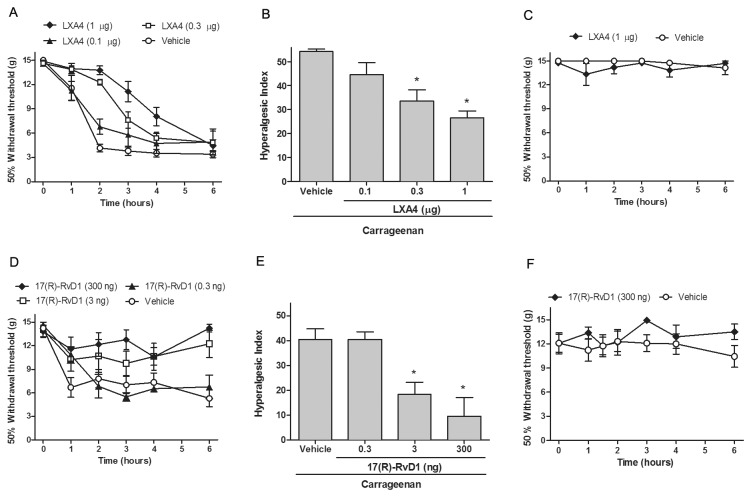
Figure 1. Intrathecal injection of LXA4 and 17(R)-RvD1 reduces carrageenan-induced mechanical hypersensitivity.
Paw withdrawal thresholds plotted versus time are shown for the ipsilateral (A, D) and contralateral (C, F) hind paw following carrageenan administration. Intrathecal pretreatment with LXA4 (A) or 17(R)-RvD1 (D) reduced mechanical hypersensitivity as compared to vehicle, while i.t. injection of LXA4 (C) or 17(R)-RvD1 (F) had no effect on mechanical thresholds in the contralateral (non-inflamed) hind paw. The hyperalgesic index (see material and methods) calculated for 0–6 h was significantly reduced by LXA4 (B) and 17(R)-RvD1 (E) pretreatment. All data are presented as mean ± S.E.M, * represents a significant difference at p<0.05 as compared with i.t. vehicle.
Figure 2
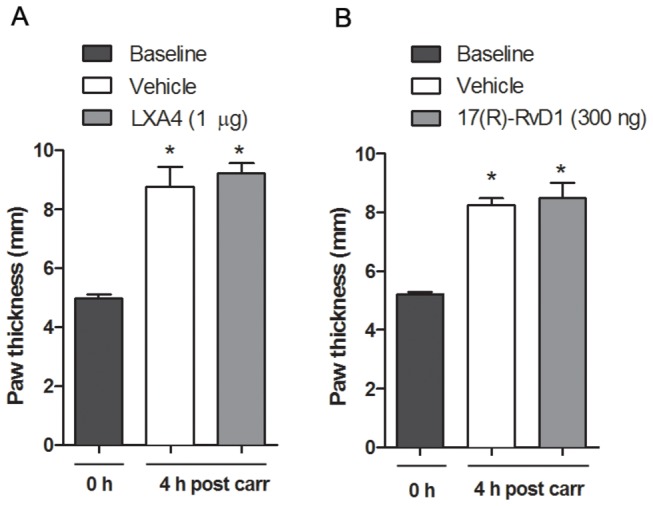
Figure 2. Intrathecal injection of LXA4 and 17(R)-RvD1 does not change carrageenan-induced inflammation.
Bar graphs show that the increased paw size measured 4 h following carrageenan injection was not altered by pretreatment with LXA4 (A) or 17(R)-RvD1 (B) as compared to pretreatment with vehicle. All data are presented as mean ± S.E.M, * represents a significant difference at p<0.05 as compared with i.t. vehicle.
Figure 3
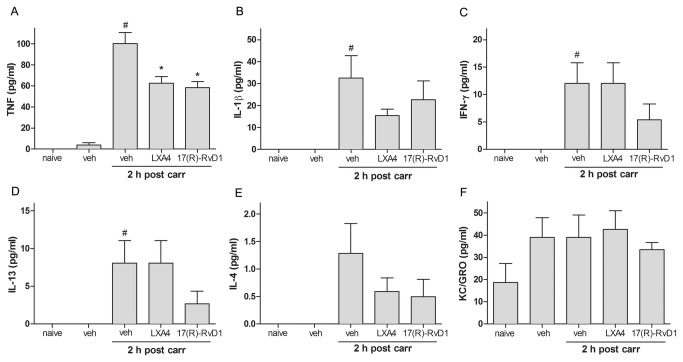
Figure 3. Intrathecal injection of LXA4 and 17(R)-RvD1 decrease carrageenan-induced TNF levels in the CSF.
Bar graphs show the levels of cytokines in pg/ml in CSF from rats pretreated with i.t. RvD1 (300 ng) or LXA4 (1 µg) prior to carrageenan injection. (A) The carrageenan-induced increase in TNF levels was significantly reduced in rats pretreated with LXA4 and 17(R)-RvD1 (A). No significant effect of i.t. LXA4 or 17(R)-RvD1 was observed on CSF levels of IL-1β (B), IL-13 (C), IFN-γ (D), IL-4 (E), or KC/GRO (F). Each bar represents the mean ± S.E.M. # and * represent a significant difference at p<0.05 as compared to the i.t. vehicle (veh) treated group before and 2 hours post carrageenan, respectively.
Figure 4
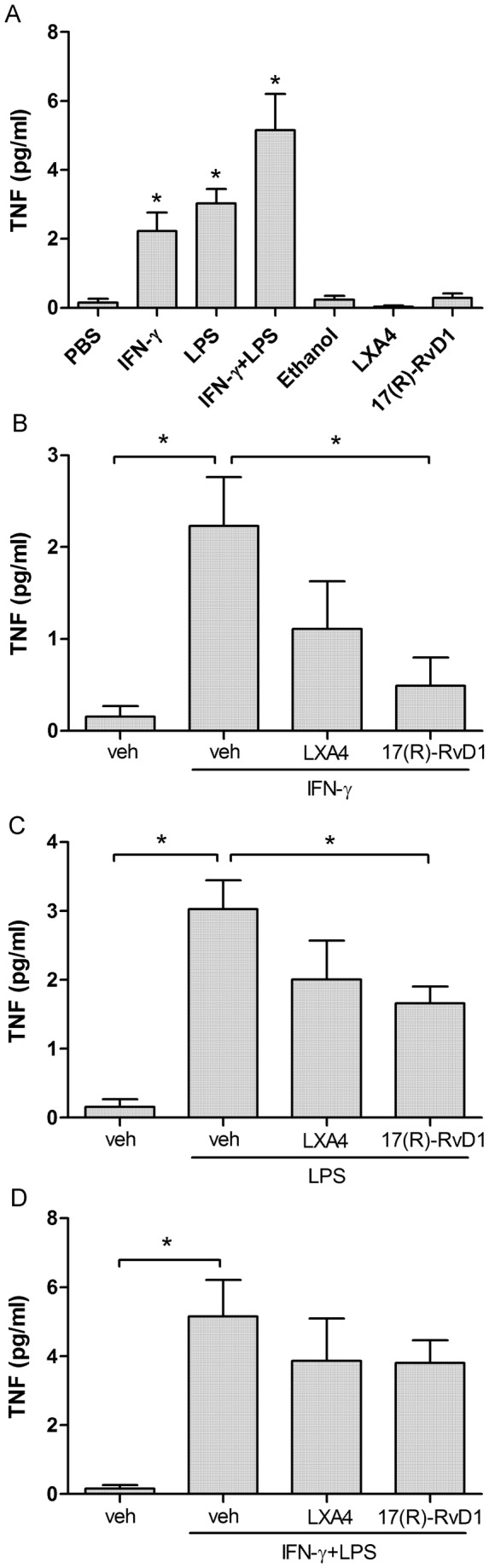
Figure 4. 17 (R)-RvD1 attenuate IFN-γ and LPS induced TNF induction in rat primary astrocytes.
Bar graphs showing levels of TNF in media from primary rat astrocyte cultures (A) following stimulation with IFN-γ (1000 U/ml, 24 h), LPS (2 µg/ml, 24 h) or the combined effect of IFN-γ (1000 U/ml, 4 h) followed by LPS (2 µg/ml, 20 h). Pretreatment with 17(R)-RvD1 (500 nM, 30 min) significantly reduced IFN-γ (B) and LPS-induced (C)-TNF release. No significant effect was seen after pretreatment with LXA4 (500 nM, 30 min). Each bar represents mean ± S.E.M, * represents a significant difference at p<0.05 as compared to PBS (A) or indicated in the figure (B-D).
Figure 5
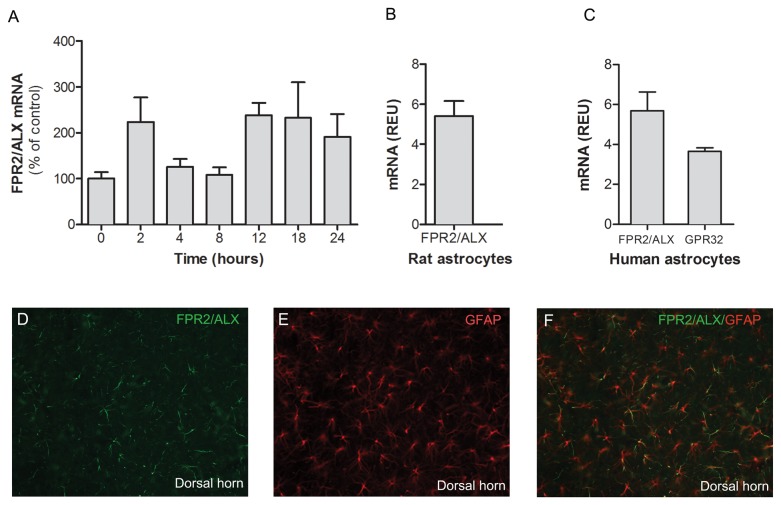
Figure 5. FPR2/ALX mRNA is present in the rat spinal cord and cultured spinal astrocytes.
Bar graphs showing the expression of (A) FPR2/ALX mRNA in the rat ipsilateral spinal cord plotted versus time following carrageenan injection to the hind paw, presented as a percent of mRNA levels in control (naïve) rat spinal cord. Each bar represents the mean ± S.E.M, n= 6-10. * represents a significant difference at p<0.05 as compared with naïve spinal cord. FPR2/ALX mRNA is expressed in the rat (B) and human astrocytes (C). GPR32 mRNA is expressed in human astrocytes (C). mRNA levels are expressed as relative units and each bar represents the mean ± S.E.M for three repeats. The immunohistochemical images show the expression of FPR2/ALX (D), the astrocyte marker GFAP (E) and the colocalization of FPR2/ALX and GFAP (F) in naïve rat lumbar spinal cord.
Figure 6
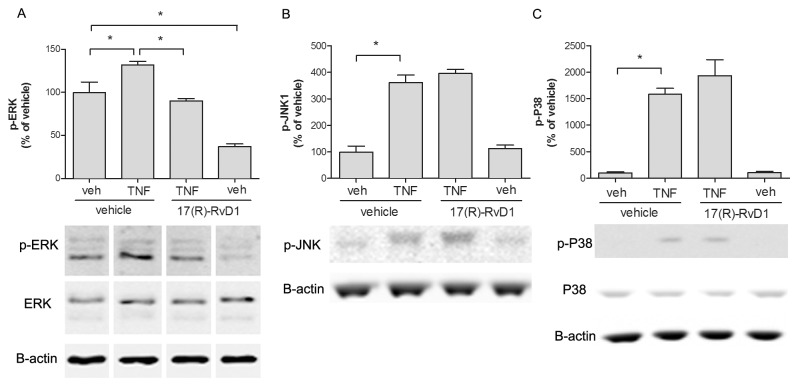
Figure 6. 17(R)-RvD1 reduced TNF-induced ERK activation in human primary astrocytes.
Bar graphs and representative western blots showing MAPK phosphorylation levels in control and TNF (50 ng/ml) stimulated cells. In astrocytes, 17(R)-RvD1 (265 nM) inhibited TNF-induced ERK (A), but not p38 (B) or JNK (C) phosphorylation. Each bar represents the mean ± S.E.M for three repeats. * represents p<0.05 for comparisons indicated in the figure.

References

    1. Milligan ED, Langer SJ, Sloane EM, He L, Wieseler-Frank J et al. (2005) Controlling pathological pain by adenovirally driven spinal production of the anti-inflammatory cytokine, interleukin-10. Eur J Neurosci 21: 2136-2148. doi:10.1111/j.1460-9568.2005.04057.x. PubMed: 15869510. - DOI - PubMed
    1. Svensson CI, Zattoni M, Serhan CN (2007) Lipoxins and aspirin-triggered lipoxin inhibit inflammatory pain processing. J Exp Med 204: 245-252. doi:10.1084/jem.20061826. PubMed: 17242163. - DOI - PMC - PubMed
    1. Vale ML, Marques JB, Moreira CA, Rocha FA, Ferreira SH et al. (2003) Antinociceptive effects of interleukin-4, -10, and -13 on the writhing response in mice and zymosan-induced knee joint incapacitation in rats. J Pharmacol Exp Ther 304: 102-108. doi:10.1124/jpet.102.038703. PubMed: 12490580. - DOI - PubMed
    1. Xu ZZ, Zhang L, Liu T, Park JY, Berta T et al. (2010) Resolvins RvE1 and RvD1 attenuate inflammatory pain via central and peripheral actions. Nat Med 16: 592-597. doi:10.1038/nm.2123. PubMed: 20383154. - DOI - PMC - PubMed
    1. Yu CG, Fairbanks CA, Wilcox GL, Yezierski RP (2003) Effects of agmatine, interleukin-10, and cyclosporin on spontaneous pain behavior after excitotoxic spinal cord injury in rats. J Pain 4: 129-140. doi:10.1054/jpai.2003.11. PubMed: 14622710. - DOI - PubMed

Publication types

MeSH terms