Forehead augmentation with a methyl methacrylate onlay implant using an injection-molding technique
- PMID: 24086816
- PMCID: PMC3785596
- DOI: 10.5999/aps.2013.40.5.597
Forehead augmentation with a methyl methacrylate onlay implant using an injection-molding technique
Abstract
Background: The forehead, which occupies about one third of the face, is one of the major determinants of a feminine or masculine look. Various methods have been used for the augmentation of the forehead using autologous fat grafts or alloplastic materials. Methylmethacrylate (MMA) is the most appropriate material for augmentation of the forehead, and we have used an injection-molding technique with MMA to achieve satisfactory results.
Methods: Under local anesthesia with intravenous (IV) sedation, an incision was made on the scalp and a meticulous and delicate subperiosteal dissection was then performed. MMA monomers and polymers were mixed, the dough was injected into the space created, and manual molding was performed along with direct inspection. This surgery was indicated for patients who wanted to correct an unattractive appearance by forehead augmentation. Every patient in this study visited our clinics 3 months after surgery to evaluate the results. We judged the postoperative results in terms of re-operation rates caused by the dissatisfaction of the patients and complications.
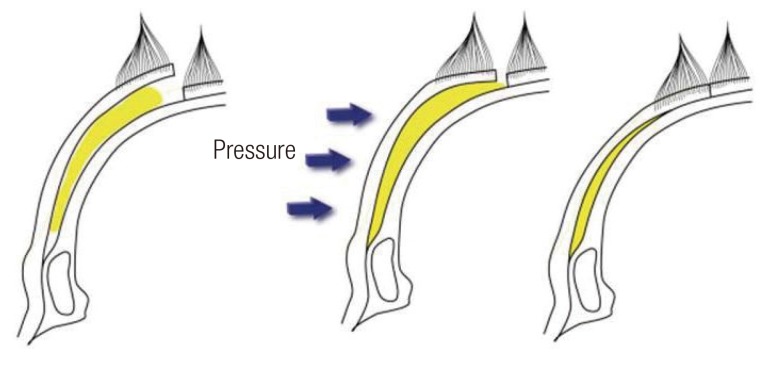
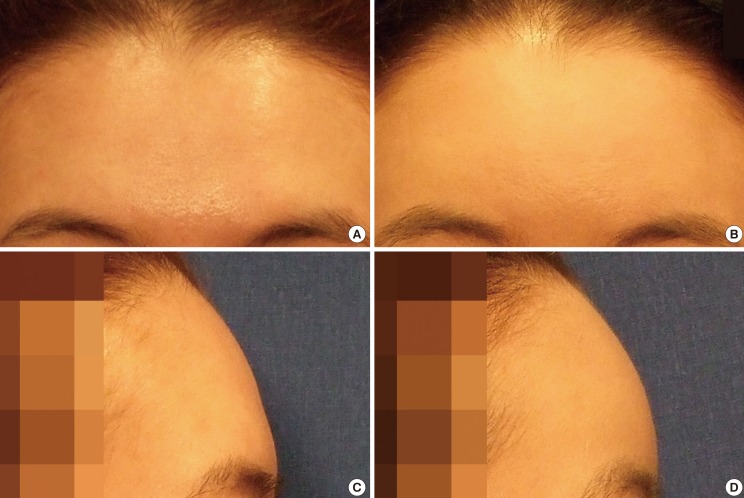
Results: During a 13-year period, 516 patients underwent forehead augmentation with MMA. With the injection-molding technique, the inner surface of the MMA implant is positioned close to the underlying frontal bone, which minimizes the gap between the implant and bone. The borders of the implant should be tapered sufficiently until no longer palpable or visible. Only 28 patients (5.4%) underwent a re-operation due to an undesirable postoperative appearance.
Conclusions: The injection-molding technique using MMA is a simple, safe, and ideal method for the augmentation of the forehead.
Keywords: Forehead; Methylmethacrylate; Surgery, plastic.
Conflict of interest statement
No potential conflict of interest relevant to this article was reported.
Figures

References
-
- Altman K. Facial feminization surgery: current state of the art. Int J Oral Maxillofac Surg. 2012;41:885–894. - PubMed
-
- Blum KS, Schneider SJ, Rosenthal AD. Methyl methacrylate cranioplasty in children: long-term results. Pediatr Neurosurg. 1997;26:33–35. - PubMed
-
- Gosain AK, Persing JA. Biomaterials in the face: benefits and risks. J Craniofac Surg. 1999;10:404–414. - PubMed
-
- Gonzalez Ulloa M, Stevens E. Implants in the face; a review of our experience in the subcutaneous use of methylmethacrylate. Plast Reconstr Surg. 1964;33:532–542. - PubMed
-
- Seo JD, You YJ, Ko RY, et al. Forehead augmentation with methylmethacrylate. J Korean Soc Aesthetic Plast Surg. 2001;7:135–139.
LinkOut - more resources
Full Text Sources
Other Literature Sources
Miscellaneous