


In and out: an analysis of epibiotic vs periplasmic bacterial predators
- PMID: 24088628
- PMCID: PMC3930308
- DOI: 10.1038/ismej.2013.164
In and out: an analysis of epibiotic vs periplasmic bacterial predators
Abstract
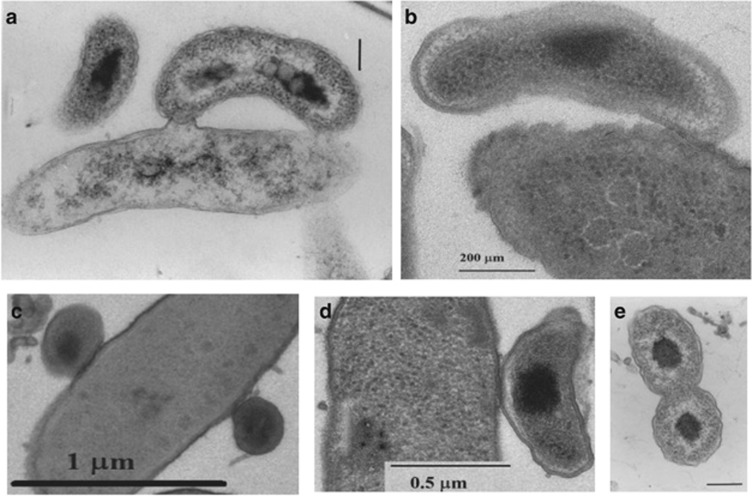
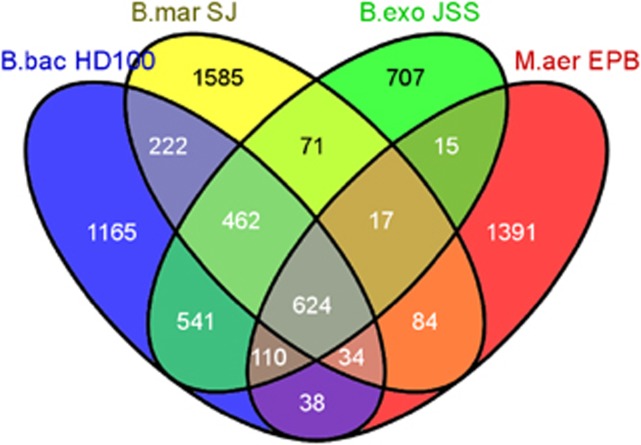
Bdellovibrio and like organisms (BALO) are obligate predators of Gram-negative bacteria, belonging to the α- and δ-proteobacteria. BALO prey using either a periplasmic or an epibiotic predatory strategy, but the genetic background underlying these phenotypes is not known. Here we compare the epibiotic Bdellovibrio exovorus and Micavibrio aeruginosavorus to the periplasmic B. bacteriovorus and Bacteriovorax marinus. Electron microscopy showed that M. aeruginosavorus, but not B. exovorus, can attach to prey cells in a non-polar manner through its longitudinal side. Both these predators were resistant to a surprisingly high number of antibiotic compounds, possibly via 26 and 19 antibiotic-resistance genes, respectively, most of them encoding efflux pumps. Comparative genomic analysis of all the BALOs revealed that epibiotic predators have a much smaller genome (ca. 2.5 Mbp) than the periplasmic predators (ca. 3.5 Mbp). Additionally, periplasmic predators have, on average, 888 more proteins, at least 60% more peptidases, and one more rRNA operon. Fifteen and 219 protein families were specific to the epibiotic and the periplasmic predators, respectively, the latter clearly forming the core of the periplasmic 'predatome', which is upregulated during the growth phase. Metabolic deficiencies of epibiotic genomes include the synthesis of inosine, riboflavin, vitamin B6 and the siderophore aerobactin. The phylogeny of the epibiotic predators suggests that they evolved by convergent evolution, with M. aeruginosavorus originating from a non-predatory ancestor while B. exovorus evolved from periplasmic predators by gene loss.
Figures
References
-
- Alami M, Lüke I, Deitermann S, Eisner G, Koch H-G, Brunner J, et al. Differential interactions between a twin-arginine signal peptide and its translocase in Escherichia coli. Mol Cell. 2003;12:937–946. - PubMed
-
- Alves JMP, Buck GA. Automated system for gene annotation and metabolic pathway reconstruction using general sequence databases. Chem Biodiv. 2007;4:2593–2602. - PubMed
-
- Barel G, Jurkevitch E. Analysis of phenotypic diversity among host-independent mutants of Bdellovibrio bacteriovorus 109J. Arch Microbiol. 2001;176:211–216. - PubMed
Publication types
MeSH terms
Substances
LinkOut - more resources
Full Text Sources
Other Literature Sources
Miscellaneous
