. 2013 Oct;5(10):725-40.
doi: 10.18632/aging.100603.

Age-related changes in microRNA levels in serum

Affiliations

Age-related changes in microRNA levels in serum

Nicole Noren Hooten et al. Aging (Albany NY). 2013 Oct.

Abstract

MicroRNAs (miRNAs) are small noncoding RNAs that post-transcriptionally regulate gene expression by targeting specific mRNAs. Altered expression of circulating miRNAs have been associated with age-related diseases including cancer and cardiovascular disease. Although we and others have found an age-dependent decrease in miRNA expression in peripheral blood mononuclear cells (PBMCs), little is known about the role of circulating miRNAs in human aging. Here, we examined miRNA expression in human serum from young (mean age 30 years) and old (mean age 64 years) individuals using next generation sequencing technology and real-time quantitative PCR. Of the miRNAs that we found to be present in serum, three were significantly decreased in 20 older individuals compared to 20 younger individuals: miR-151a-5p, miR-181a-5p and miR-1248. Consistent with our data in humans, these miRNAs are also present at lower levels in the serum of elderly rhesus monkeys. In humans, miR-1248 was found to regulate the expression of mRNAs involved in inflammatory pathways and miR-181a was found to correlate negatively with the pro-inflammatory cytokines IL-6 and TNFα and to correlate positively with the anti-inflammatory cytokines TGFβ and IL-10. These results suggest that circulating miRNAs may be a biological marker of aging and could also be important for regulating longevity. Identification of stable miRNA biomarkers in serum could have great potential as a noninvasive diagnostic tool as well as enhance our understanding of physiological changes that occur with age.


Conflict of interest statement

The authors of this manuscript have no conflict of interest to declare.

Figures
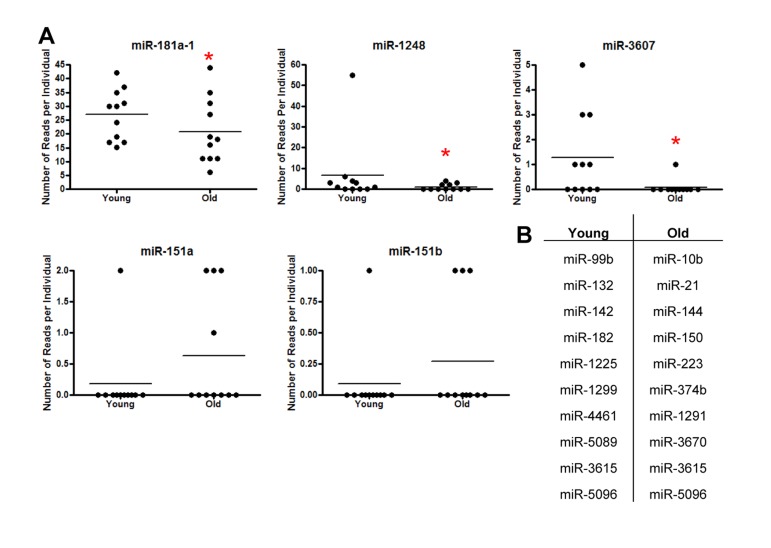
Figure 1
Figure 1. Identification of miRNAs in serum from young and old individuals
(A) Frequency of miRNA reads per individual using small RNA NGS from 11 young (~30 yr) and 11 old (~64 yr) individuals for miR-181a-1, miR-3607, miR-1248, miR-151a and miR-151b. Horizontal lines represent average number of reads. miR-181a, miR-1248 and miR-3607 were significantly downregulated in serum from old individuals using Poisson regression (miR-181a-1 P=0.03, miR-3607 P=0.01, miR-1248 P=4.9×10⁻⁹). (B) miRNAs identified that had only one read per individual.
Figure 2
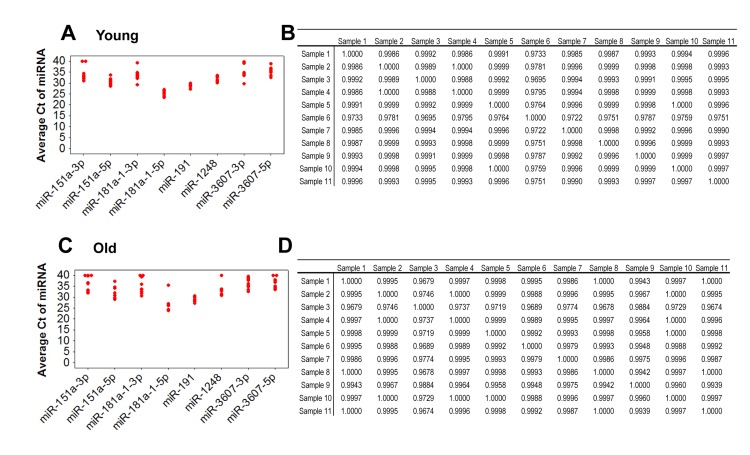
Figure 2. Comparison of expression variance of 8 miRNAs in 11 young and 11 old individuals by real-time RT-PCR
RNA isolated from serum was reverse transcribed and real-time RT-PCR was performed with miRNA specific primers. Data was normalized to miR-191. Ct values of each miRNA for each young (A) and old (C) participant. Ct values were used for analysis of the Pearson correlation coefficient of miRNA expression between young participant samples (B) and between old participant samples (D). R values are indicated and a value of 1 indicates perfect correlation.
Figure 3
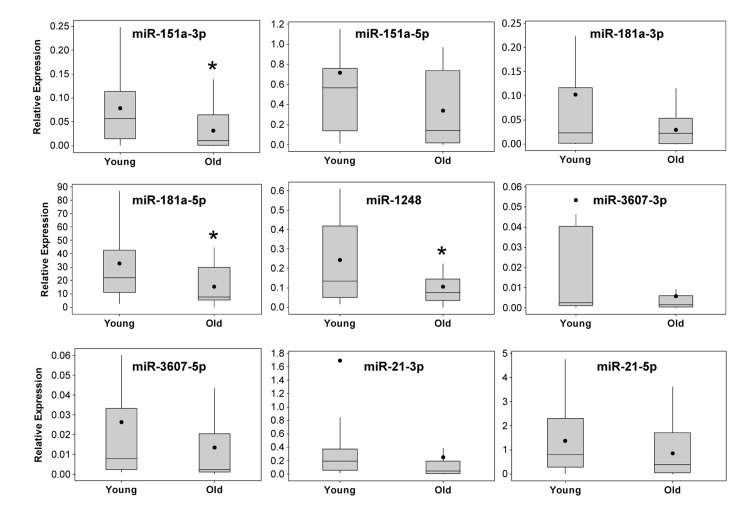
Figure 3. Real-time RT-PCR validation of miRNA expression in serum from young and old participants
The expression levels of miRNAs identified by sequencing analysis were validated in 20 young and 20 old participant serum samples (see Table 1 for demographic information) using real-time RT-PCR. Sequence specific primers for the indicated miRNAs were used and the data was normalized to miR-191. Box and whisker plots for each miRNA are shown. Whiskers represent ± the standard deviation, the box extends to upper and lower quartiles, lines represent the median and closed circles represent the mean. *P<0.05 comparing young and old by Student's t-test.
Figure 4
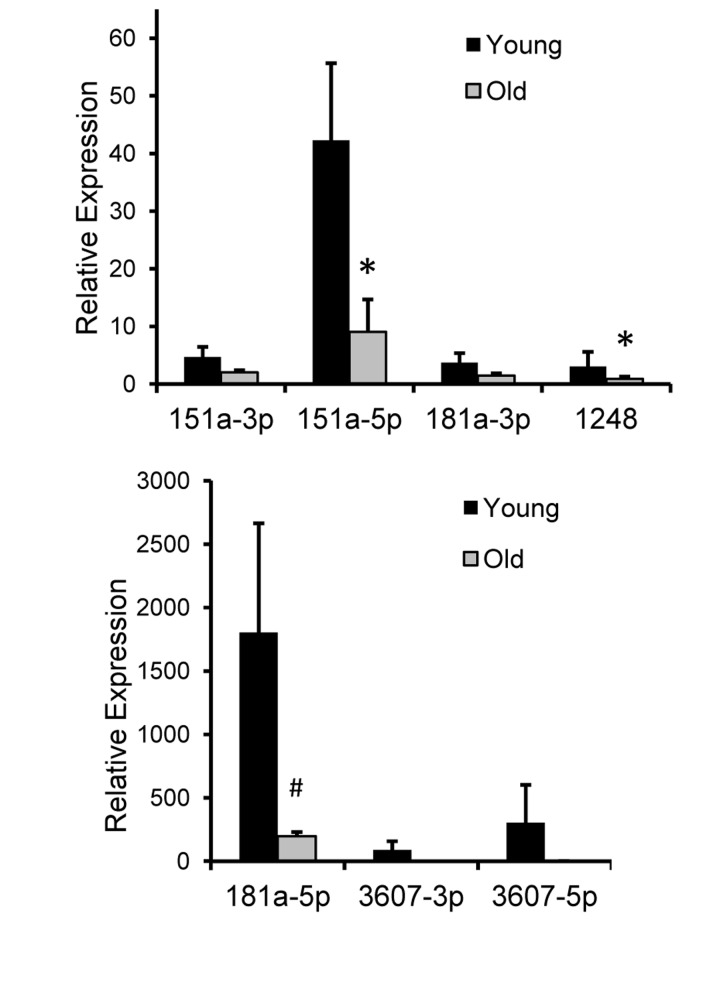
Figure 4. Relative expression of 7 miRNAs in rhesus monkey serum
RNA was isolated from serum from ten young male monkeys (mean age = 7.7 yrs) and ten old male monkeys (mean age = 21.7 yrs). Real-time RT-PCR was performed with miRNA specific primers and normalized to miR-191. The histogram represents the ±SEM. *P<0.05 and #P=0.09 using Student's t-test.
Figure 5
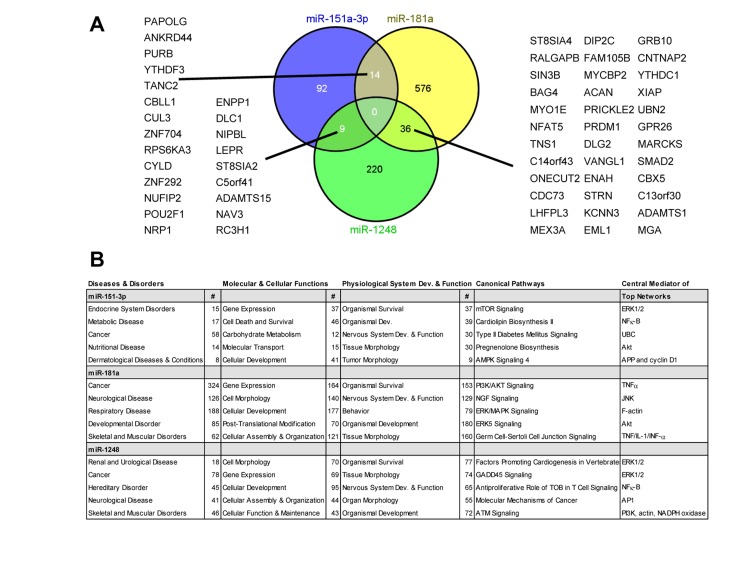
Figure 5. Predicted targets and pathways for the indicated age-associated miRNAs
Predicted targets for the 3 miRNAs were obtained using TargetScan software and the overlapping targets were visualized using a Venn diagram (A). The overlapping targets are indicated. (B) The predicted targets from TargetScan for each miRNA were used for Ingenuity Pathway Analysis. The top five pathways for each parameter are listed and where applicable the number of genes (#) for the particular pathway. For each parameter listed, P<0.05. Dev.=development.
Figure 6
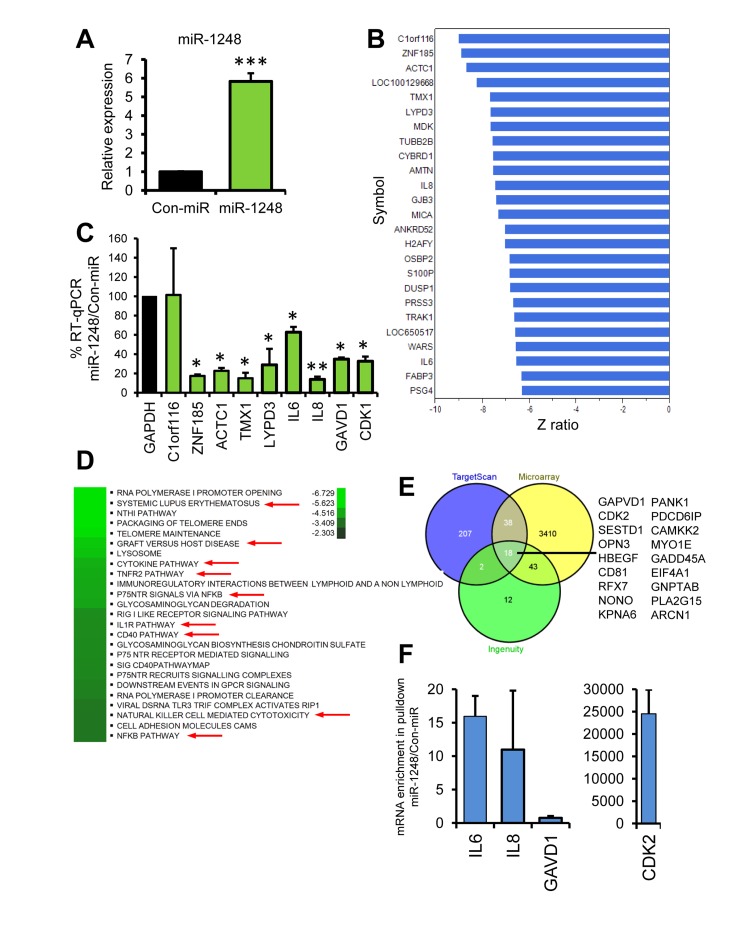
Figure 6. Pathway and Target analysis for miR-1248
(A) HeLa cells transfected with Con-miR or miR-1248 were analyzed 48 hrs after transfection for miR-1248 expression using real-time RT-PCR. Data was normalized to U6 expression and the histogram represents the mean + SEM from 3 different experiments. (B) Total RNA from (A) was analyzed using genome-wide Illumina microarrays. The top downregulated genes are listed and the corresponding numerical complete dataset is presented in Suppl. Table S1. (C) RT-qPCR validation of microarray results using mRNA-specific primer pairs. (D) Top canonical pathways for genes downregulated by miR-1248 overexpression are shown on the heatmap. Red arrows indicate inflammatory and cytokine pathways. (E) Venn diagram of putative targets from TargetScan, Ingenuity and miR-1248 microarray analysis. Overlapping mRNAs are listed. (F Biotinylated miR-1248 or Con-miR were transfected into HeLa cells and were precipitated using streptavidin beads. Associated mRNAs were isolated and gene-specific primers were used for RT-qPCR.

References

    1. Tacutu R, Craig T, Budovsky A, Wuttke D, Lehmann G, Taranukha D, Costa J, Fraifeld VE, de Magalhaes JP. Human Ageing Genomic Resources: integrated databases and tools for the biology and genetics of ageing. Nucleic Acids Res. 2013;41(Database issue):D1027–1033. - PMC - PubMed
    1. Smith-Vikos T, Slack FJ. MicroRNAs and their roles in aging. Journal of cell science. 2012;125:7–17. - PMC - PubMed
    1. Jung HJ, Suh Y. MicroRNA in Aging: From Discovery to Biology. Current genomics. 2012;13:548–557. - PMC - PubMed
    1. Leung AK, Sharp PA. MicroRNA functions in stress responses. Molecular cell. 2010;40:205–215. - PMC - PubMed
    1. Garzon R, Calin GA, Croce CM. MicroRNAs in Cancer. Annual review of medicine. 2009;60:167–179. - PubMed

Publication types