


Kidney xenotransplantation
- PMID: 24088952
- PMCID: PMC3946635
- DOI: 10.1038/ki.2013.381
Kidney xenotransplantation
Abstract
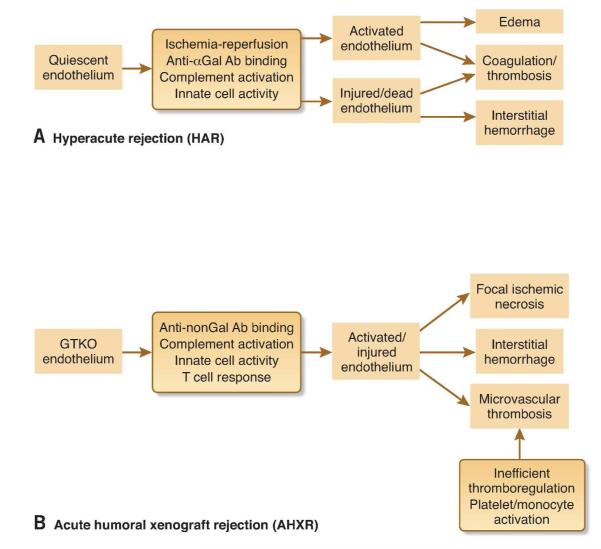
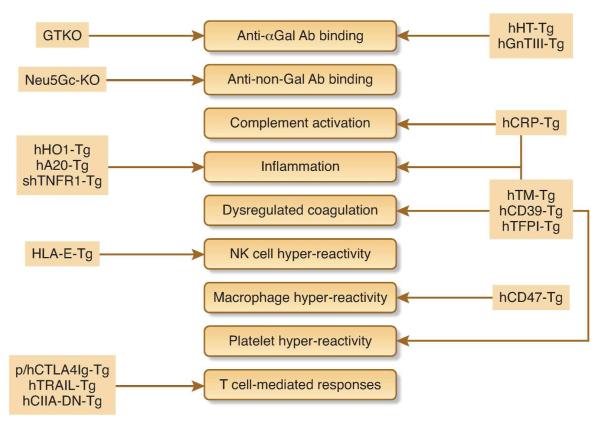
Xenotransplantation using pigs as donors offers the possibility of eliminating the chronic shortage of donor kidneys, but there are several obstacles to be overcome before this goal can be achieved. Preclinical studies have shown that, while porcine renal xenografts are broadly compatible physiologically, they provoke a complex rejection process involving preformed and elicited antibodies, heightened innate immune cell reactivity, dysregulated coagulation, and a strong T cell-mediated adaptive response. Furthermore, the susceptibility of the xenograft to proinflammatory and procoagulant stimuli is probably increased by cross-species molecular defects in regulatory pathways. To balance these disadvantages, xenotransplantation has at its disposal a unique tool to address particular rejection mechanisms and incompatibilities: genetic modification of the donor. This review focuses on the pathophysiology of porcine renal xenograft rejection, and on the significant genetic, pharmacological, and technical progress that has been made to prolong xenograft survival.
Figures
References
-
- Pondrom S. The AJT Report: news and issues that affect organ and tissue transplantation. Am J Transplant. 2012 Oct;12(10):2565–6. - PubMed
-
- Bengtsson A, Svalander CT, Molne J, Rydberg L, Breimer ME. Extracorporeal (“ex vivo”) connection of pig kidneys to humans. III. Studies of plasma complement activation and complement deposition in the kidney tissue. Xenotransplantation. 1998 Aug;5(3):176–83. - PubMed
-
- Ekser B, Ezzelarab M, Hara H, van der Windt DJ, Wijkstrom M, Bottino R, et al. Clinical xenotransplantation: the next medical revolution? Lancet. 2012 Feb 18;379(9816):672–83. - PubMed
-
- Yamada K, Yazawa K, Shimizu A, Iwanaga T, Hisashi Y, Nuhn M, et al. Marked prolongation of porcine renal xenograft survival in baboons through the use of alpha1,3-galactosyltransferase gene-knockout donors and the cotransplantation of vascularized thymic tissue. Nat Med. 2005 Jan;11(1):32–4. - PubMed
Publication types
MeSH terms
Substances
Grants and funding
LinkOut - more resources
Full Text Sources
Other Literature Sources
Medical
