


Odour receptors and neurons for DEET and new insect repellents
- PMID: 24089210
- PMCID: PMC3927149
- DOI: 10.1038/nature12594
Odour receptors and neurons for DEET and new insect repellents
Retraction in
-
Retraction: Odour receptors and neurons for DEET and new insect repellents.Nature. 2016 Aug 25;536(7617):488. doi: 10.1038/nature18613. Epub 2016 Jun 22. Nature. 2016. PMID: 27350243 Free PMC article. No abstract available.
Abstract
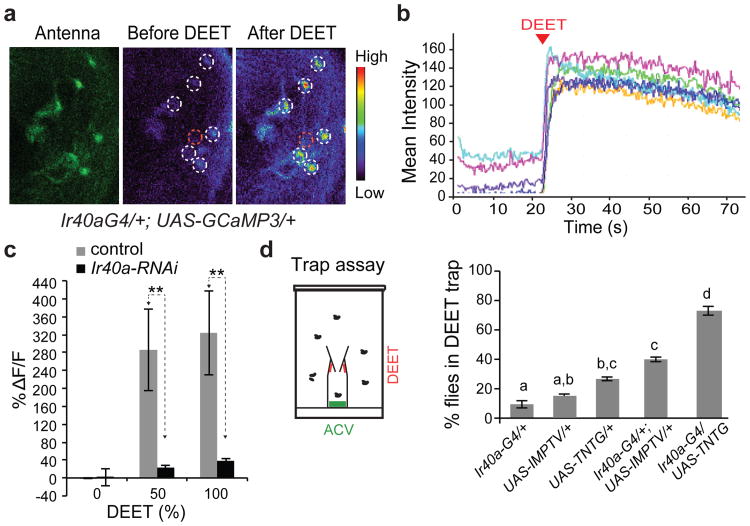
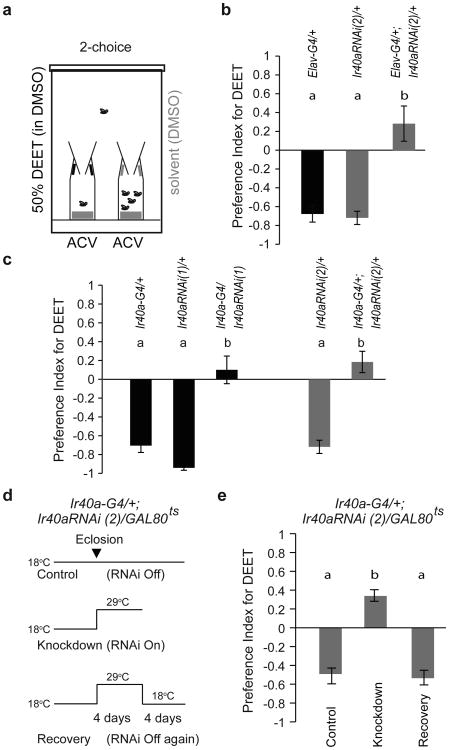
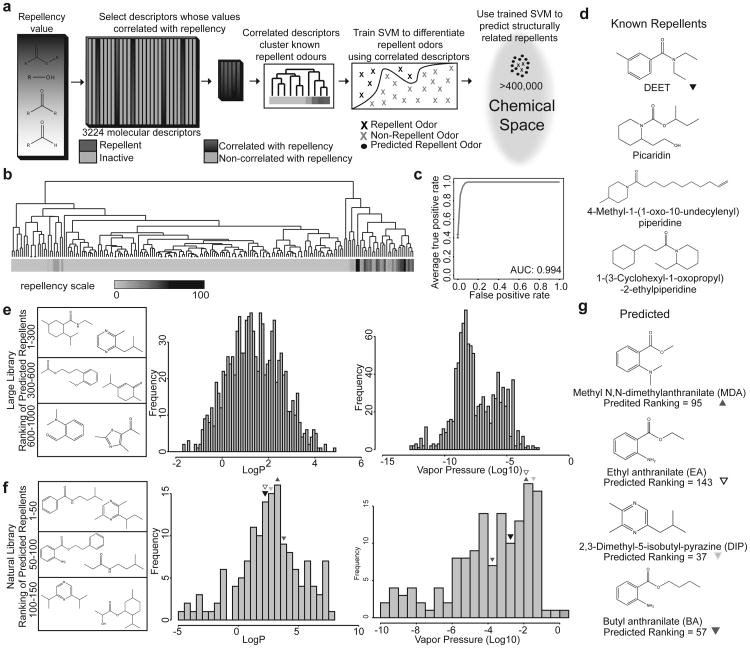
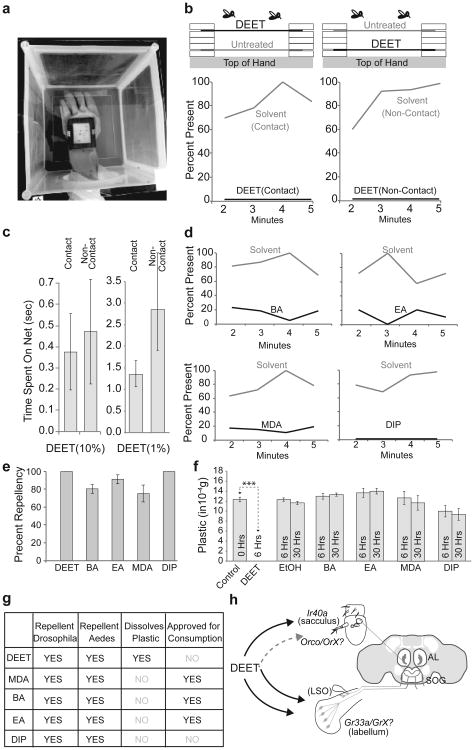
There are major impediments to finding improved DEET alternatives because the receptors causing olfactory repellency are unknown, and new chemicals require exorbitant costs to determine safety for human use. Here we identify DEET-sensitive neurons in a pit-like structure in the Drosophila melanogaster antenna called the sacculus. They express a highly conserved receptor, Ir40a, and flies in which these neurons are silenced or Ir40a is knocked down lose avoidance to DEET. We used a computational structure-activity screen of >400,000 compounds that identified >100 natural compounds as candidate repellents. We tested several and found that most activate Ir40a(+) neurons and are repellents for Drosophila. These compounds are also strong repellents for mosquitoes. The candidates contain chemicals that do not dissolve plastic, are affordable and smell mildly like grapes, with three considered safe in human foods. Our findings pave the way to discover new generations of repellents that will help fight deadly insect-borne diseases worldwide.
Figures


Comment in
-
Ir40a neurons are not DEET detectors.Nature. 2016 Jun 23;534(7608):E5-7. doi: 10.1038/nature18321. Nature. 2016. PMID: 27337300 No abstract available.
References
-
- Krajick K. Medical entomology - Keeping the bugs at bay. Science. 2006;313:36–38. - PubMed
-
- Reeder NL, Ganz PJ, Carlson JR, Saunders CW. Isolation of a DEET-insensitive mutant of Drosophila melanogaster (Diptera: Drosophilidae) J Econ Entomol. 2001;94:1584–1588. - PubMed
-
- Klun JA, et al. Comparative resistance of Anopheles albimanus and Aedes aegypti to N,N-diethyl-3-methylbenzamide (Deet) and 2-methylpiperidinyl-3-cyclohexen-1-carboxamide (AI3-37220) in laboratory human-volunteer repellent assays. J Med Entomol. 2004;41:418–422. - PubMed
Publication types
MeSH terms
Substances
Grants and funding
LinkOut - more resources
Full Text Sources
Other Literature Sources
Molecular Biology Databases
