


Hypoglycemia associated with hospitalization and adverse events in older people: population-based cohort study
- PMID: 24089536
- PMCID: PMC3816904
- DOI: 10.2337/dc13-0523
Hypoglycemia associated with hospitalization and adverse events in older people: population-based cohort study
Abstract
Objective: Little is known about the prognostic impact of hypoglycemia associated with hospitalization. We hypothesized that hospitalized hypoglycemia would be associated with increased long-term morbidity and mortality, irrespective of diabetes status.
Research design and methods: We undertook a cohort study using linked administrative health care and laboratory databases in Alberta, Canada. From 1 January 2004 to 31 March 2009, we included all outpatients 66 years of age and older who had at least one serum creatinine and one A1C measured. To examine the independent association between hospitalized hypoglycemia and all-cause mortality, we used time-varying Cox proportional hazards (adjusted hazard ratio [aHR]), and for all-cause hospitalizations, we used Poisson regression (adjusted incidence rate ratio [aIRR]).
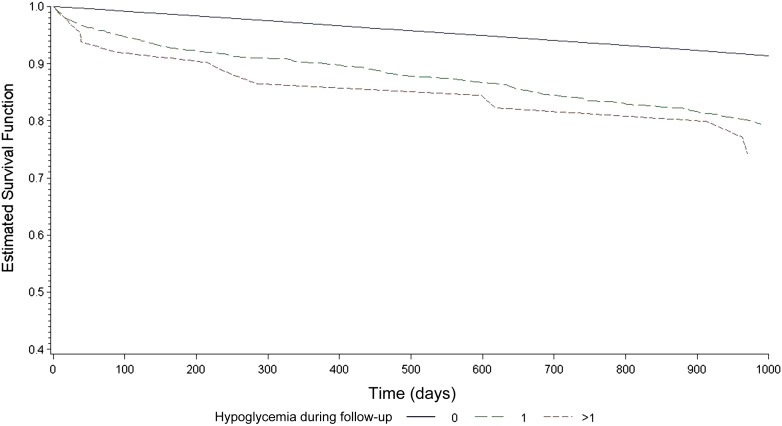
Results: The cohort included 85,810 patients: mean age 75 years, 51% female, and 50% had diabetes defined by administrative data. Overall, 440 patients (0.5%) had severe hypoglycemia associated with hospitalization and most (93%) had diabetes. During 4 years of follow-up, 16,320 (19%) patients died. Hospitalized hypoglycemia was independently associated with increased mortality (60 vs. 19% mortality for no hypoglycemia; aHR 2.55 [95% CI 2.25-2.88]), and this increased in a dose-dependent manner (aHR no hypoglycemia = 1.0 vs. one episode = 2.49 vs. one or more = 3.78, P trend <0.001). Hospitalized hypoglycemia was also independently associated with subsequent hospitalizations (aIRR no hypoglycemia = 1.0 vs. one episode = 1.90 vs. one or more = 2.61, P trend <0.001) and recurrent hypoglycemia (aHR no hypoglycemia = 1.0 vs. one episode = 2.45 vs. one or more = 9.66, P trend <0.001).
Conclusions: Older people who have an episode of hospitalized hypoglycemia are easily identified and at substantially increased risk of morbidity and mortality.
Figures
References
-
- Service FJ. Hypoglycemic disorders. N Engl J Med 1995;332:1144–1152 - PubMed
-
- Cryer PE, Axelrod L, Grossman AB, et al. Endocrine Society Evaluation and management of adult hypoglycemic disorders: an Endocrine Society Clinical Practice Guideline. J Clin Endocrinol Metab 2009;94:709–728 - PubMed
-
- Wei M, Gibbons LW, Mitchell TL, Kampert JB, Stern MP, Blair SN. Low fasting plasma glucose level as a predictor of cardiovascular disease and all-cause mortality. Circulation 2000;101:2047–2052 - PubMed
Publication types
MeSH terms
LinkOut - more resources
Full Text Sources
Other Literature Sources
Medical
