Distribution and clinical correlates of viral and host genotypes in Chinese patients with chronic hepatitis C virus infection
- PMID: 24090188
- PMCID: PMC4272577
- DOI: 10.1111/jgh.12398
Distribution and clinical correlates of viral and host genotypes in Chinese patients with chronic hepatitis C virus infection
Abstract
Background and aim: Chronic hepatitis C virus (HCV) infection is relatively frequent in China. This study investigated the clinical, demographic, and viral and host genetic characteristics that may influence disease manifestations and clinical management.
Methods: In this cross-sectional observational study, treatment-naïve Han ethnic adults with recently confirmed chronic HCV infection were enrolled at 28 hospitals across China. HCV genotype and host interleukin 28B (IL28B) genotypes were determined and compared with patient demographic parameters and medical status.
Results: Among the 997 HCV-positive patients analyzed, 56.8% were infected with HCV genotype 1b, followed in prevalence by genotypes 2, 3, and 6, with substantial regional variation. Overall, 84.1% of patients were IL28B genotype CC (rs12979860), with little regional variation. Cirrhosis was reported in 10.1% of patients and was significantly associated with hepatitis B virus coinfection, low HCV viral load, low serum alanine aminotransferase, high serum aspartate aminotransferase, diabetes, and high pickled food consumption. Medical procedures were common transmission risk factors; however, lifestyle-associated risk factors, including intravenous drug abuse and tattoos or piercings, were more common in patients with HCV genotype 3 or 6.
Conclusions: Most HCV-infected Han Chinese patients were IL28B genotype CC (rs12979860). HCV genotypes varied by geographic region, and disease characteristics differed according to HCV genotype. Relatively frequent detection of advanced liver disease may reflect limitations on access to antiviral therapy, and suggests that greater awareness of factors that influence HCV-associated disease may help avoid clinical complications and improve patient outcomes.
Keywords: China; HPV; IL28B; cirrhosis; epidemiology; natural history.
© 2013 The Authors. Journal of Gastroenterology and Hepatology published by Journal of Gastroenterology and Hepatology Foundation and Wiley Publishing and Wiley Publishing Asia Pty Ltd.
Figures
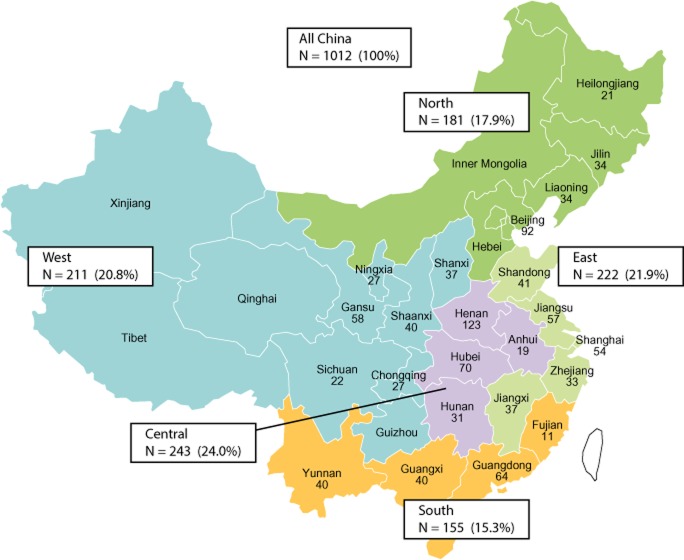
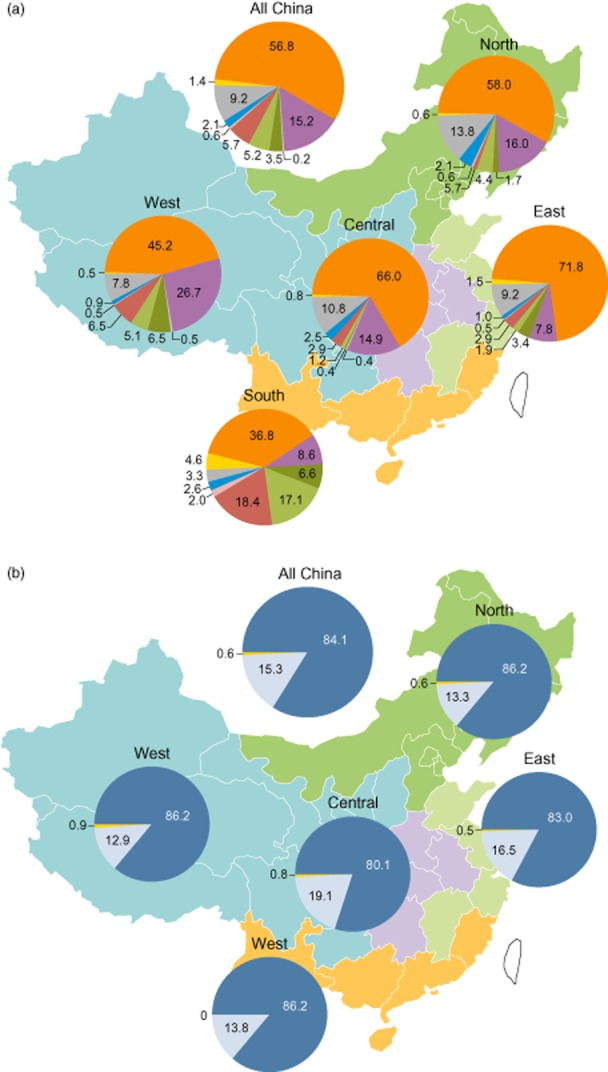
 , 1b;
, 1b;  , 2b;
, 2b;  , 3b;
, 3b;  , 6c;
, 6c;  , 1a;
, 1a;  , 2a or 2c;
  , 3a;
, 3a;  , 6a or 6b;
  , multiple genotypes;
  , subtype unidentifiable. IL28B genotype rs12979860:
  , CC;
, CC;  , CT;
, CT;  , TT.
, TT.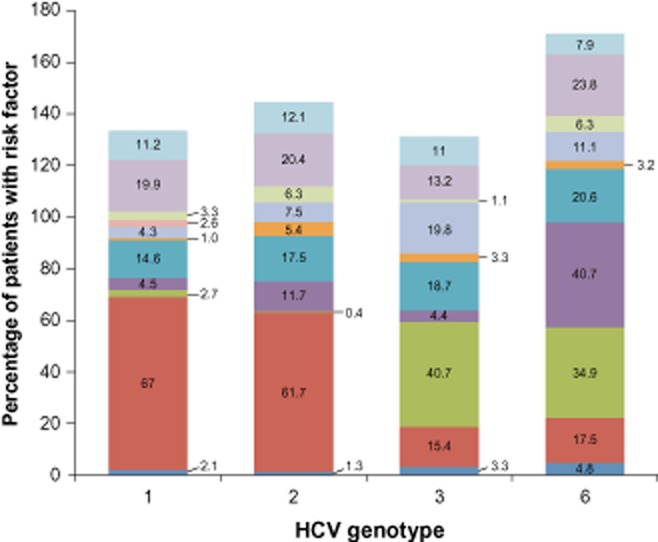
 , other;
  , surgery, organ transplant;
  , interventional exams and treatments;
  , dialysis;
  , tattoos, piercings;
  , long-term HCV exposure;
  , dental treatment;
  , IV infusion;
  , IV drug abuse;
  , blood transfusion;
  , sex.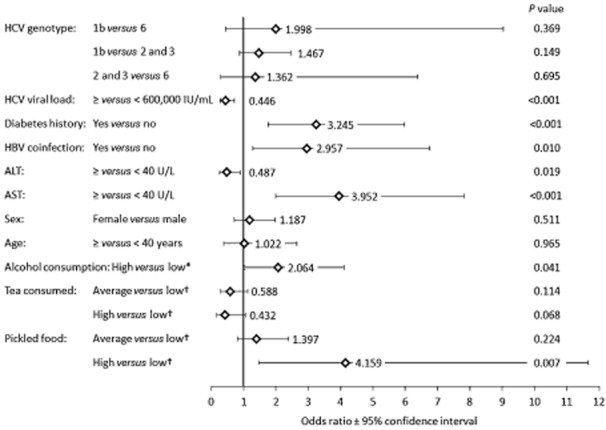
References
-
- Sievert W, Altraif I, Razavi HA, et al. A systematic review of hepatitis C virus epidemiology in Asia, Australia and Egypt. Liver Int. 2011;31(Suppl. 2):61–80. - PubMed
-
- Chen YD, Liu MY, Yu WL, et al. Hepatitis C virus infections and genotypes in China. Hepatobiliary Pancreat. Dis. Int. 2002;1:194–201. - PubMed
-
- Jacobson IM, McHutchison JG, Dusheiko G, et al. Telaprevir for previously untreated chronic hepatitis C virus infection. N. Engl. J. Med. 2011;364:2405–2416. - PubMed
Publication types
MeSH terms
Substances
LinkOut - more resources
Full Text Sources
Other Literature Sources