. 2014 Apr:44:41-9.
doi: 10.1016/j.reprotox.2013.09.005. Epub 2013 Sep 30.

Prepubertal exposure to arsenic(III) suppresses circulating insulin-like growth factor-1 (IGF-1) delaying sexual maturation in female rats

Affiliations

Prepubertal exposure to arsenic(III) suppresses circulating insulin-like growth factor-1 (IGF-1) delaying sexual maturation in female rats

Michael P Reilly et al. Reprod Toxicol. 2014 Apr.

Abstract

Arsenic (As) is a prevalent environmental toxin readily accessible for human consumption and has been identified as an endocrine disruptor. However, it is not known what impact As has on female sexual maturation. Therefore, in the present study, we investigated the effects of prepubertal exposure on mammary gland development and pubertal onset in female rats. Results showed that prepubertal exposure to 10 mg/kg of arsenite (As(III)) delayed vaginal opening (VO) and prepubertal mammary gland maturation. We determined that As accumulates in the liver, disrupts hepatocyte function and suppresses serum levels of the puberty related hormone insulin-like growth factor 1 (IGF-1) in prepubertal animals. Overall, this is the first study to show that prepubertal exposure to As(III) acts peripherally to suppress circulating levels of IGF-1 resulting in delayed sexual maturation. Furthermore, this study identifies a critical window of increased susceptibility to As(III) that may have a lasting impact on female reproductive function.

Keywords: Arsenic; Arsenite; Female puberty; Insulin-like growth factor-1 (IGF-1); Mammary gland development; Pubertal delay; Reproductive toxicity.


Figures

Figure 1
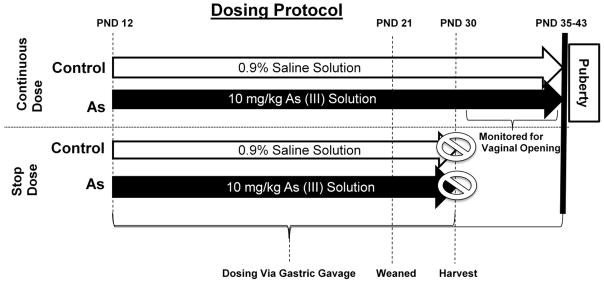
Figure 1. Model depicting the experimental dosing protocol
In short, the continous dose group was exposed via gastric gavage to either saline or 10mg/kg of As(III) starting at post natal day (PND) day 12 until vaginal opening. Stop dose group was dosed until PND 30, at which time tissue and serum was collected for analysis.
Figure 2
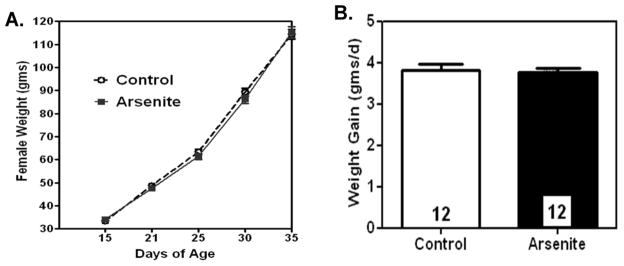
Figure 2. Prepubertal exposure to As(III) did not effect somatic growth
Overall, 10mg/kg of As(III) did not alter developmental growth throughout the study, nor did it have any effect on daily weight gain compared to saline treated females. A.) Line graph represents the mean (±SEM) weight in grams (g) at specific days of pubertal growth in arsenite (As(III)) and control (saline) treated females. Control; N=20 for each day. Arsenite; N= 15 for each day. B.) Bar graph depicts the mean (±SEM) daily weight in grams in arsenite and control treated females. N=12 in each group.
Figure 3
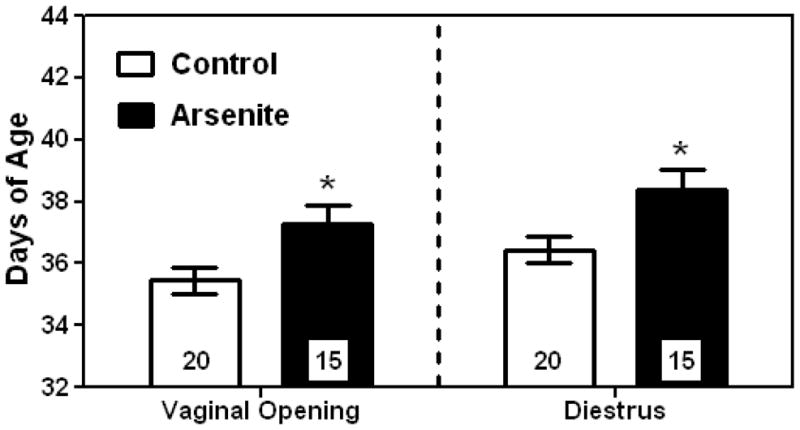
Figure 3. Prepubertal exposure to As(III) delays pubertal onset
Exposure to 10mg/kg of As(III) significantly (p <0.05) delayed the onset of female puberty indicated by a delay in vaginal opening (VO) and first diestrus (D1). The panel on the left represents the mean (±SEM) age in days at VO for the two treatment groups. The panel on the right represents the mean (±SEM) age in days at D1 for each group. *= P< 0.05; Number of females per group are within bars.
Figure 4
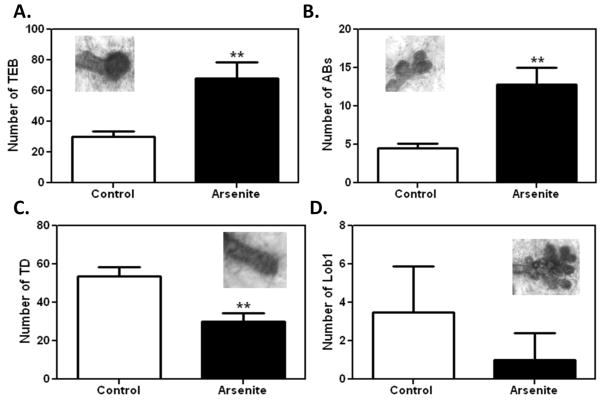
Figure 4. Morphological assessment of altered mammary gland growth due to prepubertal As(III) exposure at 30 days of age
A.) As(III) -treated females had a significantly higher (p<0.01) mean (±SEM) number of TEB compared to saline treated controls. B.) As(III) exposed prepubertal mammary glands had significantly more (p<0.01) mean (±SEM) AB ductal structures vs. controls. C.) As(III) exposure resulted in significantly lower (p <0.01) number of TD (±SEM) structures vs. controls. D.) As(III)-treated females had a reduced mean (±SEM) number of Lob1 structures in prepubertal mammary gland vs. controls. Representive images of each structure are included within each graph. N= 4 per group, same animals were assessed for all 4 structures. **p<0.01.
Figure 5
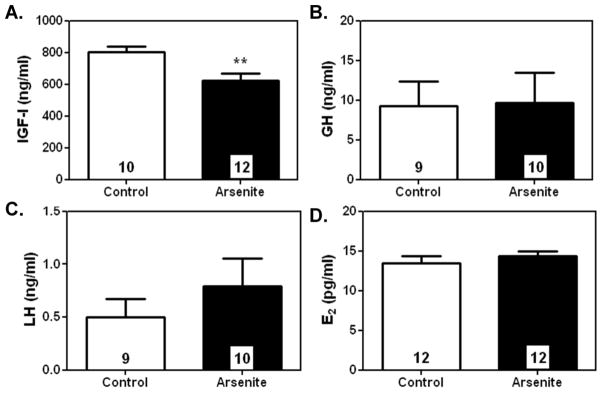
Figure 5. The effects of
As(III) exposure on reproductive hormonal secretion at 30-days of age. A.) Prepubertal exposure to 10mg/kg of As(III) significantly (p <0.01) suppressed mean (±SEM) serum levels of IGF-1 at 30 days of age compared to controls. However, AsIII exposure did not alter mean (±SEM) serum levels of B.) GH, C.) LH or D.) E2 compared to saline treated controls. **p<0.01. Number of animals per group is within each bar.
Figure 6
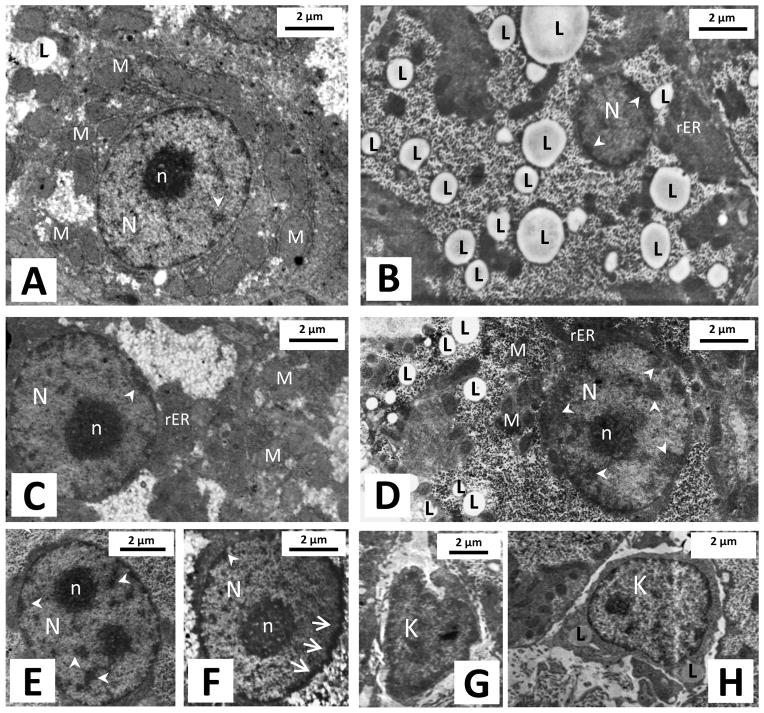
Figure 6. Histological differences observed in hepatocytes at 30 days of age
Representative TEM images showing hepatocytes in livers from prepubertal saline treated (A, C and G) and As (III)- treated females (B, D, E, F and H). Observable differences were noted in hepatocytes from As(III)–treated females including: increased intracellular lipid concentration (B and D); heterochromatin condensation (B, D and E) seen scattered throughout and densely along the periphery of the nucleus; and irregularity in their nuclear shape (F). In addition, liver of As(III)-treated animals contained a high concentration of engourged Kupffer cells containing lipid vacuoles (H) compared to controls (G). Number of livers was 4 in each group. N= Nucleus, n= nucleolus, L= Lipid droplet, M= Mitochondria, rER= Rough endoplasmic reticulum, K = Kupffer cell; arrows indicate irregularity in nuclear membrane, small arrow heads indicated heterochromatin.

References

    1. Tchounwou PB, Wilson B, Ishaque A. Important considerations in the development of public health advisories for arsenic and arsenic-containing compounds in drinking water. Rev Environ Health. 1999;14:211–29. - PubMed
    1. USEPA. Technical Fact Sheet: Final Rule for Arsenic in Drinking Water. EPA; 2001. 815-F-00-016.
    1. Focazio MJ, Welch AH, Watkins SA, Helsel DR, Horn DR, Horn MA. A Retrospective Analysis on the Occuurence of Arsenic in Ground-water Resources of the Uninted States and Limitations in Drinking-water Resources of the United States and Limitations in Drinking-water-supply Characterizations. US Geological Survey Water-Resources Investigation Report. 1999:21. 99-4279.
    1. NRC. Arsenic in Drinking Water: 2001 Update. National Academy Press; Washington DC: 2001.
    1. Smith AH, Lopipero PA, Bates MN, Steinmaus CM. Public health. Arsenic epidemiology and drinking water standards. Science. 2002;296:2145–6. - PubMed

Publication types

MeSH terms

LinkOut - more resources