


Filopodia-like actin cables position nuclei in association with perinuclear actin in Drosophila nurse cells
- PMID: 24091012
- PMCID: PMC3791400
- DOI: 10.1016/j.devcel.2013.08.014
Filopodia-like actin cables position nuclei in association with perinuclear actin in Drosophila nurse cells
Abstract
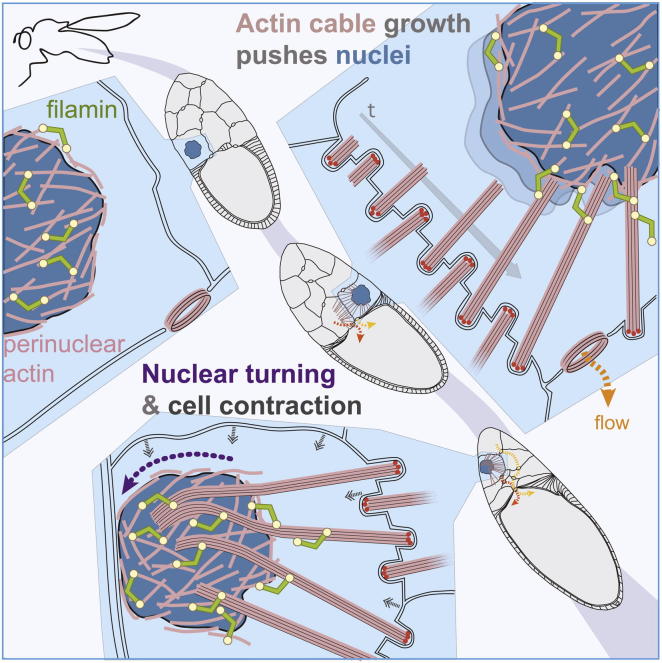
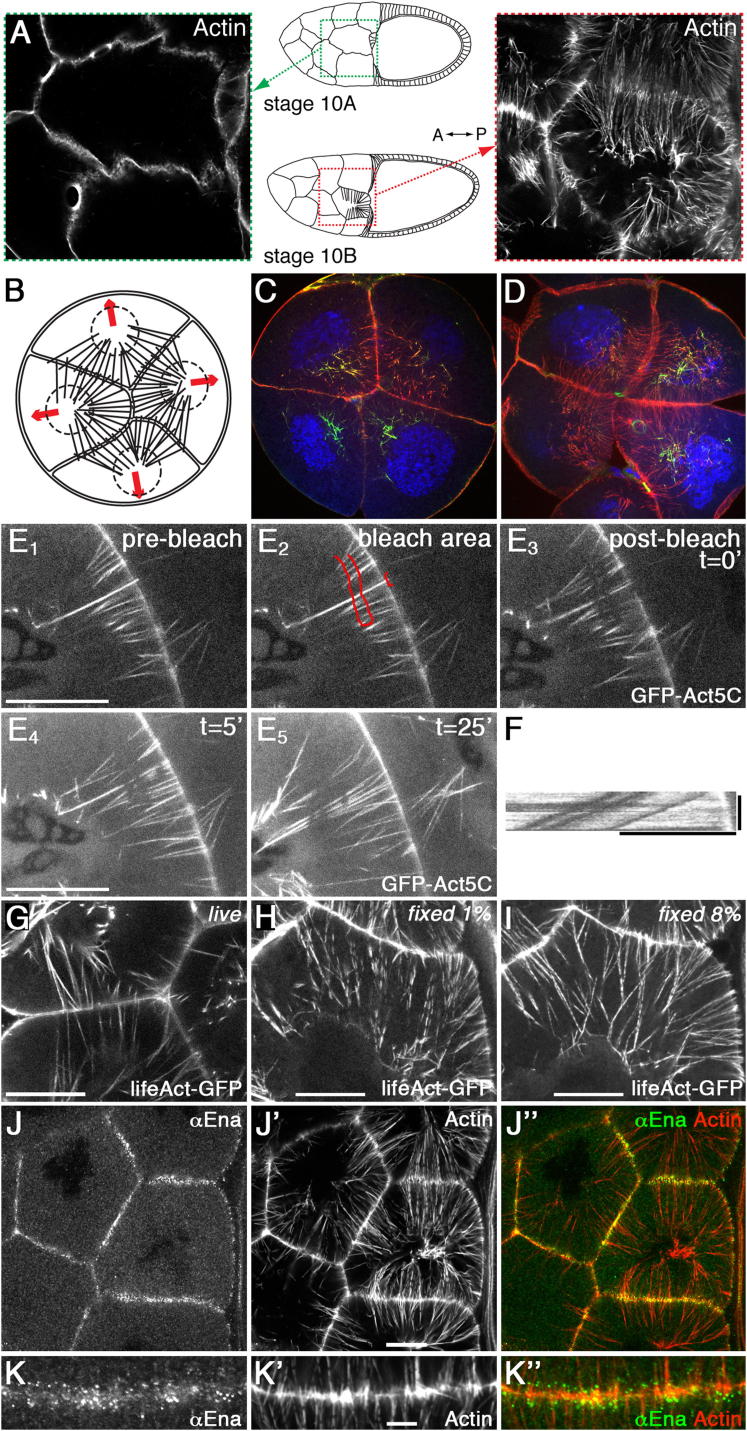
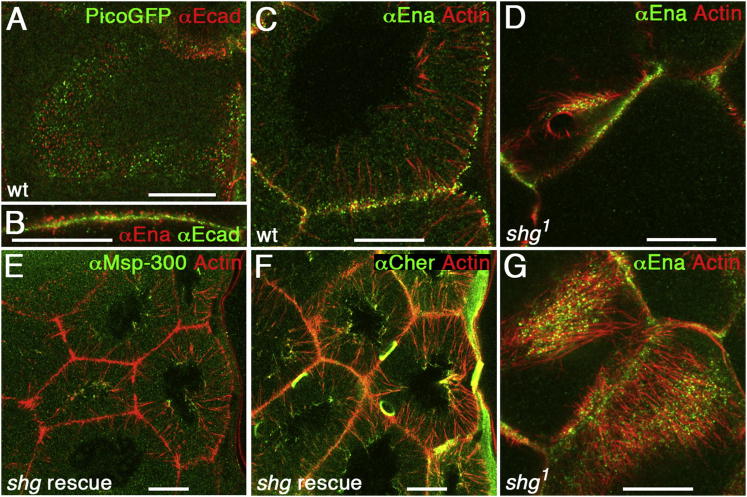
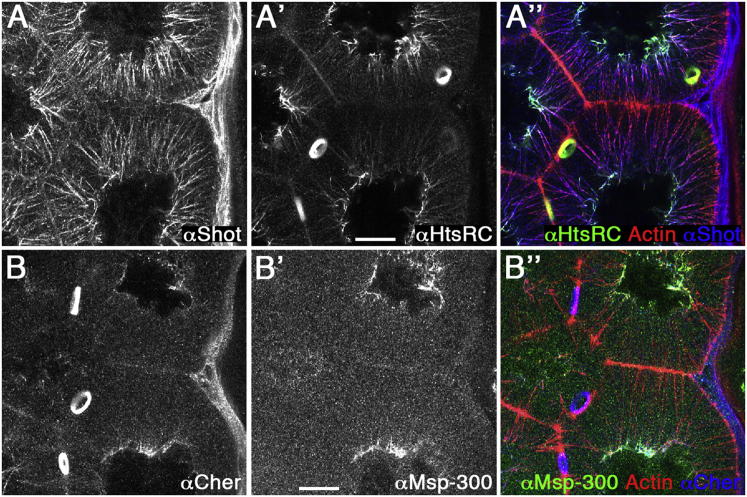
Controlling the position of the nucleus is vital for a number of cellular processes from yeast to humans. In Drosophila nurse cells, nuclear positioning is crucial during dumping, when nurse cells contract and expel their contents into the oocyte. We provide evidence that in nurse cells, continuous filopodia-like actin cables, growing from the plasma membrane and extending to the nucleus, achieve nuclear positioning. These actin cables move nuclei away from ring canals. When nurse cells contract, actin cables associate laterally with the nuclei, in some cases inducing nuclear turning so that actin cables become partially wound around the nuclei. Our data suggest that a perinuclear actin meshwork connects actin cables to nuclei via actin-crosslinking proteins such as the filamin Cheerio. We provide a revised model for how actin structures position nuclei in nurse cells, employing evolutionary conserved machinery.
Copyright © 2013 The Authors. Published by Elsevier Inc. All rights reserved.
Figures

References
-
- Burke B., Roux K.J. Nuclei take a position: managing nuclear location. Dev. Cell. 2009;17:587–597. - PubMed
-
- Caussinus E., Kanca O., Affolter M. Fluorescent fusion protein knockout mediated by anti-GFP nanobody. Nat. Struct. Mol. Biol. 2012;19:117–121. - PubMed
-
- Cliffe A., Poukkula M., Rørth P. Culturing Drosophila egg chambers and imaging border cell migration. Nat. Protoc. 2007 Published online July 23, 2007.
Publication types
MeSH terms
Substances
Grants and funding
LinkOut - more resources
Full Text Sources
Other Literature Sources
Molecular Biology Databases
Miscellaneous
