


Association between tuberculin skin test result and clinical presentation of tuberculosis disease
- PMID: 24093965
- PMCID: PMC3851915
- DOI: 10.1186/1471-2334-13-460
Association between tuberculin skin test result and clinical presentation of tuberculosis disease
Abstract
Background: The tuberculin skin test (TST) is used to test for latent tuberculosis (TB) infection and support the diagnosis of active TB. However, little is known about the relationship between the TST result and the clinical presentation of TB disease.
Methods: We analyzed US TB surveillance data, 1993-2010, and used multinomial logistic regression to calculate the association between TST result (0-4 mm [negative], 5-9 mm, 10-14 mm, and ≥ 15 mm) and clinical presentation of disease (miliary, combined pulmonary and extrapulmonary, extrapulmonary only, non-cavitary pulmonary, and cavitary pulmonary). For persons with pulmonary disease, multivariate logistic regression was used to calculate the odds of having acid-fast bacilli (AFB) positive sputum.
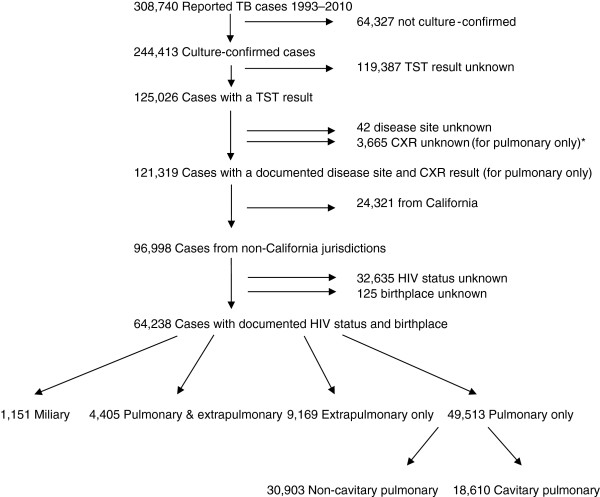
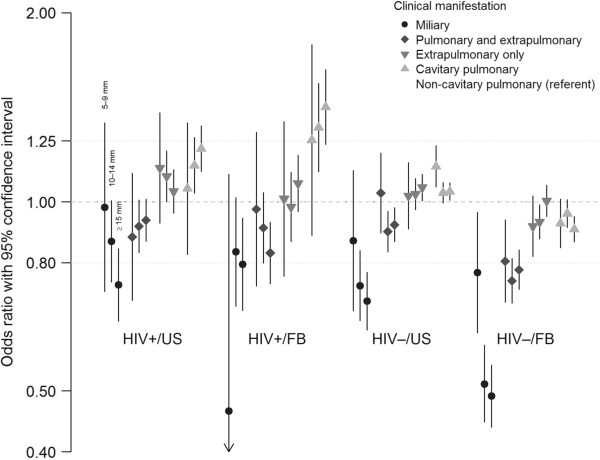
Results: There were 64,238 persons with culture-confirmed TB included in the analysis, which was stratified by HIV status and birthplace (US- vs. foreign-born). Persons with a TST ≥ 15 mm were less likely to have miliary or combined pulmonary and extrapulmonary disease, but more likely to have cavitary pulmonary disease than non-cavitary pulmonary disease. Persons with non-cavitary pulmonary disease with a negative TST were significantly more likely to have AFB positive sputum.
Conclusions: Clinical presentation of TB disease differed according to TST result and persons with a negative TST were more likely to have disseminated disease (i.e., miliary or combined pulmonary and extrapulmonary). Further study of the TST result may improve our understanding of the host-pathogen relationship in TB disease.
Figures
References
-
- American Thoracic Society. Diagnostic standards and classification of tuberculosis in adults and children. Am J Respir Crit Care Med. 2000;161(4 Pt 1):1376–1395. This official statement of the American Thoracic Society and the Centers for Disease Control and Prevention was adopted by the ATS Board of Directors, July 1999. This statement was endorsed by the Council of the Infectious Disease Society of America, September 1999. - PubMed
Publication types
MeSH terms
LinkOut - more resources
Full Text Sources
Other Literature Sources
