


A blueprint of pain curriculum across prelicensure health sciences programs: one NIH Pain Consortium Center of Excellence in Pain Education (CoEPE) experience
- PMID: 24094694
- PMCID: PMC3855868
- DOI: 10.1016/j.jpain.2013.07.006
A blueprint of pain curriculum across prelicensure health sciences programs: one NIH Pain Consortium Center of Excellence in Pain Education (CoEPE) experience
Abstract
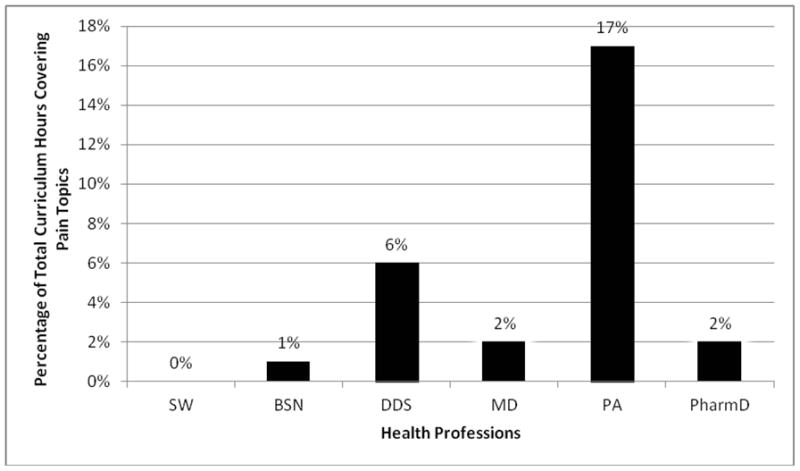
To improve U.S. pain education and promote interinstitutional and interprofessional collaborations, the National Institutes of Health Pain Consortium has funded 12 sites to develop Centers of Excellence in Pain Education (CoEPEs). Each site was given the tasks of development, evaluation, integration, and promotion of pain management curriculum resources, including case studies that will be shared nationally. Collaborations among schools of medicine, dentistry, nursing, pharmacy, and others were encouraged. The John D. Loeser CoEPE is unique in that it represents extensive regionalization of health science education, in this case in the region covering the states of Washington, Wyoming, Alaska, Montana, and Idaho. This paper describes a blueprint of pain content and teaching methods across the University of Washington's 6 health sciences schools and provides recommendations for improvement in pain education at the prelicensure level. The Schools of Dentistry and Physician Assistant provide the highest percentage of total required curriculum hours devoted to pain compared with the Schools of Medicine, Nursing, Pharmacy, and Social Work. The findings confirm the paucity of pain content in health sciences curricula, missing International Association for the Study of Pain curriculum topics, and limited use of innovative teaching methods such as problem-based and team-based learning.
Perspective: Findings confirm the paucity of pain education across the health sciences curriculum in a CoEPE that serves a large region in the United States. The data provide a pain curriculum blueprint that can be used to recommend added pain content in health sciences programs across the country.
Keywords: Pain education; WWAMI; curriculum; health sciences; prelicensure; teaching methods.
Copyright © 2013. Published by Elsevier Inc.
Conflict of interest statement
Conflicts of interest: The authors have no conflicts of interest to report.
Figures
References
-
- Aggarwal VR, Joughin A, Zakrzewska JM, Crawford FJ, Tickle M. Dentists’ and specialists’ knowledge of chronic orofacial pain: Results from a continuing professional development survey. Prim Dent Care. 2011;18:41–44. - PubMed
-
- Benedetti C, Dickerson ED, Nichols LL. Medical education: A barrier to pain therapy and palliative care. J Pain Symptom Manage. 2001;21:360–362. - PubMed
-
- Briggs EV, Carr EC, Whittaker MS. Survey of undergraduate pain curricula in healthcare professionals in the United Kingdom. Eur J Pain. 2011;15:789–795. - PubMed
-
- Butler JA. Use of teaching methods within the lecture format. Med Teach. 1992;14:11–25. - PubMed
-
- Corrigan C, Desnick L, Marshall S, Bentov N, Rosenblatt RA. What can we learn from first-year medical students’ perceptions of pain in the primary care setting? Pain Med. 2011;12:1216–1222. - PubMed
Publication types
MeSH terms
Grants and funding
LinkOut - more resources
Full Text Sources
Other Literature Sources
Medical
