. 2013 Dec 1;273(2):418-24.
doi: 10.1016/j.taap.2013.09.021. Epub 2013 Oct 3.

Green tea polyphenol, (-)-epigallocatechin-3-gallate, induces toxicity in human skin cancer cells by targeting β-catenin signaling

Affiliations

Green tea polyphenol, (-)-epigallocatechin-3-gallate, induces toxicity in human skin cancer cells by targeting β-catenin signaling

Tripti Singh et al. Toxicol Appl Pharmacol. .

Abstract

The green tea polyphenol, (-)-epigallocatechin-3-gallate (EGCG), has been shown to have anti-carcinogenic effects in several skin tumor models, and efforts are continued to investigate the molecular targets responsible for its cytotoxic effects to cancer cells. Our recent observation that β-catenin is upregulated in skin tumors suggested the possibility that the anti-skin carcinogenic effects of EGCG are mediated, at least in part, through its effects on β-catenin signaling. We have found that treatment of the A431 and SCC13 human skin cancer cell lines with EGCG resulted in reduced cell viability and increased cell death and that these cytotoxic effects were associated with inactivation of β-catenin signaling. Evidence of EGCG-induced inactivation of β-catenin included: (i) reduced accumulation of nuclear β-catenin; (ii) enhanced levels of casein kinase1α, reduced phosphorylation of glycogen synthase kinase-3β, and increased phosphorylation of β-catenin on critical serine(45,33/37) residues; and (iii) reduced levels of matrix metalloproteinase (MMP)-2 and MMP-9, which are down-stream targets of β-catenin. Treatment of cells with prostaglandin E2 (PGE2) enhanced the accumulation of β-catenin and enhanced β-catenin signaling. Treatment with either EGCG or an EP2 antagonist (AH6809) reduced the PGE2-enhanced levels of cAMP, an upstream regulator of β-catenin. Inactivation of β-catenin by EGCG resulted in suppression of cell survival signaling proteins. siRNA knockdown of β-catenin in A431 and SCC13 cells reduced cell viability. Collectively, these data suggest that induction of cytotoxicity in skin cancer cells by EGCG is mediated by targeting of β-catenin signaling and that the β-catenin signaling is upregulated by inflammatory mediators.

Keywords: (−)-Epigallocatechin-3-gallate; (−)-epigallocatechin-3 gallate; 3′–5′-cyclic adenosine monophosphate; CDK; COX-2; Cyclooxygenase-2; EGCG; Green tea polyphenol; MMP; PGs; Prostaglandin; Skin cancer; cAMP; cyclin-dependent kinase; cyclooxygenase-2; matrix metalloproteinase; prostaglandins; β-Catenin.


Conflict of interest statement

Disclosure statement: The authors have no conflict of interest to declare.

Figures

Figure 1
Figure 1
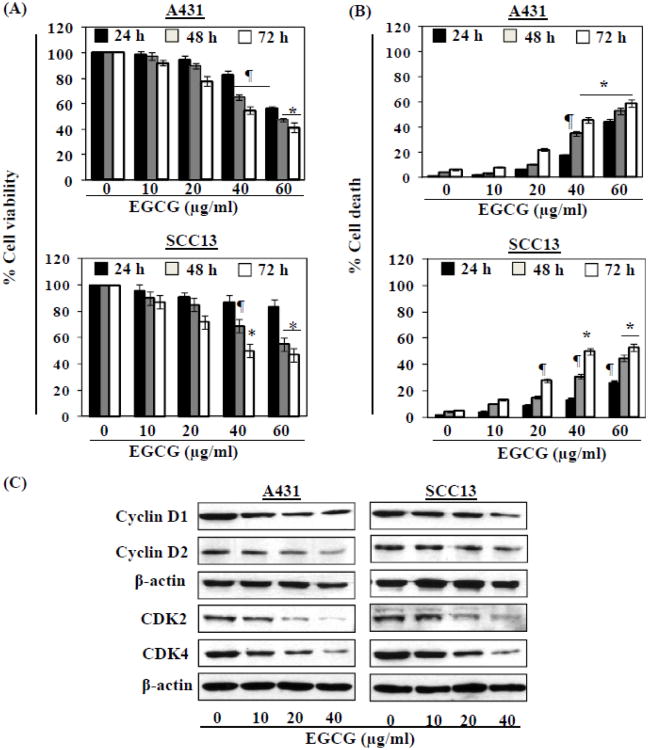
EGCG inhibits human skin cancer cell viability. (A) Treatment of human skin cancer cells (A431 and SCC13) with EGCG inhibits cell viability in a dose- and time-dependent manner. Cell viability was determined by MTT assay at 24, 48 and 72 h. The data on cell viability are expressed in terms of percent of control cells (non-EGCG treated) as the mean ± SD of 5 replicates. (B) EGCG enhances death of human skin cancer cells. Cell death was determined using trypan blue dye exclusion assay. The data on cell death are presented as the mean percent of dead cells from three independent experiments ± SD vs control group. Significant difference vs. control group, *P<0.001; P<0.01. (C) Cells were treated with various concentrations of EGCG for 48 h and cell lysates were used to detect the levels of cyclins and cyclin-dependent kinases using western blot analysis. β-actin served as the loading control.
Figure 2
Figure 2
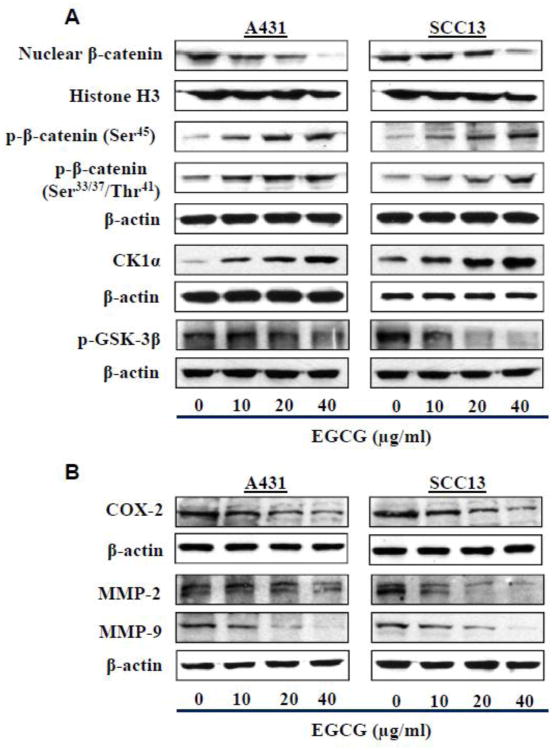
Effect of EGCG on β-catenin and its signaling proteins in human skin cancer cells. Cells were treated with various concentrations of EGCG for 48 h and cell lysates were used to detect the levels of proteins related with β-catenin signaling using western blot analysis. (A) Effect of EGCG on the nuclear accumulation of β-catenin and phosphorylation of β-catenin at critical residues and on the expression levels of regulatory kinases (GSK-3β, CK1α). (B) Effect of EGCG on COX-2 expression, and MMP-2 and MMP-9 proteins, which are downstream targets of β-catenin, in human skin cancer cells. β-actin served as the loading control.
Figure 3
Figure 3
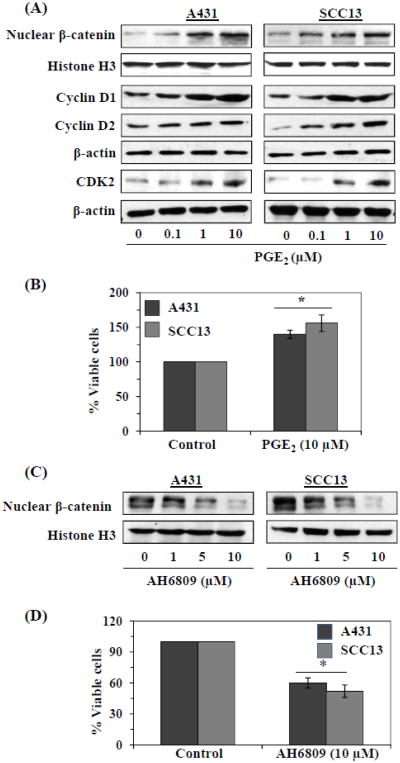
Treatment of human skin cancer cells with PGE2 stimulates β-catenin signaling and induces cell viability. (A) Cells were treated with PGE2 for 24 h and thereafter cells were harvested and nuclear lysates were prepared to detect the levels of nuclear β-catenin. Total cell lysates were used for the analysis of cell cycle regulatory proteins using western blot analyses. β-actin served as the loading control. (B) Effect of PGE2 on cell proliferation of skin cancer cells. Briefly, 5×10⁴ cells were plated in six-well culture dishes and treated with PGE2 (10 μM) for 24 h. After 24 h, cells were harvested and counted using a microscope. The numbers of cells were compared between PGE2-treated and non-PGE2-treated groups. Significant increases vs non-PGE2-treated cells, *P<0.01. (C) Treatment of cells with an EP2 antagonist (AH6809) for 24 h inhibits nuclear accumulation of β-catenin in a concentration-dependent manner. (D) Treatment of A431 or SCC13 cells with EP2 antagonist inhibits the viability or proliferation of skin cancer cells. Significant inhibition of cell viability vs control cells, *P<0.01.
Figure 4
Figure 4
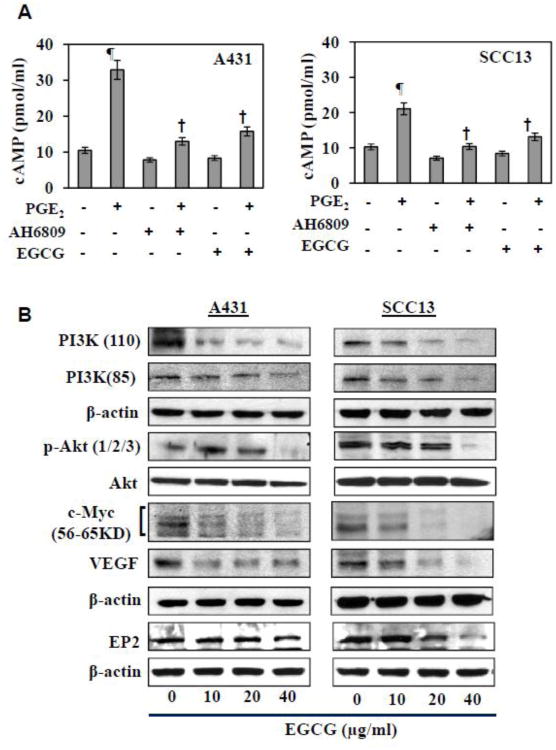
Effect of EGCG on cyclic AMP and cell survival signaling proteins in A431 and SCC13 skin cancer cells. (A) Treatment of skin cancer cells with either EP2 receptor antagonist (10 μM) or EGCG (40 μg/ml) inhibits PGE2 (10 μM)-induced expression of cAMP. Significant increase vs control, P<0.001; significant decrease vs PGE2-treated cells, P<0.001. (B) EGCG treatment inhibits the levels of cell survival signaling proteins (proteins of PI3K pathway) and its downstream targets, such as c-Myc and VEGF, in skin cancer cells. Cells were treated with various concentrations of EGCG for 48 h, and cell lysates were subjected to the analysis of various proteins using western blot analysis. Equal loading of proteins on gel was verified after probing the stripped membrane with anti β-actin antibody.
Figure 5
Figure 5
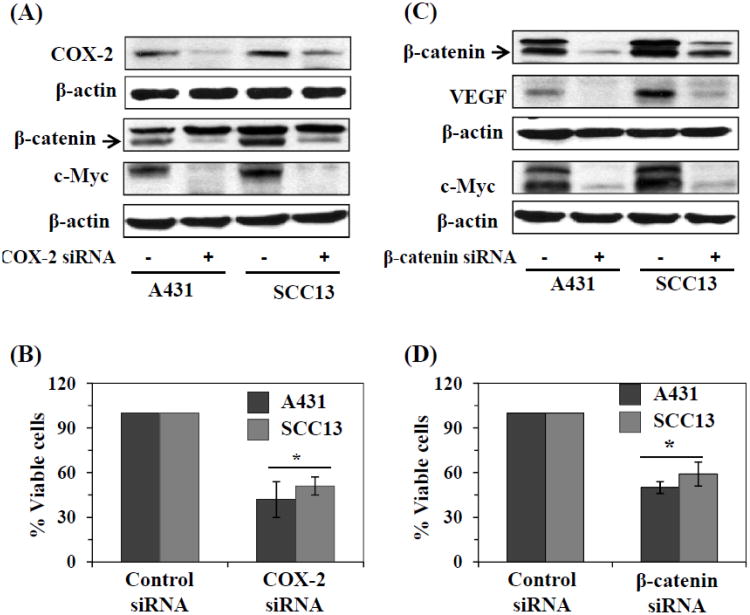
Regulation of β-catenin in human skin cancer cells. (A) siRNA knockdown of COX-2 in A431 and SCC13 cells resulted in decrease in levels of β-catenin and its downstream target c-Myc, as determined by western blot analysis. (B) siRNA knockdown of COX-2 in A431 or SCC13 cells resulted in significant reduction in cell viability. (C) siRNA knockdown of β-catenin in A431 and SCC13 cells resulted in lowering the levels of VEGF and c-Myc, as analyzed by western blot analysis. (D) siRNA knockdown of β-catenin in A431 and SCC13 cells resulted in significant decrease in cell viability. Briefly, for the analysis of cell viability, 5×10⁴ cells were plated in six well culture plates. Twenty-four h later, cells were harvested, counted using a microscope and the cell numbers were compared between control siRNA and β-catenin or COX-2 siRNA knockdown groups of cells. Cells treated with scrambled siRNA were used as a control group. Significant inhibition vs control, *P<0.01.
Figure 6
Figure 6
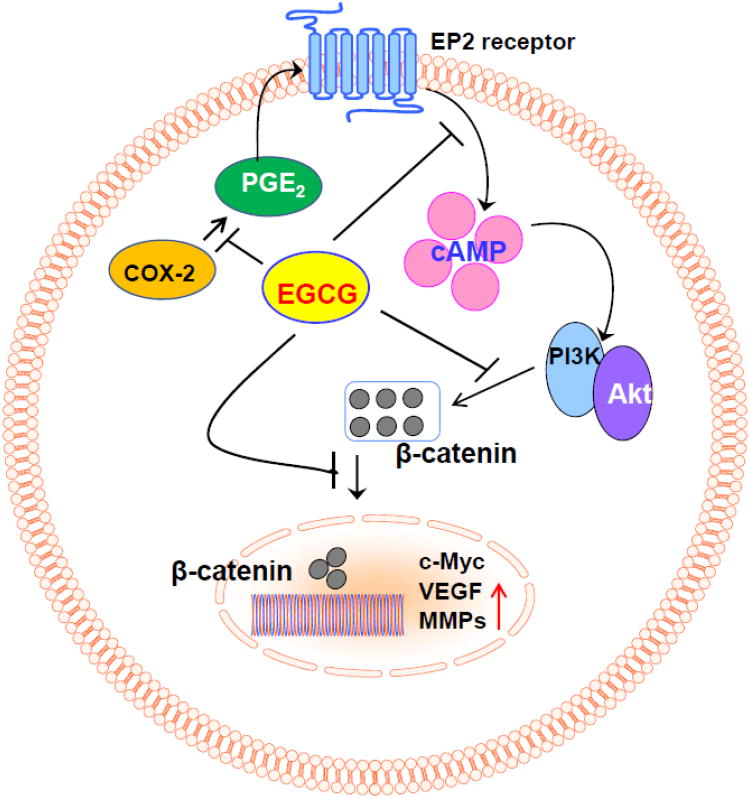
A schematic diagram depicting the cytotoxic effects of EGCG on human skin cancer cells by targeting β-catenin signaling through inhibition of PGE2 production, an inflammatory mediator in cancer cells.

References

    1. American Cancer Society. Cancer Facts & Figures 2010. Atlanta: American Cancer Society; 2010.
    1. Downward J. Mechanisms and consequences of activation of protein kinase B/Akt. Curr Opin Cell Biol. 1998;10:262–267. - PubMed
    1. Fischer PM. Recent advances and new directions in the discovery and development of cyclin-dependent kinase inhibitors. Curr Opin Drug Discov Devel. 2001;4:623–634. - PubMed
    1. Gavert N, Ben-Ze'ev A. β-Catenin signaling in biological control and cancer. J Cell Biochem. 2007;102:820–828. - PubMed
    1. Housman TS, Feldman SR, Williford PM, Fleischer AB, Jr, Goldman ND, Acostamadiedo JM, Chen GJ. Skin cancer is among the most costly of all cancers to treat for the Medicare population. J Am Acad Dermatol. 2003;48:425–429. - PubMed

Publication types

MeSH terms