


Steady-state production of IL-4 modulates immunity in mouse strains and is determined by lineage diversity of iNKT cells
- PMID: 24097110
- PMCID: PMC3824254
- DOI: 10.1038/ni.2731
Steady-state production of IL-4 modulates immunity in mouse strains and is determined by lineage diversity of iNKT cells
Erratum in
- Nat Immunol. 2014 Mar;15(3):305
Abstract
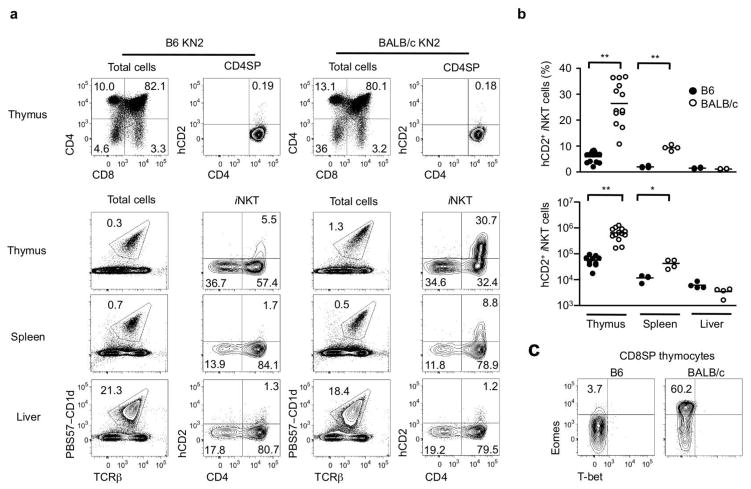
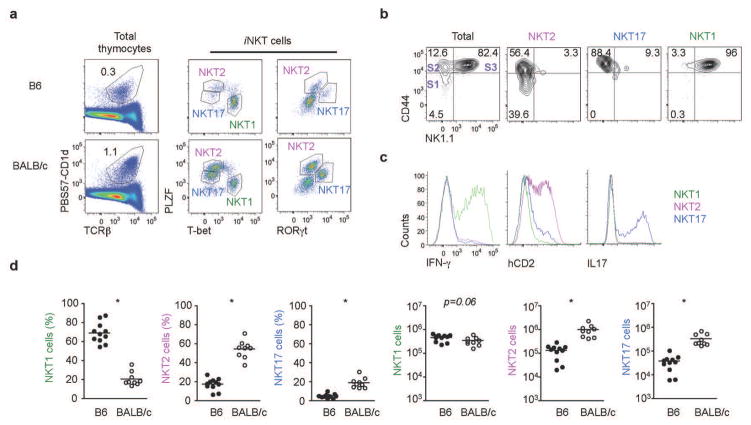
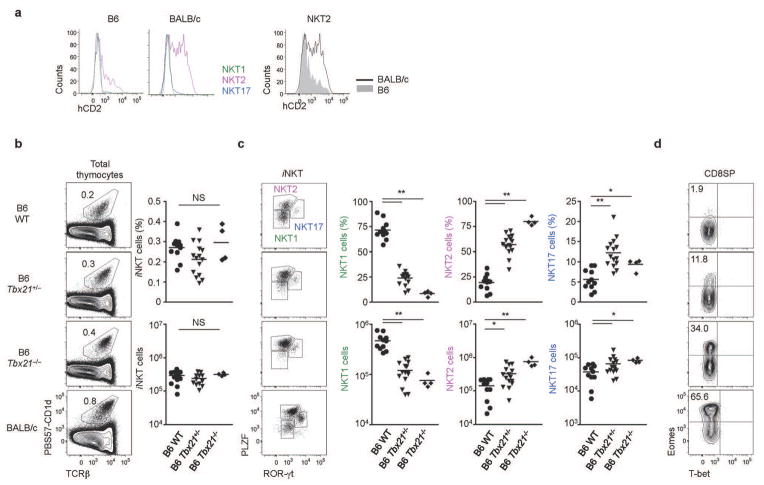
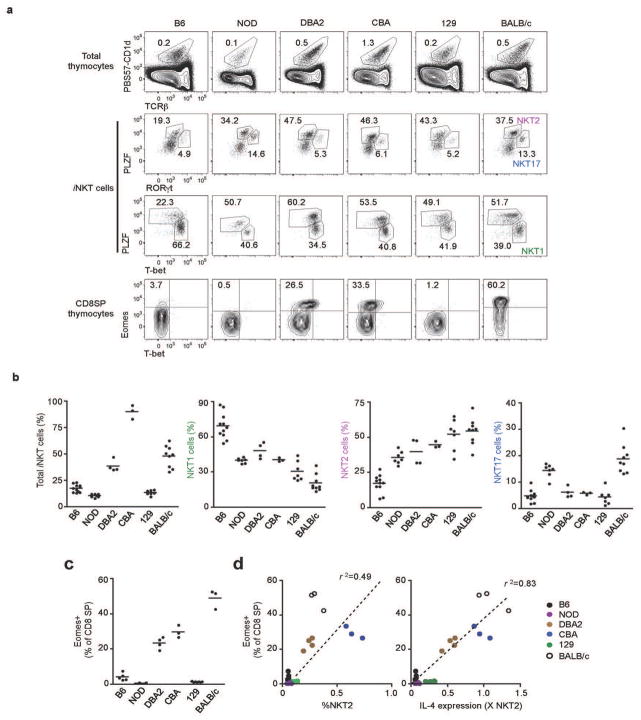
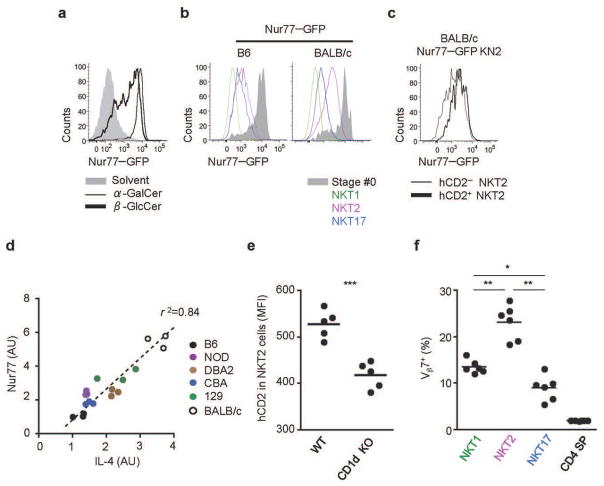
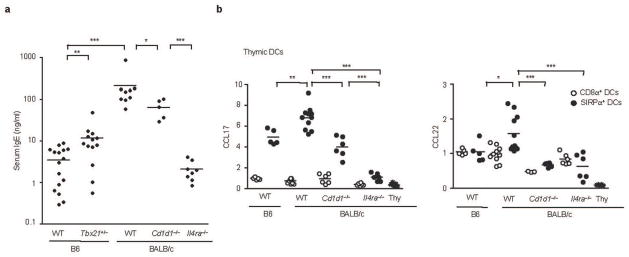
Invariant natural killer T cells (iNKT cells) can produce copious amounts of interleukin 4 (IL-4) early during infection. However, indirect evidence suggests they may produce this immunomodulatory cytokine in the steady state. Through intracellular staining for transcription factors, we have defined three subsets of iNKT cells (NKT1, NKT2 and NKT17) that produced distinct cytokines; these represented diverse lineages and not developmental stages, as previously thought. These subsets exhibited substantial interstrain variation in numbers. In several mouse strains, including BALB/c, NKT2 cells were abundant and were stimulated by self ligands to produce IL-4. In those strains, steady-state IL-4 conditioned CD8(+) T cells to become 'memory-like', increased serum concentrations of immunoglobulin E (IgE) and caused dendritic cells to produce chemokines. Thus, iNKT cell-derived IL-4 altered immunological properties under normal steady-state conditions.
Conflict of interest statement
The authors declare no competing financial interests.
Figures
Comment in
-
Polarized effector programs for innate-like thymocytes.Nat Immunol. 2013 Nov;14(11):1110-1. doi: 10.1038/ni.2739. Nat Immunol. 2013. PMID: 24145782 No abstract available.
References
-
- Berg LJ. Signalling through TEC kinases regulates conventional versus innate CD8(+) T-cell development. Nat Rev Immunol. 2007;7:479–485. - PubMed
Publication types
MeSH terms
Substances
Grants and funding
LinkOut - more resources
Full Text Sources
Other Literature Sources
Molecular Biology Databases
Research Materials
