


MDMA enhances emotional empathy and prosocial behavior
- PMID: 24097374
- PMCID: PMC4221206
- DOI: 10.1093/scan/nst161
MDMA enhances emotional empathy and prosocial behavior
Abstract
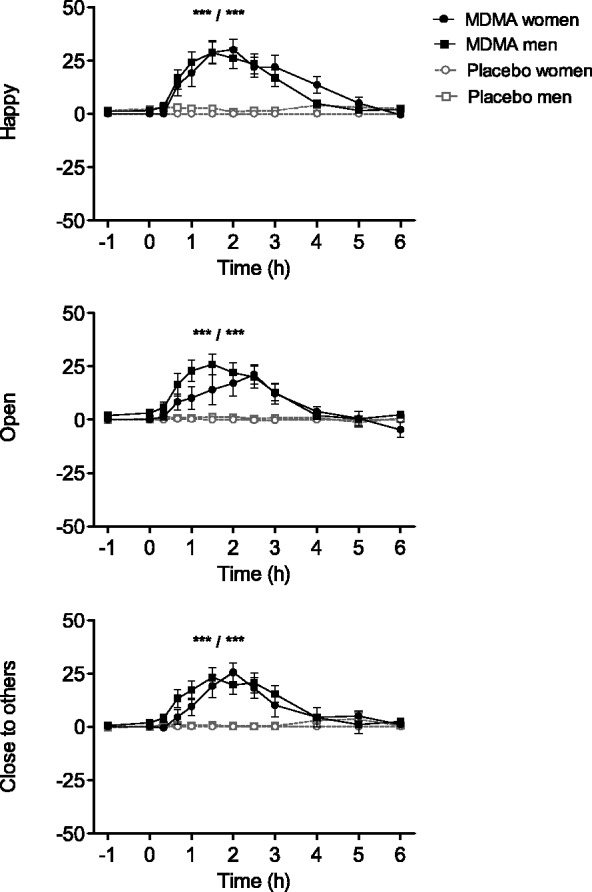
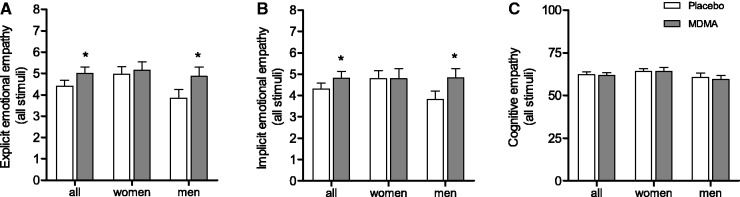
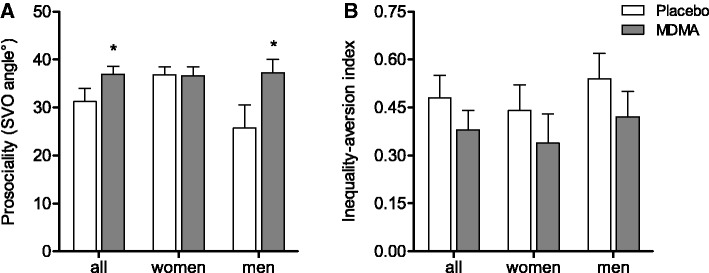
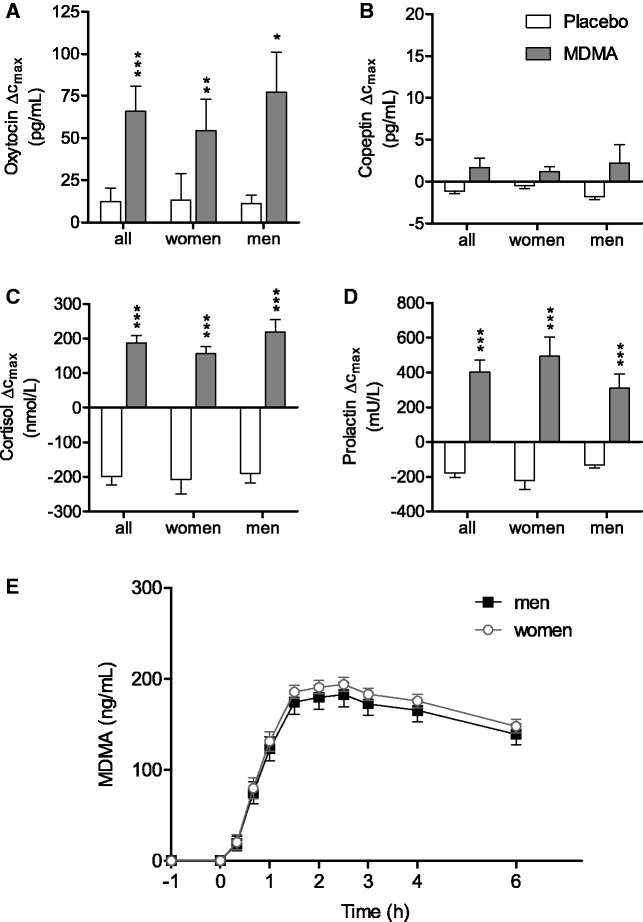
3,4-Methylenedioxymethamphetamine (MDMA, 'ecstasy') releases serotonin and norepinephrine. MDMA is reported to produce empathogenic and prosocial feelings. It is unknown whether MDMA in fact alters empathic concern and prosocial behavior. We investigated the acute effects of MDMA using the Multifaceted Empathy Test (MET), dynamic Face Emotion Recognition Task (FERT) and Social Value Orientation (SVO) test. We also assessed effects of MDMA on plasma levels of hormones involved in social behavior using a placebo-controlled, double-blind, random-order, cross-over design in 32 healthy volunteers (16 women). MDMA enhanced explicit and implicit emotional empathy in the MET and increased prosocial behavior in the SVO test in men. MDMA did not alter cognitive empathy in the MET but impaired the identification of negative emotions, including fearful, angry and sad faces, in the FERT, particularly in women. MDMA increased plasma levels of cortisol and prolactin, which are markers of serotonergic and noradrenergic activity, and of oxytocin, which has been associated with prosocial behavior. In summary, MDMA sex-specifically altered the recognition of emotions, emotional empathy and prosociality. These effects likely enhance sociability when MDMA is used recreationally and may be useful when MDMA is administered in conjunction with psychotherapy in patients with social dysfunction or post-traumatic stress disorder.
Keywords: MDMA; ecstasy; emotion recognition; empathy; social behavior; social cognition.
© The Author (2013). Published by Oxford University Press. For Permissions, please email: journals.permissions@oup.com.
Figures
References
-
- Anderson IM, Juhasz G, Thomas E, et al. The effect of acute citalopram on face emotion processing in remitted depression: a pharmacoMRI study. European Neuropsychopharmacology. 2011;21:140–8. - PubMed
-
- Blair RJ. Responding to the emotions of others: dissociating forms of empathy through the study of typical and psychiatric populations. Consciousness and Cognition. 2005;14:698–718. - PubMed
-
- Brunt TM, Koeter MW, Niesink RJ, van den Brink W. Linking the pharmacological content of ecstasy tablets to the subjective experiences of drug users. Psychopharmacology. 2012;220:751–62. - PubMed
Publication types
MeSH terms
Substances
LinkOut - more resources
Full Text Sources
Other Literature Sources
Medical
Miscellaneous
