


Familial occurrence of systemic mast cell activation disease
- PMID: 24098785
- PMCID: PMC3787002
- DOI: 10.1371/journal.pone.0076241
Familial occurrence of systemic mast cell activation disease
Abstract
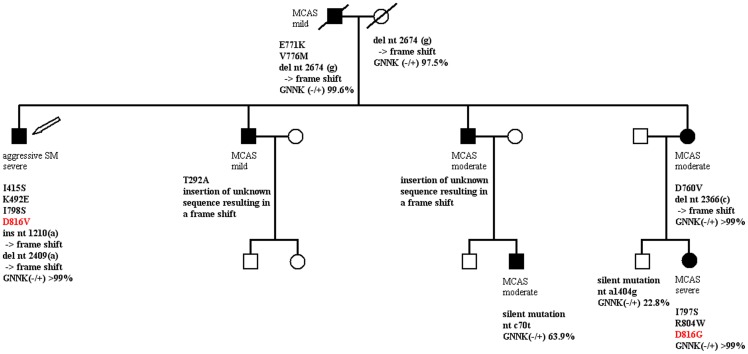
Systemic mast cell activation disease (MCAD) comprises disorders characterized by an enhanced release of mast cell mediators accompanied by accumulation of dysfunctional mast cells. Demonstration of familial clustering would be an important step towards defining the genetic contribution to the risk of systemic MCAD. The present study aimed to quantify familial aggregation for MCAD and to investigate the variability of clinical and molecular findings (e.g. somatic mutations in KIT) among affected family members in three selected pedigrees. Our data suggest that systemic MCAD pedigrees include more systemic MCAD cases than would be expected by chance, i.e., compared with the prevalence of MCAD in the general population. The prevalence of MCAD suspected by symptom self-report in first-degree relatives of patients with MCAD amounted to approximately 46%, compared to prevalence in the general German population of about 17% (p<0.0001). In three families with a high familial loading of MCAD, the subtype of MCAD and the severity of mediator-related symptoms varied between family members. In addition, genetic alterations detected in KIT were variable, and included mutations at position 816 of the amino acid sequence. In conclusion, our data provide evidence for common familial occurrence of MCAD. Our findings observed in the three pedigrees together with recent reports in the literature suggest that, in familial cases (i.e., in the majority of MCAD), mutated disease-related operator and/or regulator genes could be responsible for the development of somatic mutations in KIT and other proteins important for the regulation of mast cell activity. Accordingly, the immunohistochemically different subtypes of MCAD (i.e. mast cell activation syndrome and systemic mastocytosis) should be more accurately regarded as varying presentations of a common generic root process of mast cell dysfunction, than as distinct diseases.
Conflict of interest statement
Figures
References
-
- Valent P, Akin C, Escribano L, Födinger M, Hartmann K, et al. (2007) Standards and standardization in mastocytosis: consensus statements on diagnostics, treatment recommendations and response criteria. Eur J Clin Invest 37: 435–453. - PubMed
Publication types
MeSH terms
Substances
LinkOut - more resources
Full Text Sources
Other Literature Sources
