


Quality of maternal and paternal care predicts later stress reactivity in the cooperatively-breeding marmoset (Callithrix geoffroyi)
- PMID: 24099861
- PMCID: PMC3877691
- DOI: 10.1016/j.psyneuen.2013.08.011
Quality of maternal and paternal care predicts later stress reactivity in the cooperatively-breeding marmoset (Callithrix geoffroyi)
Abstract
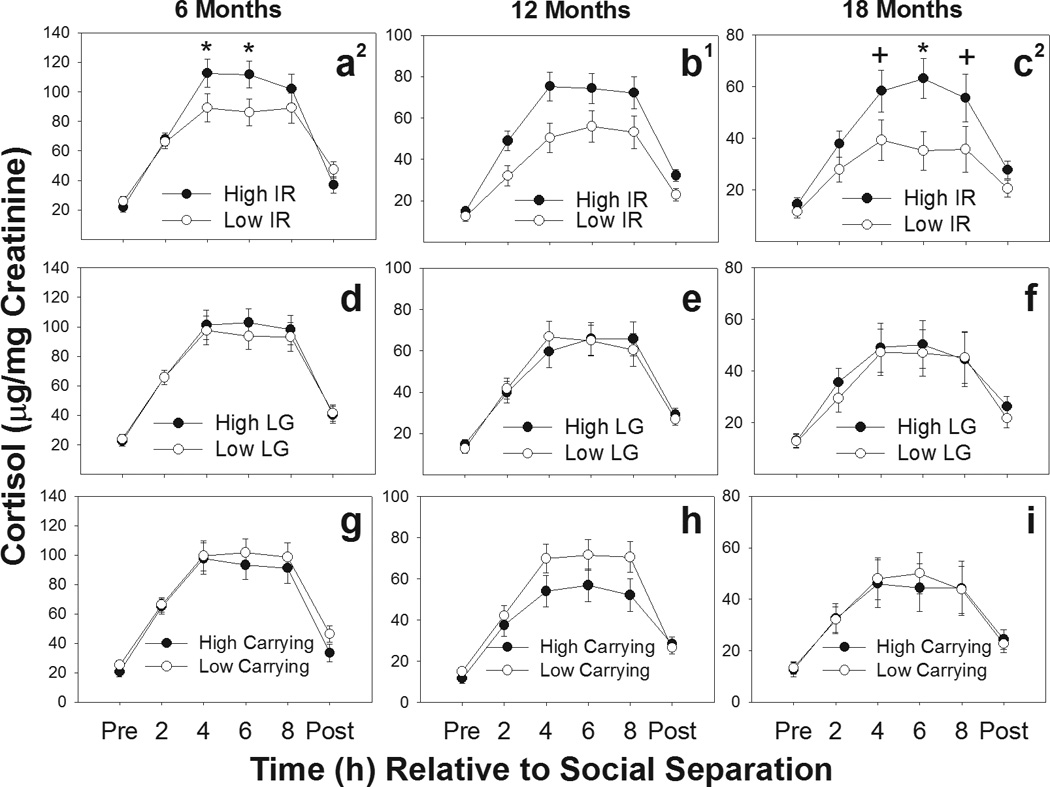
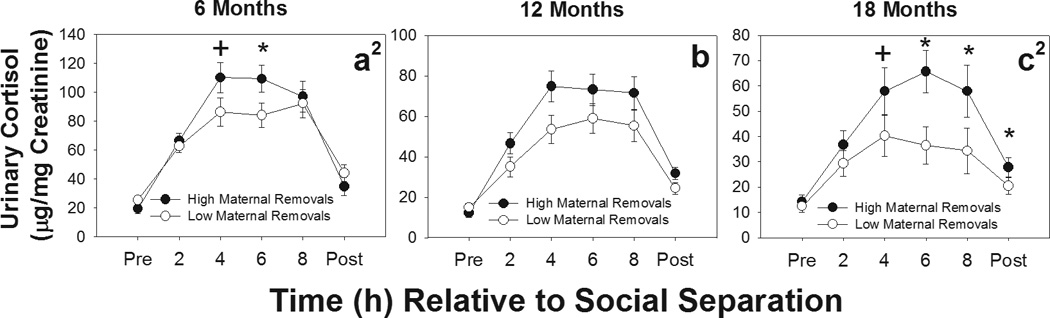
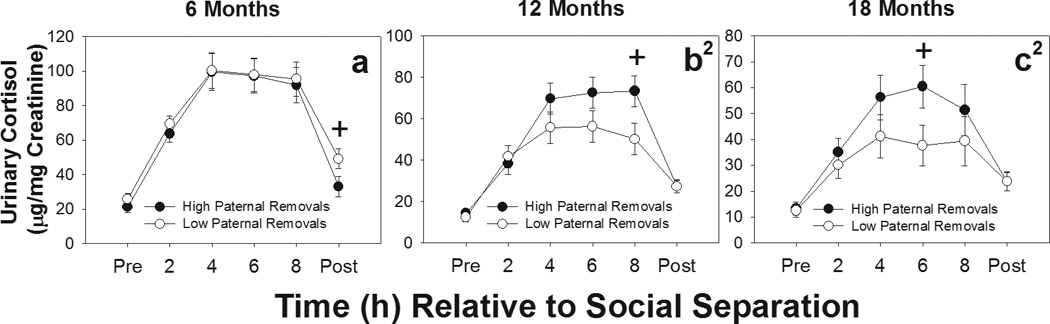
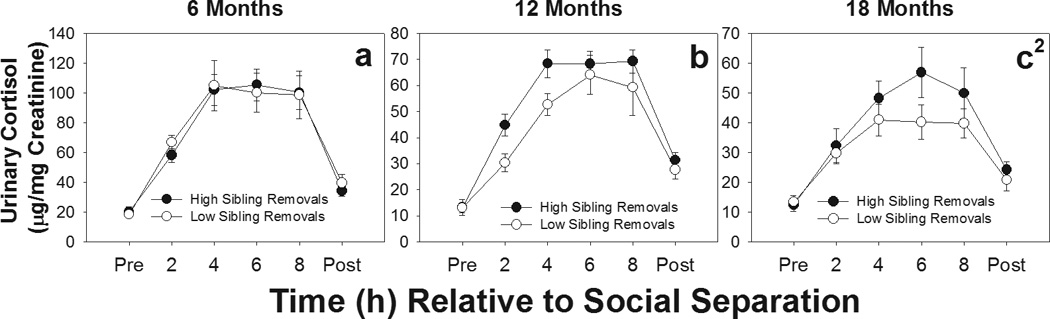
Variation in the early postnatal social environment can have lasting effects on hypothalamic-pituitary-adrenal (HPA) axis stress responses. Both rats and macaque monkeys subjected to low quality or abusive maternal care during the early postnatal period have more pronounced HPA responses to environmental stressors throughout development and into adulthood compared to animals reared in higher quality early maternal environments. However, little is known about the relative contributions to HPA stress response styles in developing offspring in species in which offspring care is routinely provided by group members other than the mother, such as in cooperatively breeding mammals. Marmoset monkeys exhibit cooperative offspring rearing, with fathers and older siblings providing care in addition to that provided by the mother. We evaluated the effects of early maternal, paternal, and older sibling care on HPA responses to social separation across development in captive white-faced marmoset offspring (Callithrix geoffroyi). We monitored offspring care by mothers, fathers, and older siblings in marmosets for the first 60 days of life. Later in development, each marmoset experienced three standardized social separation/novelty exposure stressors at 6, 12, and 18 months of age. During separation, we collected urine samples and analyzed them via enzyme immunoassay for cortisol levels. Infants that received higher rates of rejections from the entire family group showed higher cortisol responses to social separation. This relationship was found when mothers, fathers, and older siblings, were analyzed separately as well. No differences in cortisol responses were found between offspring that received high and low rates of carrying or high and low rates of licking and grooming by any group member. In the cooperatively breeding marmoset, early social cues from multiple classes of caregivers may influence HPA stress responses throughout the lifespan.
Keywords: Cortisol; Early social environment; HPA programming; Parental care.
Published by Elsevier Ltd.
Conflict of interest statement
In submitting this manuscript, all authors declare no conflict of interest, monetary or otherwise
Figures
References
-
- Arabadzisz D, Diaz-Heijtz R, Knuesel I, Weber E, Pilloud S, Dettling AC, Feldon J, Law AJ, Harrison PJ, Pryce CR. Primate Early Life Stress Leads to Long-Term Mild Hippocampal Decreases in Corticosteroid Receptor Expression. Biological Psychiatry. 2010;67:1106–1109. - PubMed
-
- Arborelius L, Owens MJ, Plotsky PM, Nemeroff CB. The role of corticotropin-releasing factor in depression and anxiety disorders. J Endocrinol. 1999;160:1–12. - PubMed
-
- Barr CS, Newman TK, Lindell S, Becker ML, Shannon C, Champoux M, Suomi SJ, Higley JD. Early Experience and Sex Interact to Influence Limbic-Hypothalamic-Pituitary-Adrenal-Axis Function After Acute Alcohol Administration in Rhesus Macaques (Macaca mulatta) Alcoholism: Clinical and Experimental Research. 2004a;28:1114–1119. - PubMed
-
- Barr CS, Newman TK, Shannon C, Parker C, Dvoskin RL, Becker ML, Schwandt M, Champoux M, Lesch KP, Goldman D. Rearing condition and rh5-HTTLPR interact to influence limbic-hypothalamic-pituitary-adrenal axis response to stress in infant macaques. Biological psychiatry. 2004b;55:733–738. - PubMed
-
- Bhatnagar S, Meaney MJ. Hypothalamic-pituitary-adrenal function in chronic intermittently cold-stressed neonatally handled and non handled rats. Journal of neuroendocrinology. 1995;7:97–108. - PubMed
Publication types
MeSH terms
Substances
Grants and funding
LinkOut - more resources
Full Text Sources
Other Literature Sources
Medical
Molecular Biology Databases
