


Transgenerational effects of prenatal bisphenol A on social recognition
- PMID: 24100195
- PMCID: PMC3955720
- DOI: 10.1016/j.yhbeh.2013.09.007
Transgenerational effects of prenatal bisphenol A on social recognition
Abstract
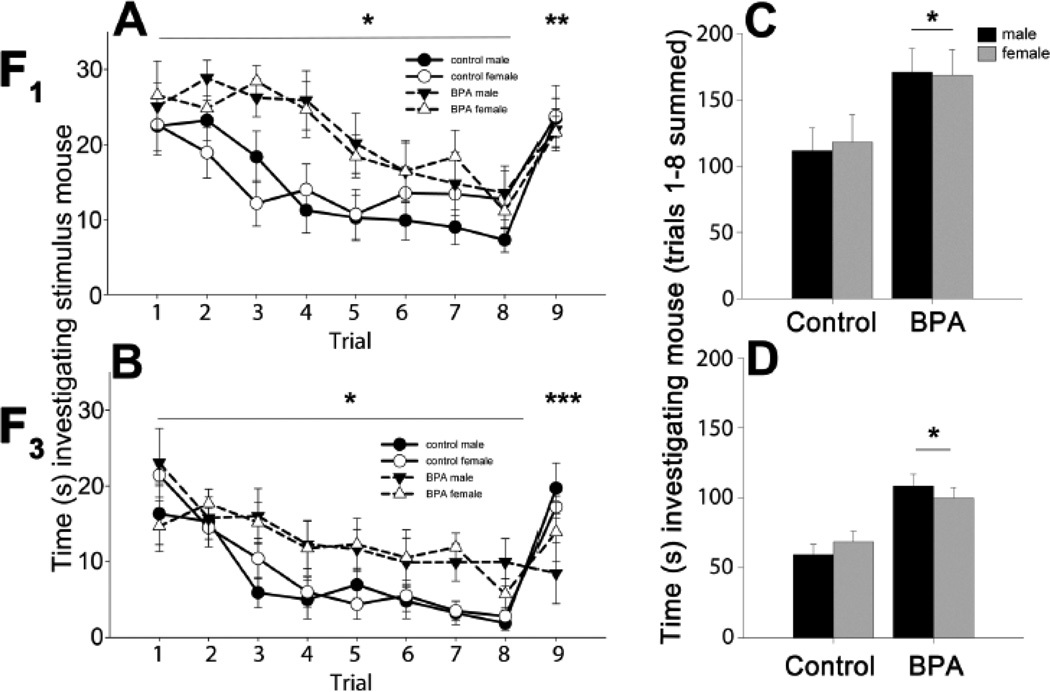
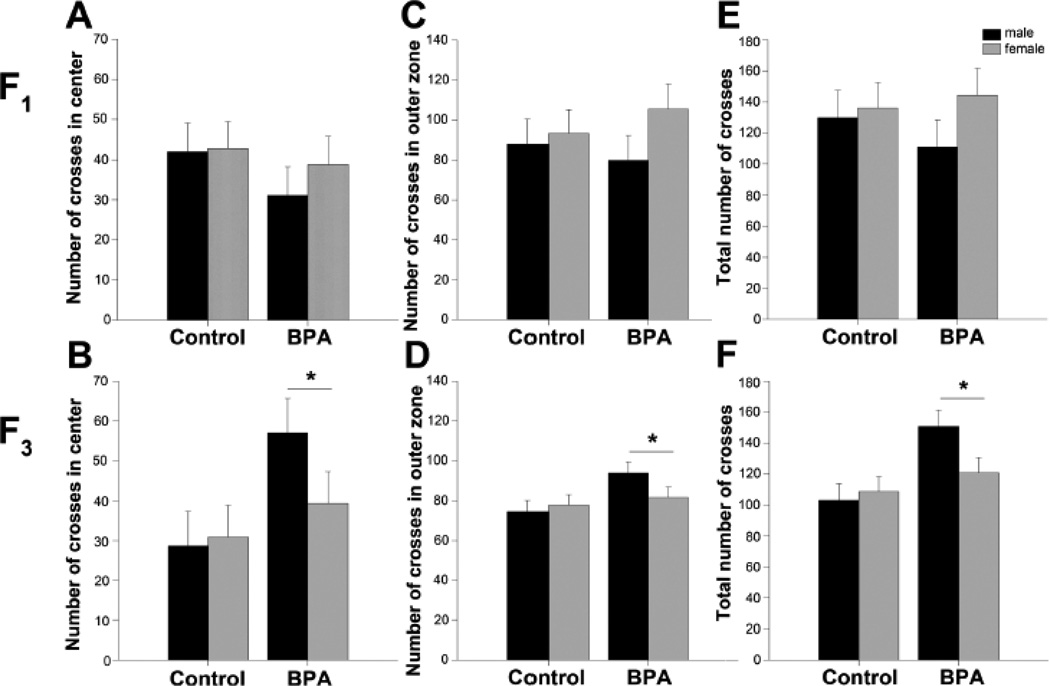
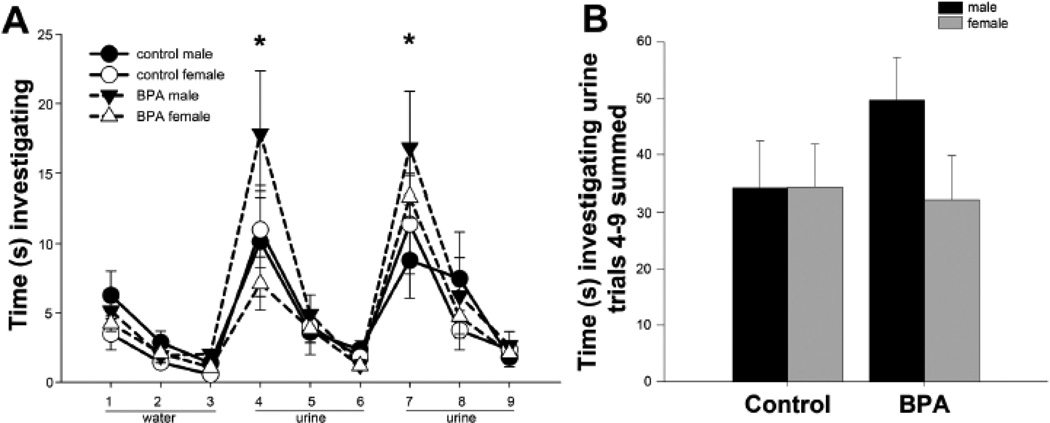
Bisphenol A (BPA) is a man-made endocrine disrupting compound used to manufacture polycarbonate plastics. It is found in plastic bottles, canned food linings, thermal receipts and other commonly used items. Over 93% of people have detectable BPA levels in their urine. Epidemiological studies report correlations between BPA levels during pregnancy and activity, anxiety, and depression in children. We fed female mice control or BPA-containing diets that produced plasma BPA concentrations similar to concentrations in humans. Females were mated and at birth, pups were fostered to control dams to limit BPA exposure to gestation in the first generation. Sibling pairs were bred to the third generation with no further BPA exposure. First (F1) and third (F3) generation juveniles were tested for social recognition and in the open field. Adult F3 mice were tested for olfactory discrimination. In both generations, BPA exposed juvenile mice displayed higher levels of investigation than controls in a social recognition task. In F3 BPA exposed mice, dishabituation to a novel female was impaired. In the open field, no differences were noted in F1 mice, while in F3, BPA lineage mice were more active than controls. No impairments were detected in F3 mice, all were able to discriminate different male urine pools and urine from water. No sex differences were found in any task. These results demonstrate that BPA exposure during gestation has long lasting, transgenerational effects on social recognition and activity in mice. These findings show that BPA exposure has transgenerational actions on behavior and have implications for human neurodevelopmental behavioral disorders.
Keywords: Attention deficit hyperactivity disorder; Autism; Endocrine disrupting chemicals; Epigenetics; Social recognition; Transgenerational inheritance.
© 2013.
Conflict of interest statement
None of the authors have biomedical financial interests or potential conflicts of interest to report.
Figures
References
-
- Anway MD, Skinner MK. Epigenetic transgenerational actions of endocrine disruptors. Endocrinology. 2006;147(6 Suppl):S43–S49. - PubMed
-
- Bergman Å, Heindel J, Jobling S, Kidd K, Zoeller R. The State-of-the-Science of Endocrine Disrupting Chemicals – 2012. [Retrieved May 13, 2013];2013 from http://www.who.int/ceh/publications/endocrine/en/index.html.
-
- Bhaumik S, Branford D, McGrother C, Thorp C. Autistic traits in adults with learning disabilities. Br J Psychiatry. 1997;170:502–506. - PubMed
-
- Bielsky IF, Hu SB, Ren X, Terwilliger EF, Young LJ. The V1a vasopressin receptor is necessary and sufficient for normal social recognition: a gene replacement study. Neuron. 2005;47(4):503–513. - PubMed
Publication types
MeSH terms
Substances
Grants and funding
LinkOut - more resources
Full Text Sources
Other Literature Sources
Miscellaneous
