


Do observed or perceived characteristics of the neighborhood environment mediate associations between neighborhood poverty and cumulative biological risk?
- PMID: 24100238
- PMCID: PMC3837295
- DOI: 10.1016/j.healthplace.2013.09.005
Do observed or perceived characteristics of the neighborhood environment mediate associations between neighborhood poverty and cumulative biological risk?
Abstract
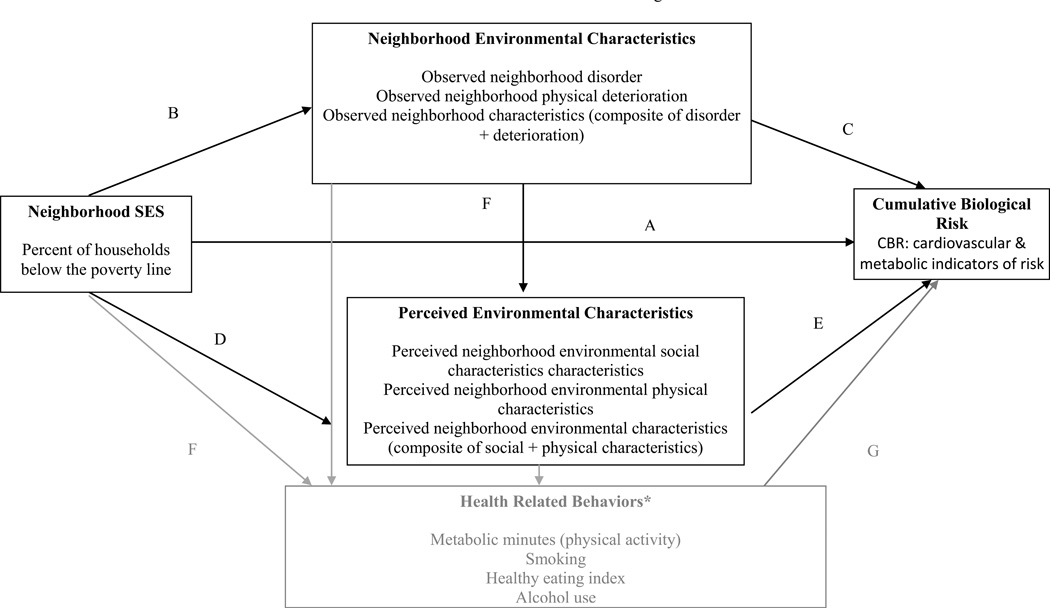
Objective: To examine contributions of observed and perceived neighborhood characteristics in explaining associations between neighborhood poverty and cumulative biological risk (CBR) in an urban community.
Methods: Multilevel regression analyses were conducted using cross-sectional data from a probability sample survey (n=919), and observational and census data. Dependent variable: CBR.
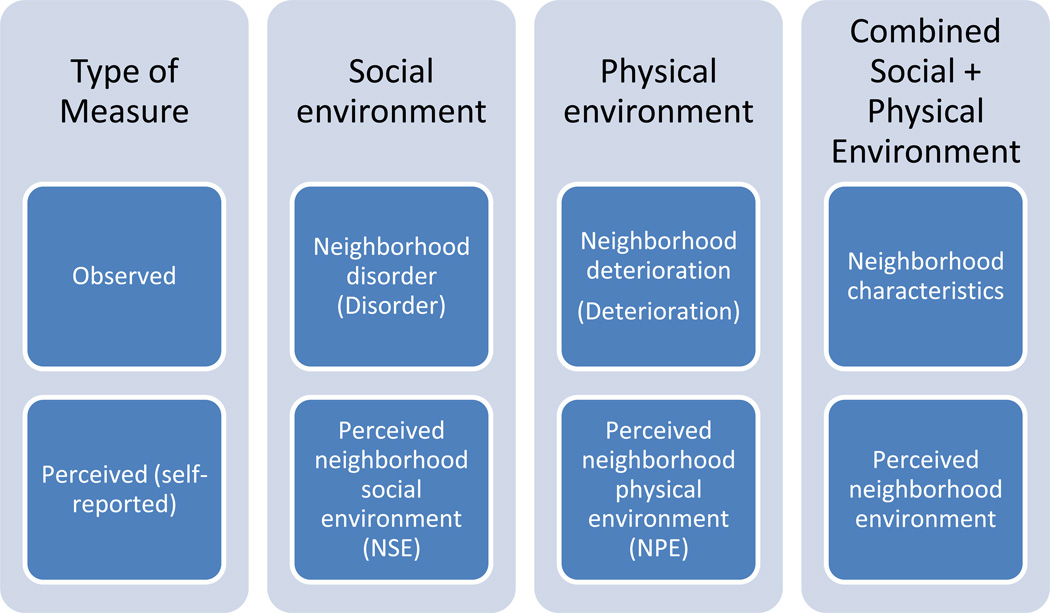
Independent variables: neighborhood disorder, deterioration and characteristics; perceived neighborhood social environment, physical environment, and neighborhood environment. Covariates: neighborhood and individual demographics, health-related behaviors.
Results: Observed and perceived indicators of neighborhood conditions were significantly associated with CBR, after accounting for both neighborhood and individual level socioeconomic indicators. Observed and perceived neighborhood environmental conditions mediated associations between neighborhood poverty and CBR.
Conclusions: Findings were consistent with the hypothesis that neighborhood conditions associated with economic divestment mediate associations between neighborhood poverty and CBR.
Keywords: Allostatic load; Neighborhood; Neighborhood environment; Poverty; Urban health inequalities.
© 2013 Elsevier Ltd. All rights reserved.
Figures
References
-
- Alley DE, Seeman TE, Ki K, et al. Socioeconomic status and C-reactive protein levels in the US population: NHANES IV. Brain Behavior and Immunology. 2006;20:498–504. - PubMed
-
- Barnard J, Rubin DB, Schenker N, et al. Multiple imputation. In: Smelser NJ, Baltes PB, editors. International encyclopedia of the social and behavioral science. New York: Pergamon; 2001. pp. 10204–10210.
-
- Block G, Coyle LM, Hartman AM, Scoppa SM. Revision of dietary analysis software for the Health Habits and History Questionnaire. American Journal of Epidemiology. 1994;139:1190–1196. - PubMed
-
- Borrell LN, Diez Roux A, Rose K, Catellier D, Clark BL. Neighbourhood characteristics and mortality in the Atherosclerosis Risk in Communities Study. International Journal of Epidemiology. 2004;33:398–407. - PubMed
Publication types
MeSH terms
Grants and funding
LinkOut - more resources
Full Text Sources
Other Literature Sources
Miscellaneous
