


In vivo transfection of manganese superoxide dismutase gene or nuclear factor κB shRNA in nodose ganglia improves aortic baroreceptor function in heart failure rats
- PMID: 24101667
- PMCID: PMC3893036
- DOI: 10.1161/HYPERTENSIONAHA.113.02057
In vivo transfection of manganese superoxide dismutase gene or nuclear factor κB shRNA in nodose ganglia improves aortic baroreceptor function in heart failure rats
Abstract
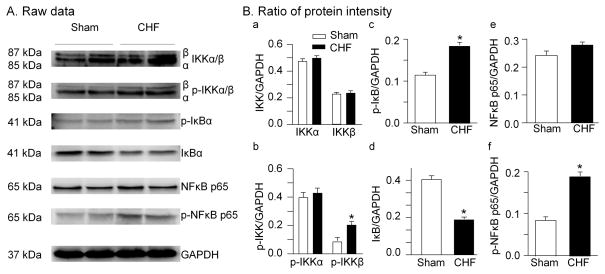
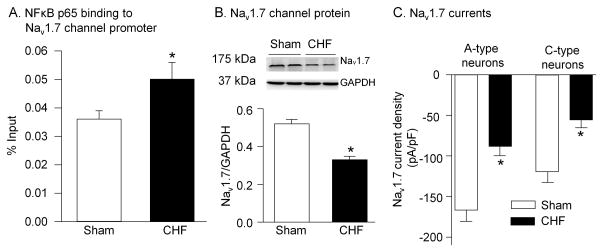
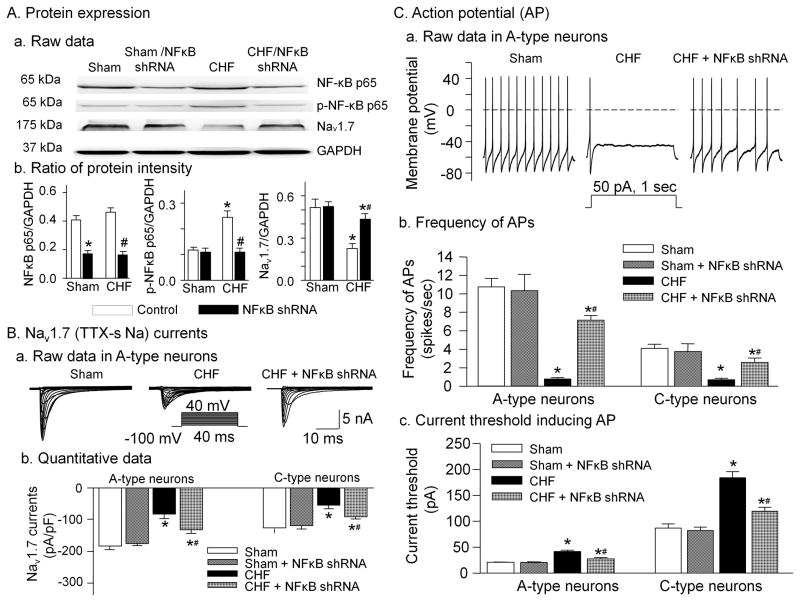
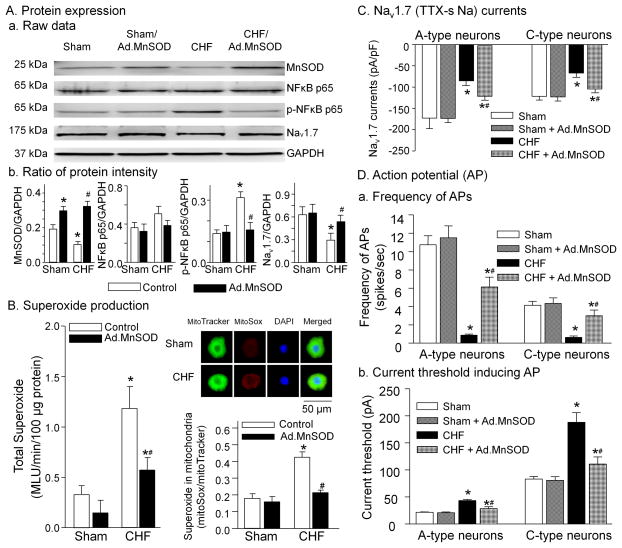
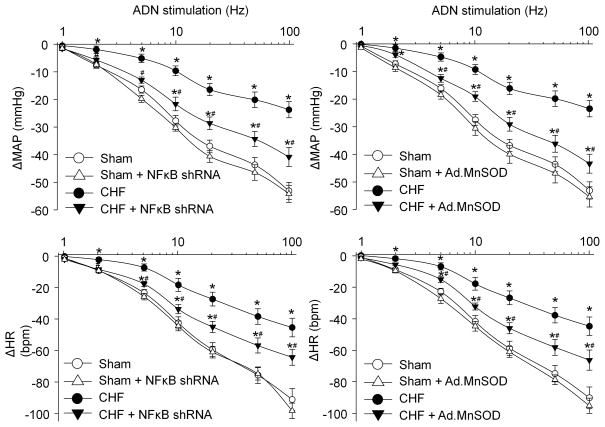
Arterial baroreflex sensitivity is attenuated in chronic heart failure (CHF) state, which is associated with cardiac arrhythmias and sudden cardiac death in patients with CHF. Our previous study showed that CHF-induced sodium channel dysfunction in the baroreceptor neurons was involved in the blunted baroreflex sensitivity in CHF rats. Mitochondria-derived superoxide overproduction decreased expression and activation of the sodium channels in the baroreceptor neurons from CHF rats. However, the molecular mechanisms responsible for the sodium channel dysfunction in the baroreceptor neurons from CHF rats remain unknown. We tested the involvement of nuclear factor κB (NFκB) in the sodium channel dysfunction and evaluated the effects of in vivo transfection of manganese superoxide dismutase gene and NFκB shRNA on the baroreflex function in CHF rats. CHF was developed at 6 to 8 weeks after left coronary artery ligation in adult rats. Western blot and chromatin immunoprecipitation data showed that phosphorylated NFκB p65 and ability of NFκB p65 binding to the sodium channel promoter were increased in the nodose ganglia from CHF rats. In vivo transfection of adenoviral manganese superoxide dismutase gene or lentiviral NFκB p65 shRNA into the nodose ganglia partially reversed CHF-reduced sodium channel expression and cell excitability in the baroreceptor neurons and improved CHF-blunted arterial baroreflex sensitivity. Additionally, transfection of adenoviral manganese superoxide dismutase also inhibited the augmentation of phosphorylated NFκB p65 in the nodose neurons from CHF rats. The present study suggests that superoxide-NFκB signaling contributes to CHF-induced baroreceptor dysfunction and resultant impairment of baroreflex function.
Keywords: baroreflex; heart failure; pressoreceptors; sodium channels; superoxides.
Figures
References
-
- Ruttanaumpawan P, Gilman MP, Usui K, Floras JS, Bradley TD. Sustained effect of continuous positive airway pressure on baroreflex sensitivity in congestive heart failure patients with obstructive sleep apnea. J Hypertens. 2008;26:1163–1168. - PubMed
-
- Floras JS. Clinical aspects of sympathetic activation and parasympathetic withdrawal in heart failure. J Am Coll Cardiol. 1993;22:72A–84A. - PubMed
-
- Pinna GD, Maestri R, Capomolla S, Febo O, Robbi E, Cobelli F, La Rovere MT. Applicability and clinical relevance of the transfer function method in the assessment of baroreflex sensitivity in heart failure patients. J Am Coll Cardiol. 2005;46:1314–1321. - PubMed
-
- Creager MA, Creager SJ. Arterial baroreflex regulation of blood pressure in patients with congestive heart failure. J Am Coll Cardiol. 1994;23:401–405. - PubMed
Publication types
MeSH terms
Substances
Grants and funding
LinkOut - more resources
Full Text Sources
Other Literature Sources
