


Effect of the sun on visible clinical signs of aging in Caucasian skin
- PMID: 24101874
- PMCID: PMC3790843
- DOI: 10.2147/CCID.S44686
Effect of the sun on visible clinical signs of aging in Caucasian skin
Abstract
Objectives: AGING SIGNS CAN BE CLASSIFIED INTO FOUR MAIN CATEGORIES: wrinkles/texture, lack of firmness of cutaneous tissues (ptosis), vascular disorders, and pigmentation heterogeneities. During a lifetime, skin will change in appearance and structure not only because of chronological and intrinsic processes but also due to several external factors such as gravity, sun and ultraviolet exposure, and high levels of pollution; or lifestyle factors that have important and obvious effects on skin aging, such as diet, tobacco, illness, or stress. The effect of these external factors leads to progressive degradations of tegument that appear with different kinetics. The aim of this study was to clinically quantify the effect of sun exposure on facial aging in terms of the appearance of new specific signs or in terms of increasing the classical signs of aging.
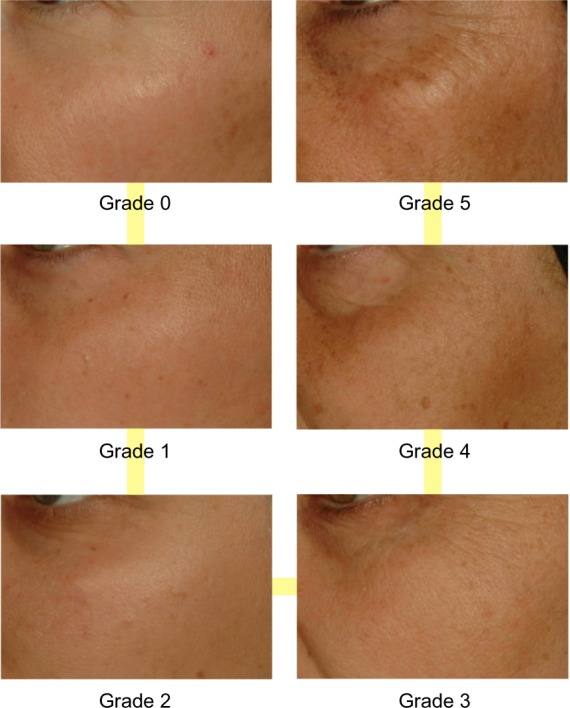
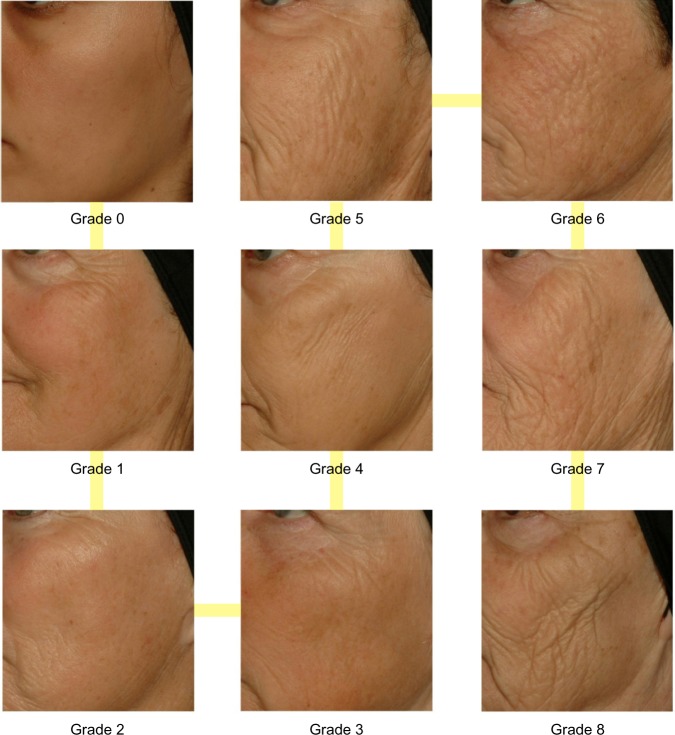
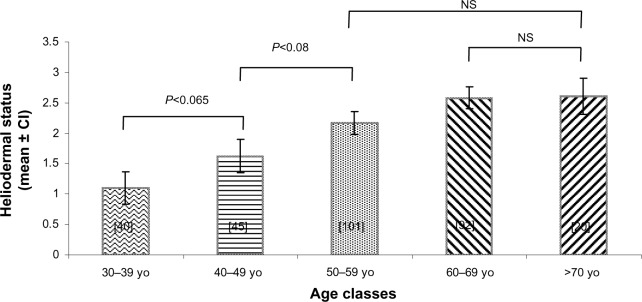
Materials and methods: This study was carried out on 298 Caucasian women from 30 years to 78 years old. The participants were divided into two groups according to their sun exposure history: 157 women were characterized as sun-seeking, and the other 141 were classified as sun-phobic. This division was made possible by dermatologist grading of heliodermal status on the basis of several observations of classic criteria: wrinkles, sagging, pigmentation heterogeneities, vascular disorders, elastosis, and so on. This work was an opportunity to complete clinical photographic tools by adding in our portfolio new scales for signs observed in the two groups. Thus, 22 clinical parameters were investigated by a panel of twelve trained experts to characterize each woman's face regarding standardized photographic scales, and thus describe the aging process.
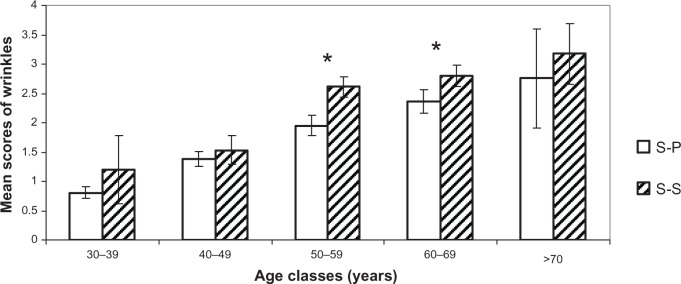
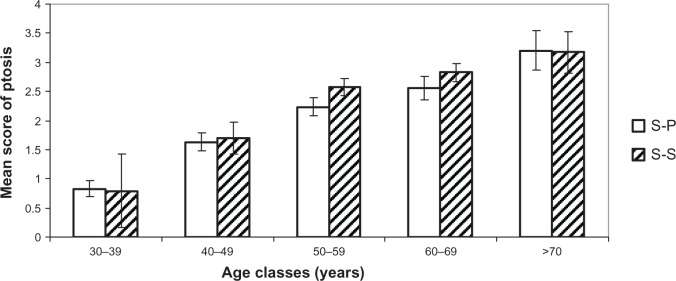
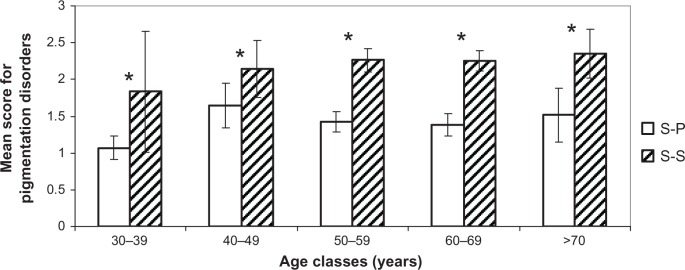
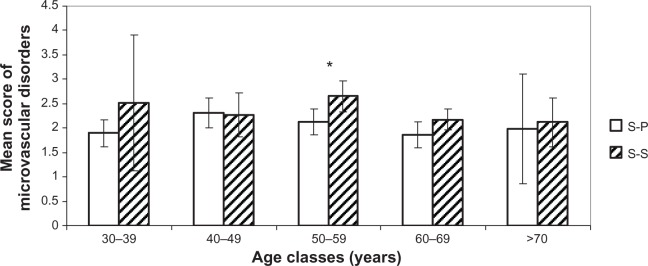
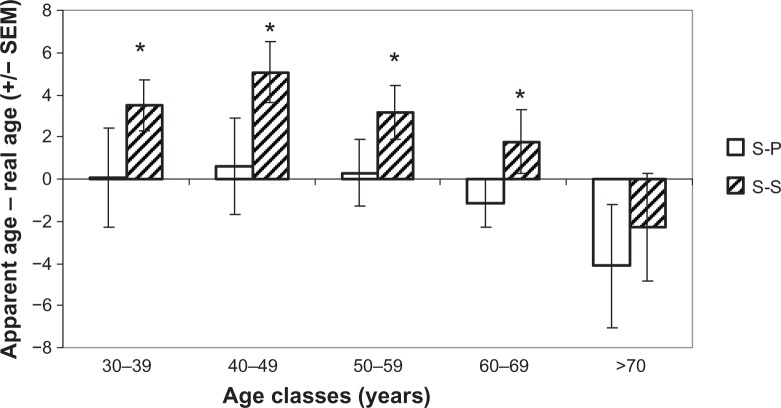
Results: By calculating statistical correlations between the four clinical clusters (wrinkles/texture, ptosis, vascular disorders, and pigmentation disorders), and real age and apparent age on the one hand and heliodermal status on the other hand, we identified a link between each clinical cluster and aging and the photoaging process. By comparing evaluations of clinical signs between the two groups for each 10-year cluster, we demonstrated that whatever the age, a prevalence of pigmentation disorders for the sun-seeking group (ie, pigmentation) is strongly linked to ultraviolet (UV) exposure. Meanwhile, clinical signs of ptosis are linked more to chronological aging and do not present differences between the two groups, nor, therefore, photoaging. Wrinkles and texture are affected by the two aging processes. Finally, clinical signs of vascular disorders present no evolution with age.
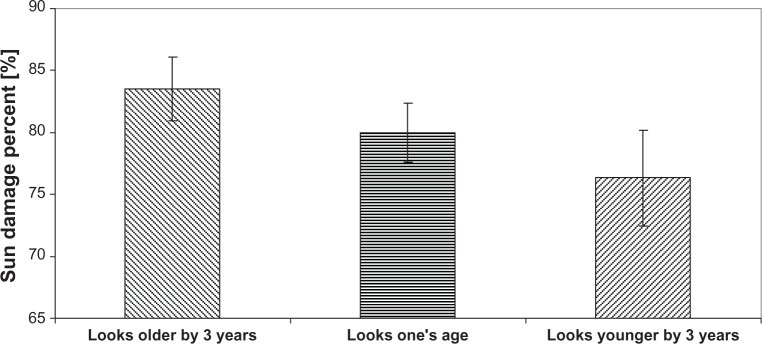
Conclusion: Clinical signs of aging are essentially influenced by extrinsic factors, especially sun exposure. Indeed UV exposure seems to be responsible for 80% of visible facial aging signs.
Keywords: UV; clinical evaluation; photoaging; pigmentation; ptosis; wrinkles.
Figures
References
-
- Lavker RM, Gerberick GF, Veres D, Irwin CJ, Kaidbey KH. Cumulative effects from repeated exposures to suberythemal doses of UVB and UVA in human skin. J Am Acad Dermatol. 1995;32(1):53–62. - PubMed
-
- Lavker RM. Cutaneous aging: chronologic versus photoaging. In: Gilchrest BA, editor. Photodammage. Cambridge, UK: Blackwell Science; 1995. pp. 123–135.
-
- El-Domyati M, Attia S, Saleh F, et al. Intrinsic aging vs photoaging: a comparative histopathological, immunohistochemical, and ultrastructural study of skin. Exp Dermatol. 2002;11(5):398–405. - PubMed
-
- Giacomoni PU, Nadaud JF, Straface E, Donelli G, Heenen M, Malorni W. Morphological alterations and cell blebbing in UV-irradiated human epidermis. Arch Dermatol Res. 1998;290(3):163–166. - PubMed
-
- Baumann L. Skin ageing and its treatment. J Pathol. 2007;211(2):241–251. - PubMed
LinkOut - more resources
Full Text Sources
Other Literature Sources
