


Norepinephrine transporter heterozygous knockout mice exhibit altered transport and behavior
- PMID: 24102798
- PMCID: PMC3852905
- DOI: 10.1111/gbb.12084
Norepinephrine transporter heterozygous knockout mice exhibit altered transport and behavior
Abstract
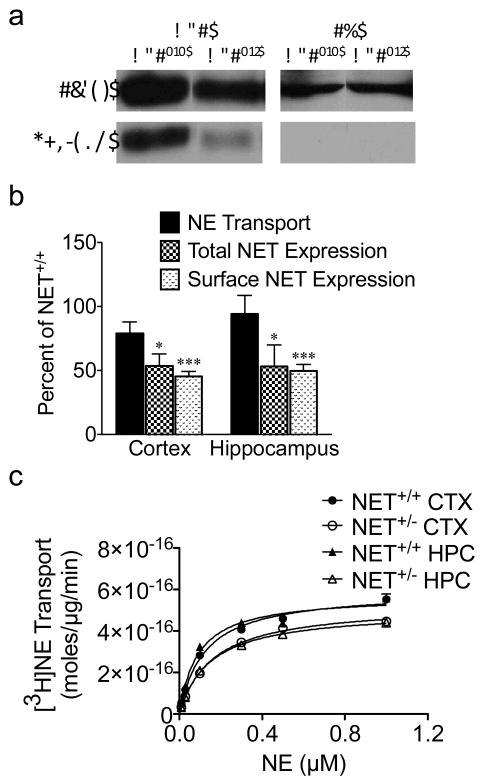
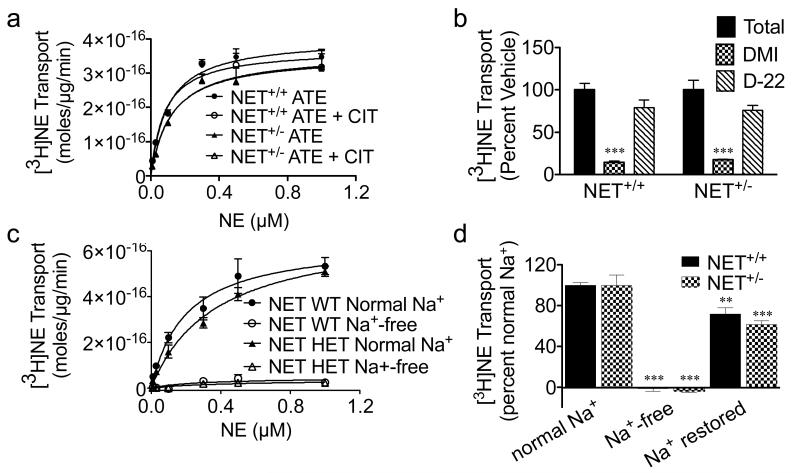
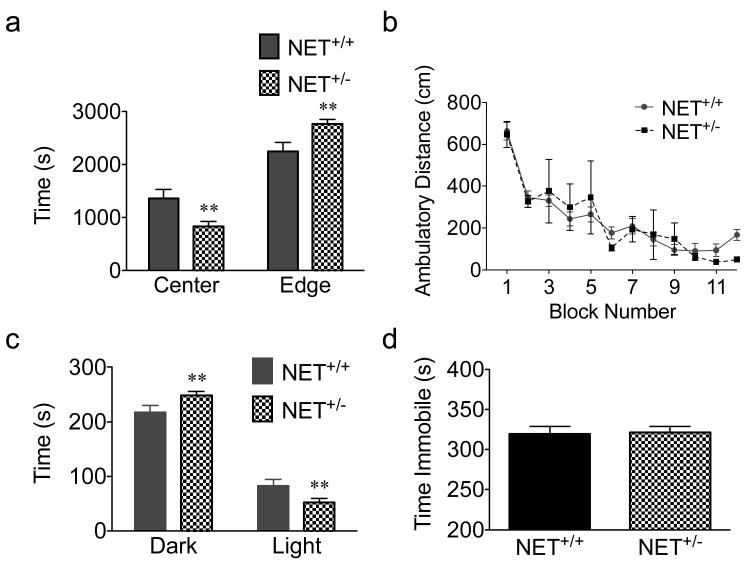
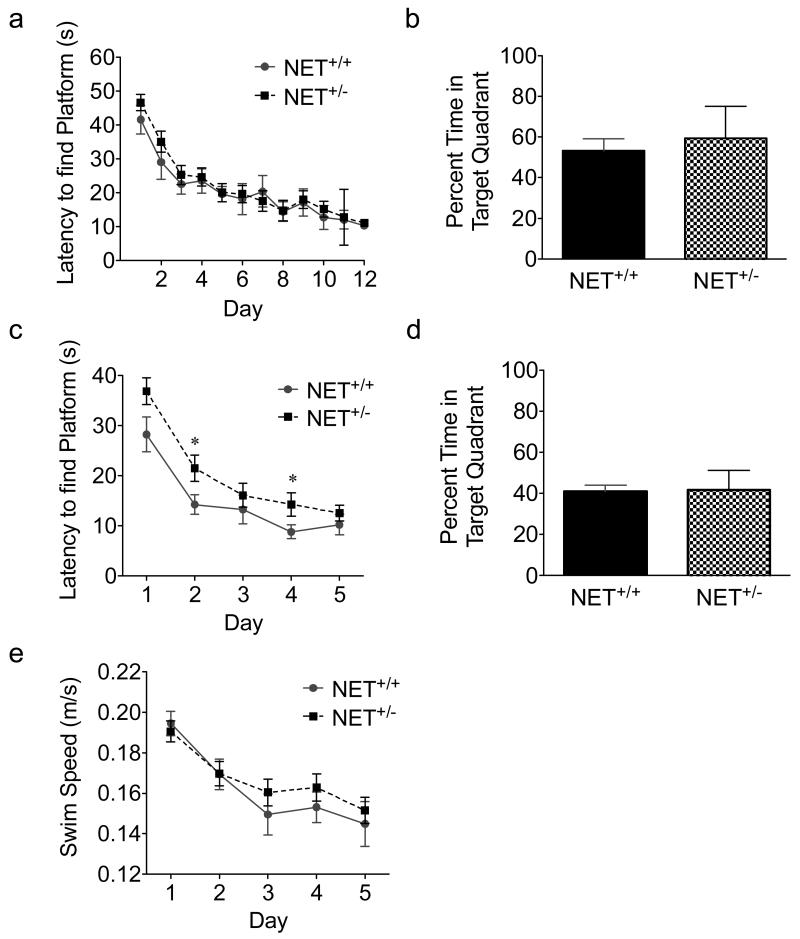
The norepinephrine (NE) transporter (NET) regulates synaptic NE availability for noradrenergic signaling in the brain and sympathetic nervous system. Although genetic variation leading to a loss of NET expression has been implicated in psychiatric and cardiovascular disorders, complete NET deficiency has not been found in people, limiting the utility of NET knockout mice as a model for genetically driven NET dysfunction. Here, we investigate NET expression in NET heterozygous knockout male mice (NET(+/-) ), demonstrating that they display an approximately 50% reduction in NET protein levels. Surprisingly, these mice display no significant deficit in NET activity assessed in hippocampal and cortical synaptosomes. We found that this compensation in NET activity was due to enhanced activity of surface-resident transporters, as opposed to surface recruitment of NET protein or compensation through other transport mechanisms, including serotonin, dopamine or organic cation transporters. We hypothesize that loss of NET protein in the NET(+/-) mouse establishes an activated state of existing surface NET proteins. The NET(+/-) mice exhibit increased anxiety in the open field and light-dark box and display deficits in reversal learning in the Morris water maze. These data suggest that recovery of near basal activity in NET(+/-) mice appears to be insufficient to limit anxiety responses or support cognitive performance that might involve noradrenergic neurotransmission. The NET(+/-) mice represent a unique model to study the loss and resultant compensatory changes in NET that may be relevant to behavior and physiology in human NET deficiency disorders.
Keywords: Anxiety; Morris water maze; depression; genetic; heterozygote; knockout; light-dark box; norepinephrine; tail suspension; transporter.
© 2013 John Wiley & Sons Ltd and International Behavioural and Neural Genetics Society.
Figures
References
-
- Ahern TH, Javors MA, Eagles DA, Martillotti J, Mitchell HA, Liles LC, Weinshenker D. The effects of chronic norepinephrine transporter inactivation on seizure susceptibility in mice. Neuropsychopharmacology. 2006;31:730–738. - PubMed
-
- Amphoux A, Vialou V, Drescher E, Bruss M, Mannoury La Cour C, Rochat C, Millan MJ, Giros B, Bonisch H, Gautron S. Differential pharmacological in vitro properties of organic cation transporters and regional distribution in rat brain. Neuropharmacology. 2006;50:941–952. - PubMed
-
- Apparsundaram S, Galli A, DeFelice LJ, Hartzell HC, Blakely RD. Acute regulation of norepinephrine transport: I. protein kinase C- linked muscarinic receptors influence transport capacity and transporter density in SK-N-SH cells. J Pharmacol Exp Ther. 1998a;287:733–743. - PubMed
-
- Apparsundaram S, Schroeter S, Giovanetti E, Blakely RD. Acute regulation of norepinephrine transport: II. PKC-modulated surface expression of human norepinephrine transporter proteins. J Pharmacol Exp Ther. 1998b;287:744–751. - PubMed
Publication types
MeSH terms
Substances
Grants and funding
LinkOut - more resources
Full Text Sources
Other Literature Sources
Medical
