


Interleukin-3 plays dual roles in osteoclastogenesis by promoting the development of osteoclast progenitors but inhibiting the osteoclastogenic process
- PMID: 24103757
- PMCID: PMC3856188
- DOI: 10.1016/j.bbrc.2013.09.098
Interleukin-3 plays dual roles in osteoclastogenesis by promoting the development of osteoclast progenitors but inhibiting the osteoclastogenic process
Abstract
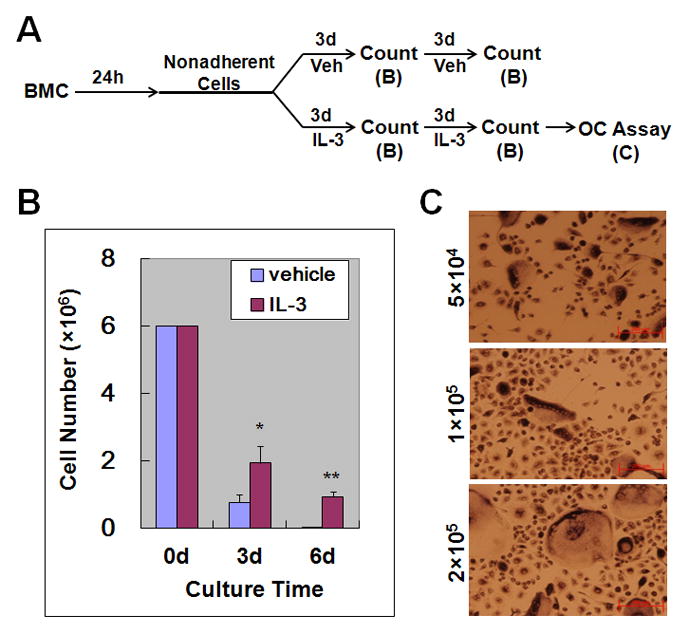
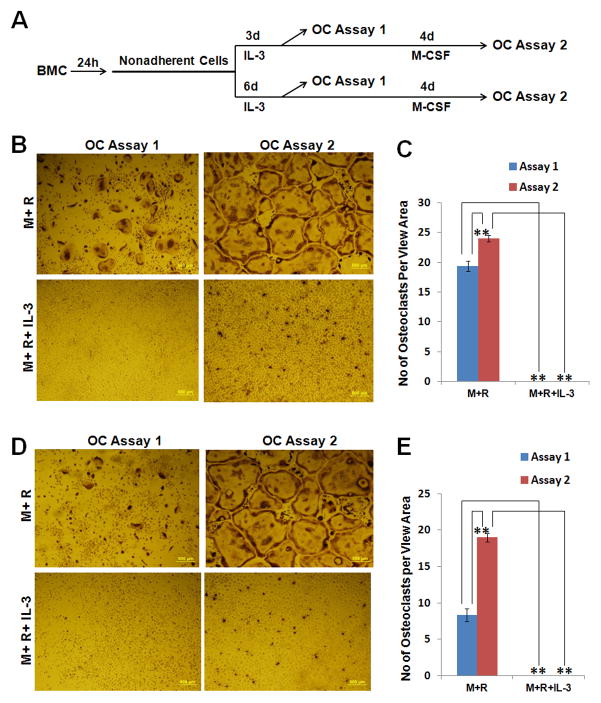
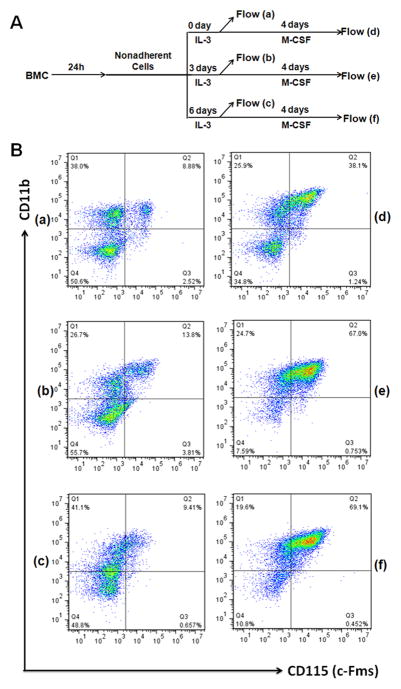
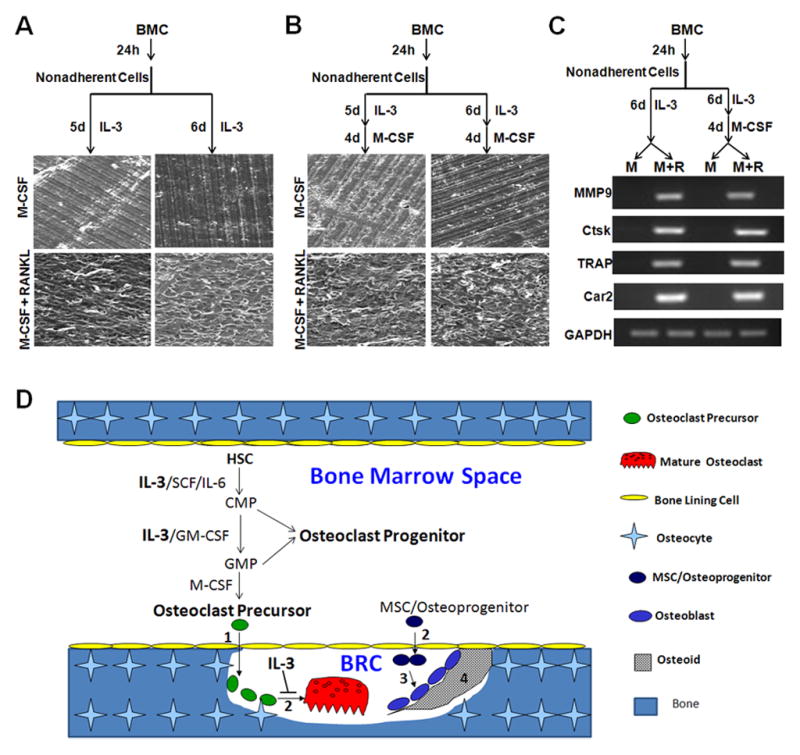
Interleukin (IL)-3, a multilineage hematopoietic growth factor, is implicated in the regulation of osteoclastogenesis. However, the role of IL-3 in osteoclastogenesis remains controversial; whereas early studies showed that IL-3 stimulates osteoclastogenesis, recent investigations demonstrated that IL-3 inhibits osteoclast formation. The objective of this work is to further address the role of IL-3 in osteoclastogenesis. We found that IL-3 treatment of bone marrow cells generated a population of cells capable of differentiating into osteoclasts in tissue culture dishes in response to the stimulation of the monocyte/macrophage-colony stimulating factor (M-CSF) and the receptor activator of nuclear factor kappa B ligand (RANKL). The IL-3-dependent hematopoietic cells were able to further proliferate and differentiate in response to M-CSF stimulation and the resulting cells were also capable of forming osteoclasts with M-CSF and RANKL treatment. Interestingly, IL-3 inhibits M-CSF-/RANKL-induced differentiation of the IL-3-dependent hematopoietic cells into osteoclasts. The flow cytometry analysis indicates that while IL-3 treatment of bone marrow cells slightly affected the percentage of osteoclast precursors in the surviving populations, it considerably increased the percentage of osteoclast precursors in the populations after subsequent M-CSF treatment. Moreover, osteoclasts derived from IL-3-dependent hematopoietic cells were fully functional. Thus, we conclude that IL-3 plays dual roles in osteoclastogenesis by promoting the development of osteoclast progenitors but inhibiting the osteoclastogenic process. These findings provide a better understanding of the role of IL-3 in osteoclastogenesis.
Keywords: APC; BMC; BRC; CMP; Car2; Ctsk; FBS; GAPDH; GM-CSF; GMP; HSC; IL-3; IL-6; Interleukin-3; M-CSF; MMP9; MSC; Osteoclast precursor; Osteoclast progenitor; Osteoclastogenesis; PBS; PE; RANKL; RT-PCR; SCF; SEM; TRAP; allophycocyanin; bone marrow cells; bone remodeling compartment; carbonic anhydrase 2; cathepsin K; common myeloid progenitors; fetal bovine serum; glyceraldehyde 3-phosphate dehydrogenase; granulocyte/macrophage colony stimulating factor; granulocyte/macrophage progenitors; hematopoietic stem cells; interleukin 3; interleukin 6; matrix metalloproteinase 9; mesenchymal stem cells; monocyte/macrophage-colony stimulating factor; phosphate-buffered buffers; phycoerythrin; receptor activator of nuclear factor kappa B ligand; reverse transcription-polymerase chain reaction; scanning electron microscopy; stem cell factor; tartrate resistant acid phosphatase; α-MEM; α-minimal essential medium.
Copyright © 2013 The Authors. Published by Elsevier Inc. All rights reserved.
Figures
References
-
- Feng X. Regulatory roles and molecular signaling of TNF family members in osteoclasts. Gene. 2005;350:1–13. - PubMed
-
- Kondo M, Wagers AJ, Manz MG, Prohaska SS, Scherer DC, Beilhack GF, Shizuru JA, Weissman IL. Biology of hematopoietic stem cells and progenitors: implications for clinical application. Annu Rev Immunol. 2003;21:759–806. - PubMed
Publication types
MeSH terms
Substances
Grants and funding
LinkOut - more resources
Full Text Sources
Other Literature Sources
Medical
Molecular Biology Databases
Research Materials
Miscellaneous
