


The neurobiology of psychopathic traits in youths
- PMID: 24105343
- PMCID: PMC4418507
- DOI: 10.1038/nrn3577
The neurobiology of psychopathic traits in youths
Abstract
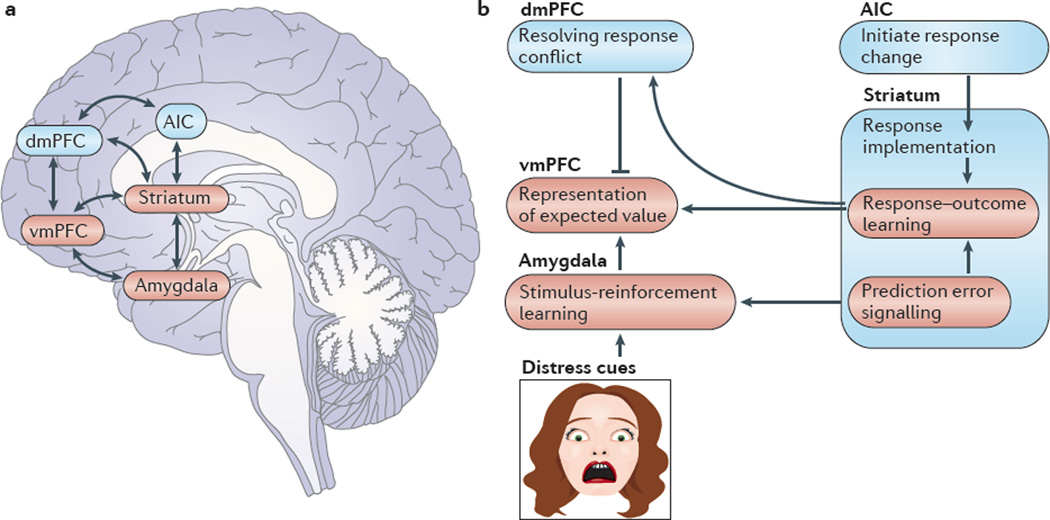
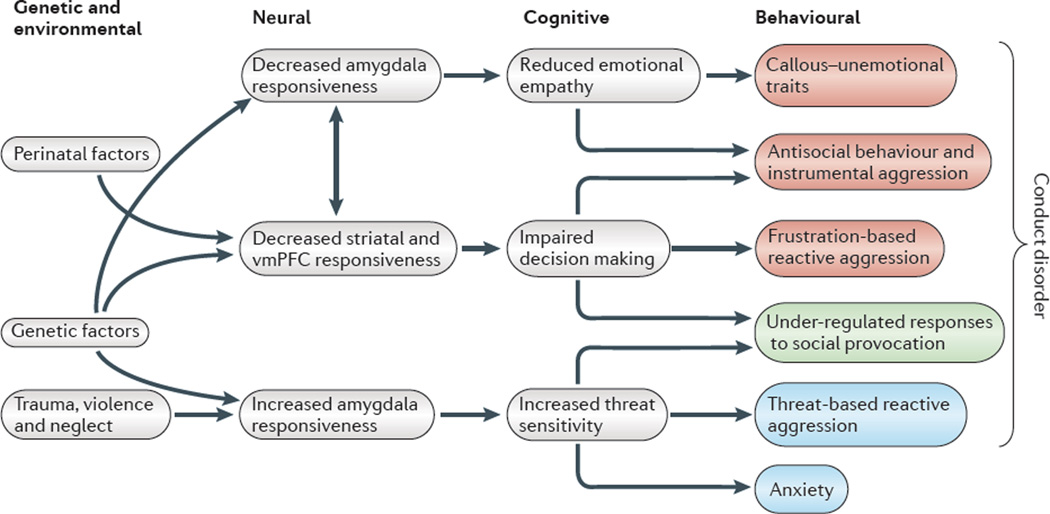
Conduct disorder is a childhood behaviour disorder that is characterized by persistent aggressive or antisocial behaviour that disrupts the child's environment and impairs his or her functioning. A proportion of children with conduct disorder have psychopathic traits. Psychopathic traits consist of a callous-unemotional component and an impulsive-antisocial component, which are associated with two core impairments. The first is a reduced empathic response to the distress of other individuals, which primarily reflects reduced amygdala responsiveness to distress cues; the second is deficits in decision making and in reinforcement learning, which reflects dysfunction in the ventromedial prefrontal cortex and striatum. Genetic and prenatal factors contribute to the abnormal development of these neural systems, and social-environmental variables that affect motivation influence the probability that antisocial behaviour will be subsequently displayed.
Figures
References
-
- Kazdin AE, Whitley M, Marciano PL. Child- therapist and parent-therapist alliance and therapeutic change in the treatment of children referred for oppositional, aggressive, and antisocial behavior. J. Child Psychol. Psychiatry. 2006;47:436–445. - PubMed
-
- Barry CT, et al. The importance of callous-unemotional traits for extending the concept of psychopathy to children. J. Abnorm. Psychol. 2000;109:335–340. - PubMed
-
- Burke JD, Loeber R, Lahey BB. Adolescent conduct disorder and interpersonal callousness as predictors of psychopathy in young adults. J. Clin. Child Adolesc. Psychol. 2007;36:334–346. - PubMed
-
-
Wootton JM, Frick PJ, Shelton KK, Silverthorn P. Ineffective parenting and childhood conduct problems: the moderating role of callous- unemotional traits. J. Consult. Clin. Psychol. 1997;65:301–308. The first study to report that the type of parenting has less of an impact on the behaviour of youths with high levels of callous-unemotional traits relative to youths with low levels of callous- unemotional traits; that is, the study shows that the pathophysiology of callous-unemotional traits interferes with socialization.
-
Publication types
MeSH terms
Grants and funding
LinkOut - more resources
Full Text Sources
Other Literature Sources
