


L (+)-lactic acid production by pellet-form Rhizopus oryzae NRRL 395 on biodiesel crude glycerol
- PMID: 24112554
- PMCID: PMC3832941
- DOI: 10.1186/1475-2859-12-92
L (+)-lactic acid production by pellet-form Rhizopus oryzae NRRL 395 on biodiesel crude glycerol
Abstract
Background: Given its availability and low price, glycerol derived from biodiesel industry has become an ideal feedstock for the production of fuels and chemicals. A solution to reduce the negative environmental problems and the cost of biodiesel is to use crude glycerol as carbon source for microbial growth media in order to produce valuable organic chemicals. In the present paper, crude glycerol was used as carbon substrate for production of L (+)-lactic acid using pelletized fungus R. oryzae NRRL 395 on batch fermentation. More, the experiments were conducted on media supplemented with inorganic nutrients and lucerne green juice.
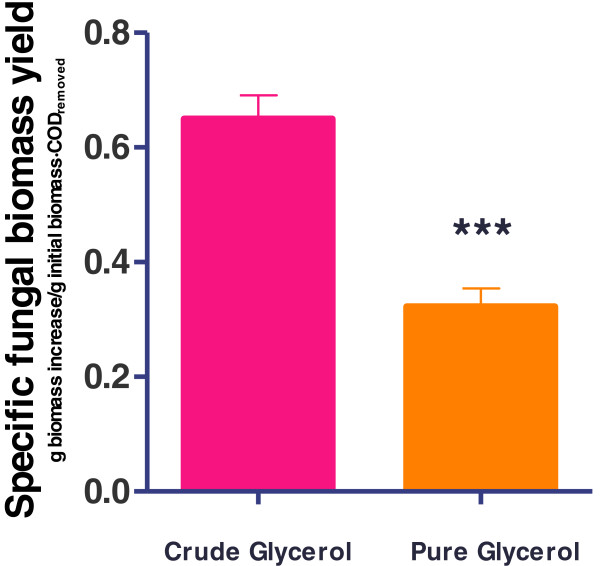
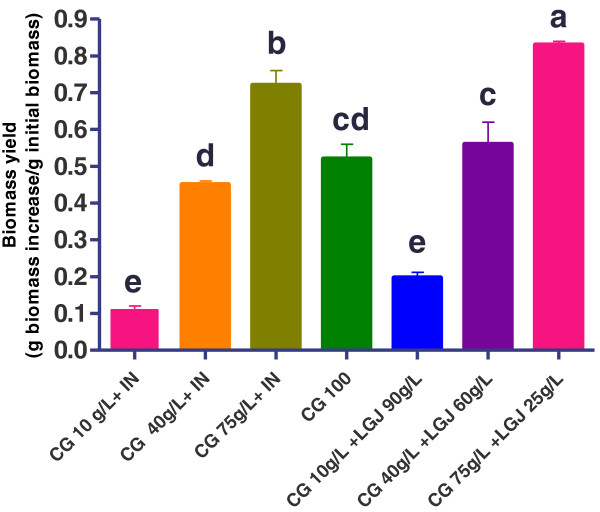
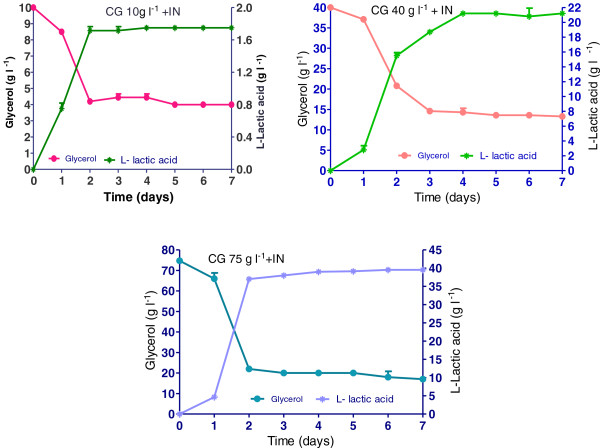
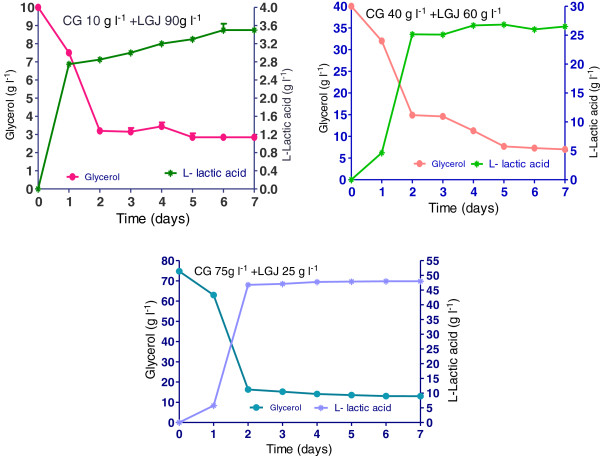
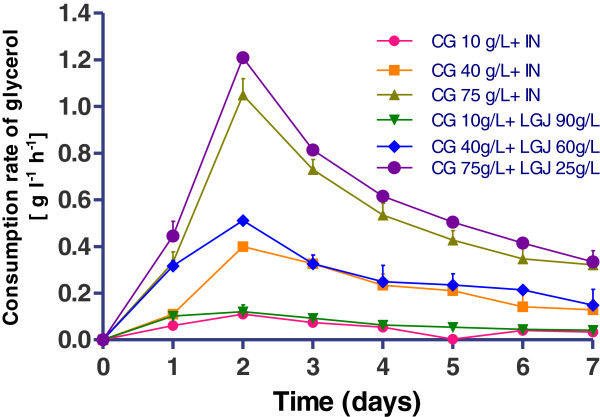
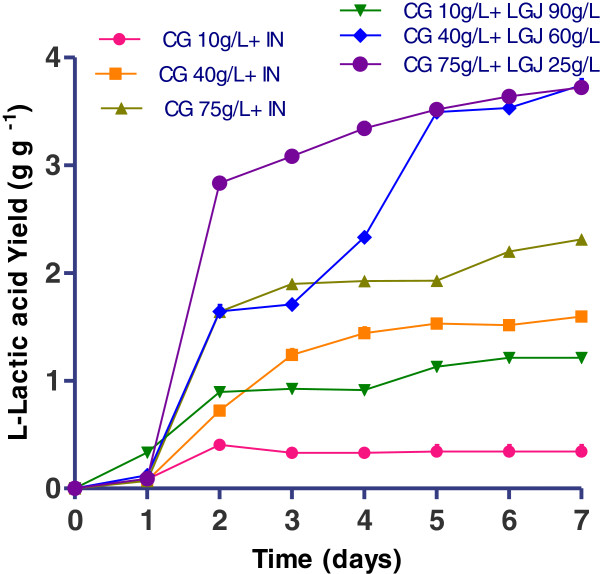
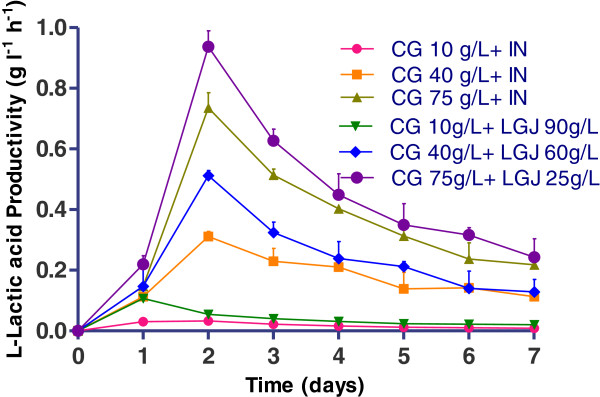
Results: Crude and pure glycerols were first used to produce the highest biomass yield of R. oryzae NRRL 395. An enhanced lactic acid production then followed up using fed-batch fermentation with crude glycerol, inorganic nutrients and lucerne green juice. The optimal crude glycerol concentration for cultivating R. oryzae NRRL 395 was 75 g l(-1), which resulted in a fungal biomass yield of 0.72 g g(-1) in trial without lucerne green juice addition and 0.83 g g(-1) in trial with lucerne green juice. The glycerol consumption rate was 1.04 g l(-1) h(-1) after 48 h in trial with crude glycerol 75 g l(-1) while in trial with crude glycerol 10 g l(-1) the lowest rate of 0.12 g l(-1) h(-1) was registered. The highest L (+)-lactic acid yield (3.72 g g(-1)) was obtained at the crude glycerol concentration of 75 g l(-1) and LGJ 25 g l(-1), and the concentration of lactic acid was approximately 48 g l(-1).
Conclusions: This work introduced sustainable opportunities for L (+)-lactic acid production via R. oryzae NRRL 395 fermentation on biodiesel crude glycerol media. The results showed good fungal growth on crude glycerol at 75 g l(-1) concentration with lucerne green juice supplementation of 25 g l(-1). Lucerne green juice provided a good source of nutrients for crude glycerol fermentation, without needs for supplementation with inorganic nutrients. Crude glycerol and lucerne green juice ratio influence the L (+)-lactic acid production, increasing the lactate productivity with the concentration of crude glycerol.
Figures
References
-
- Drozdzynska A, Leja K, Czaczyk K. Biotechnological production of 1,3-propanediol from crude glycerol. J Biotechnol Comp Bio Bionanotechnol. 2011;92:92–100.
-
- Rossi DM, da Costa JB, de Souza EA, Perelba MCR, Ayub MAZ. Bioconversion of residual glycerol from biodiesel synthesis into 1,3-propanediol and ethanol by isolated bacteria from environmental consortia. Renew Energ. 2012;39:223–227. doi: 10.1016/j.renene.2011.08.005. - DOI
-
- Kosmider A, Drozdzynska A, Blaszka K, Leja K, Czaczyk K. Propionic acid production by Propionibacterium freudenreichii ssp. shermanii using industrial wastes: crude glycerol and whey lactose. Pol J Environ Stud. 2010;19:1249–1253.
Publication types
MeSH terms
Substances
LinkOut - more resources
Full Text Sources
Other Literature Sources
Molecular Biology Databases
