


Expanded classification of hepatitis C virus into 7 genotypes and 67 subtypes: updated criteria and genotype assignment web resource
- PMID: 24115039
- PMCID: PMC4063340
- DOI: 10.1002/hep.26744
Expanded classification of hepatitis C virus into 7 genotypes and 67 subtypes: updated criteria and genotype assignment web resource
Abstract
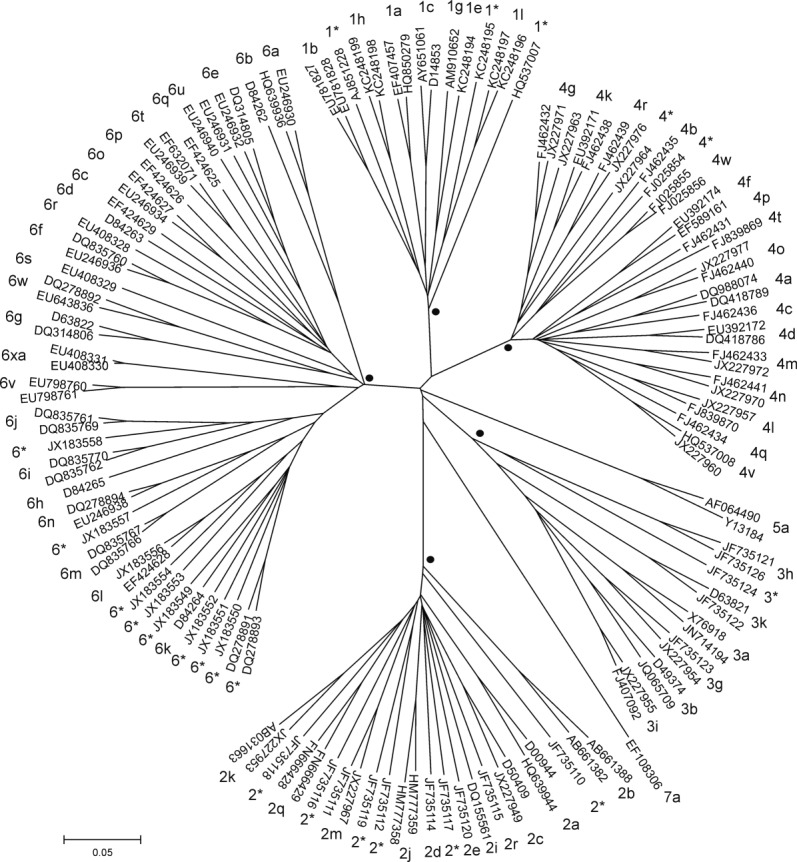
The 2005 consensus proposal for the classification of hepatitis C virus (HCV) presented an agreed and uniform nomenclature for HCV variants and the criteria for their assignment into genotypes and subtypes. Since its publication, the available dataset of HCV sequences has vastly expanded through advancement in nucleotide sequencing technologies and an increasing focus on the role of HCV genetic variation in disease and treatment outcomes. The current study represents a major update to the previous consensus HCV classification, incorporating additional sequence information derived from over 1,300 (near-)complete genome sequences of HCV available on public databases in May 2013. Analysis resolved several nomenclature conflicts between genotype designations and using consensus criteria created a classification of HCV into seven confirmed genotypes and 67 subtypes. There are 21 additional complete coding region sequences of unassigned subtype. The study additionally describes the development of a Web resource hosted by the International Committee for Taxonomy of Viruses (ICTV) that maintains and regularly updates tables of reference isolates, accession numbers, and annotated alignments (http://talk.ictvonline.org/links/hcv/hcv-classification.htm). The Flaviviridae Study Group urges those who need to check or propose new genotypes or subtypes of HCV to contact the Study Group in advance of publication to avoid nomenclature conflicts appearing in the literature. While the criteria for assigning genotypes and subtypes remain unchanged from previous consensus proposals, changes are proposed in the assignment of provisional subtypes, subtype numbering beyond "w," and the nomenclature of intergenotypic recombinant.
Conclusion: This study represents an important reference point for the consensus classification of HCV variants that will be of value to researchers working in clinical and basic science fields.
© 2013 by the American Association for the Study of Liver Diseases.
Figures
References
-
- Choo Q, Kuo G, Weiner A, Overby L, Bradley D, Houghton M. Isolation of a cDNA clone derived from a blood-borne non-A, non-B viral hepatitis genome. Science. 1989;80(244):359–362. - PubMed
-
- Simmonds P, Bukh J, Combet C, Deléage G, Enomoto N, Feinstone S, et al. Consensus proposals for a unified system of nomenclature of hepatitis C virus genotypes. Hepatology. 2005;43:962–973. - PubMed
-
- Yusim K, Richardson R, Tao N, Dalwani A, Agrawal A, Szinger J, et al. Los alamos hepatitis C immunology database. Appl Bioinformatics. 2005;4:217–225. - PubMed
-
- Kuiken C, Combet C, Bukh J, Shin-I T, Deleage G, Mizokami M, et al. A comprehensive system for consistent numbering of HCV sequences, proteins and epitopes. Hepatology. 2006;44:1355–1361. - PubMed
Publication types
MeSH terms
Grants and funding
LinkOut - more resources
Full Text Sources
Other Literature Sources
Medical