


Prenatal maternal depression symptoms and nutrition, and child cognitive function
- PMID: 24115347
- PMCID: PMC3844897
- DOI: 10.1192/bjp.bp.113.129486
Prenatal maternal depression symptoms and nutrition, and child cognitive function
Abstract
Background: Little is currently known about how maternal depression symptoms and unhealthy nutrition during pregnancy may developmentally interrelate to negatively affect child cognitive function.
Aims: To test whether prenatal maternal depression symptoms predict poor prenatal nutrition, and whether this in turn prospectively associates with reduced postnatal child cognitive function.
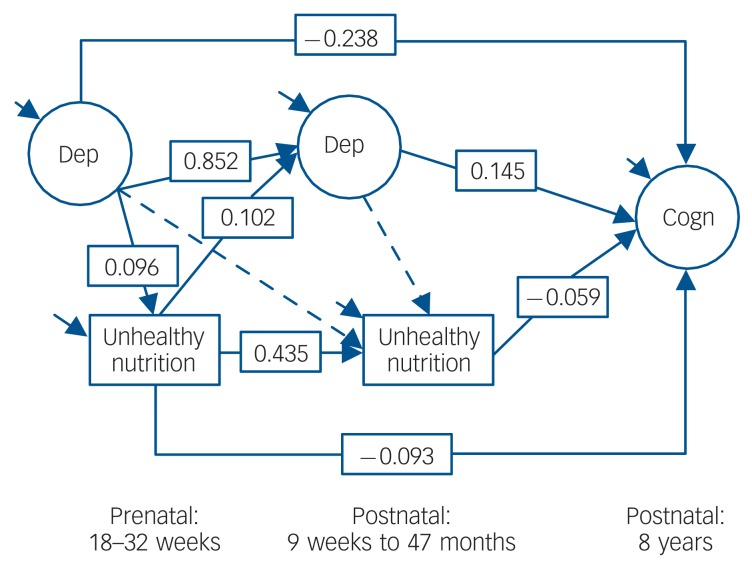
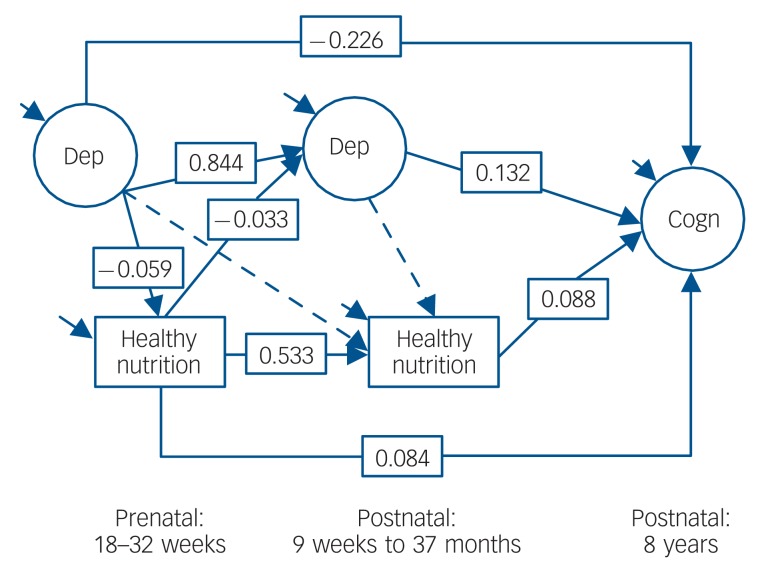
Method: In 6979 mother-offspring pairs participating in the Avon Longitudinal Study of Parents and Children (ALSPAC) in the UK, maternal depression symptoms were assessed five times between 18 weeks gestation and 33 months old. Maternal reports of the nutritional environment were assessed at 32 weeks gestation and 47 months old, and child cognitive function was assessed at age 8 years.
Results: During gestation, higher depressive symptoms were related to lower levels of healthy nutrition and higher levels of unhealthy nutrition, each of which in turn was prospectively associated with reduced cognitive function. These results were robust to postnatal depression symptoms and nutrition, as well as a range of potential prenatal and postnatal confounds (i.e. poverty, teenage mother, low maternal education, parity, birth complications, substance use, criminal lifestyle, partner cruelty towards mother).
Conclusions: Prenatal interventions aimed at the well-being of children of parents with depression should consider targeting the nutritional environment.
Conflict of interest statement
None.
Figures
References
-
- Goodman S, Rouse M, Connell A, Broth M, Hall C, Heyward D. Maternal depression and child psychopathology: a meta-analytic review. Clin Child Fam Psychol Rev 2011; 14: 1–27 - PubMed
-
- Goodman SH, Gotlib IH. Risk for psychopathology in the children of depressed parents: a developmental approach to the understanding of mechanisms. Psychol Rev 1999; 106: 458–90 - PubMed
-
- Pawlby S, Hay D, Sharp D, Waters CS, Pariante CM. Antenatal depression and offspring psychopathology: the influence of childhood maltreatment. Br J Psychiatry 2011; 199: 106–12 - PubMed
-
- Murray L. The impact of postnatal depression on infant development. J Child Psychol Psychiatry 1992; 33: 543–561 - PubMed
Publication types
MeSH terms
Grants and funding
LinkOut - more resources
Full Text Sources
Other Literature Sources
Medical
