


RNA interference functions as an antiviral immunity mechanism in mammals
- PMID: 24115437
- PMCID: PMC3875315
- DOI: 10.1126/science.1241911
RNA interference functions as an antiviral immunity mechanism in mammals
Abstract
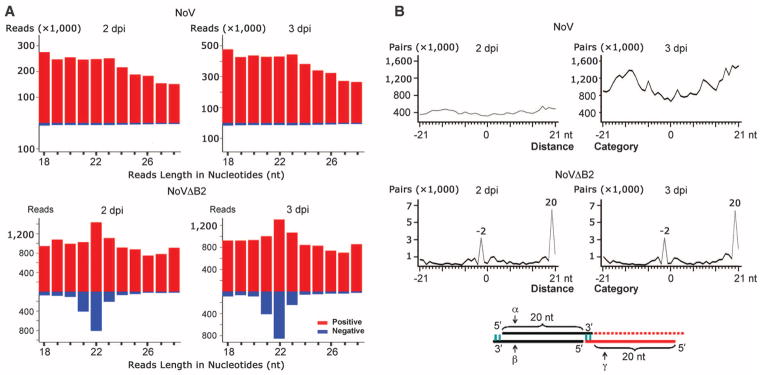
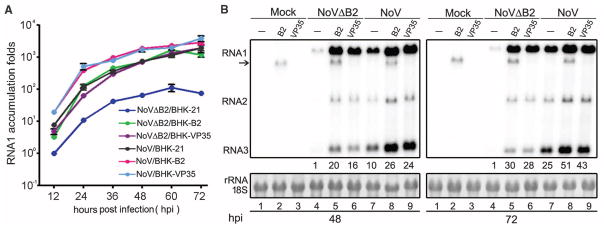
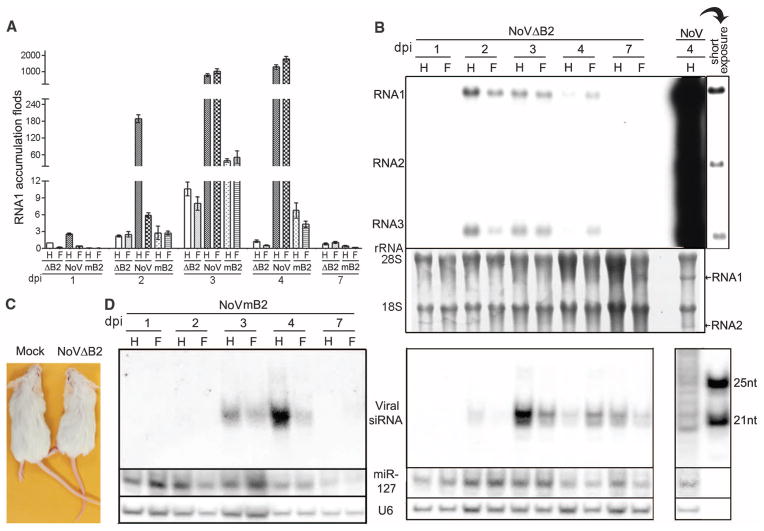
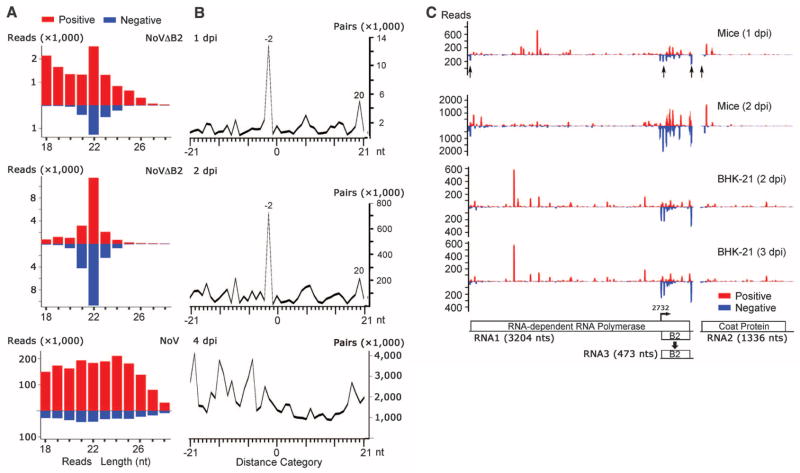
Diverse eukaryotic hosts produce virus-derived small interfering RNAs (siRNAs) to direct antiviral immunity by RNA interference (RNAi). However, it remains unknown whether the mammalian RNAi pathway has a natural antiviral function. Here, we show that infection of hamster cells and suckling mice by Nodamura virus (NoV), a mosquito-transmissible RNA virus, requires RNAi suppression by its B2 protein. Loss of B2 expression or its suppressor activity leads to abundant production of viral siRNAs and rapid clearance of the mutant viruses in mice. However, viral small RNAs detected during virulent infection by NoV do not have the properties of canonical siRNAs. These findings have parallels with the induction and suppression of antiviral RNAi by the related Flock house virus in fruit flies and nematodes and reveal a mammalian antiviral immunity mechanism mediated by RNAi.
Figures
Comment in
-
Molecular biology. RNAi, Antiviral after all.Science. 2013 Oct 11;342(6155):207-8. doi: 10.1126/science.1245475. Science. 2013. PMID: 24115433 No abstract available.
-
Small RNAs: antiviral RNAi in mammals.Nat Rev Genet. 2013 Dec;14(12):821. doi: 10.1038/nrg3616. Epub 2013 Oct 22. Nat Rev Genet. 2013. PMID: 24145213 No abstract available.
-
Antiviral RNA interference in animals: piecing together the evidence.Nat Struct Mol Biol. 2013 Nov;20(11):1239-41. doi: 10.1038/nsmb.2708. Nat Struct Mol Biol. 2013. PMID: 24197164 No abstract available.
References
Publication types
MeSH terms
Substances
Grants and funding
LinkOut - more resources
Full Text Sources
Other Literature Sources
