


Effects of crude oil exposure on bioaccumulation of polycyclic aromatic hydrocarbons and survival of adult and larval stages of gelatinous zooplankton
- PMID: 24116004
- PMCID: PMC3792109
- DOI: 10.1371/journal.pone.0074476
Effects of crude oil exposure on bioaccumulation of polycyclic aromatic hydrocarbons and survival of adult and larval stages of gelatinous zooplankton
Abstract
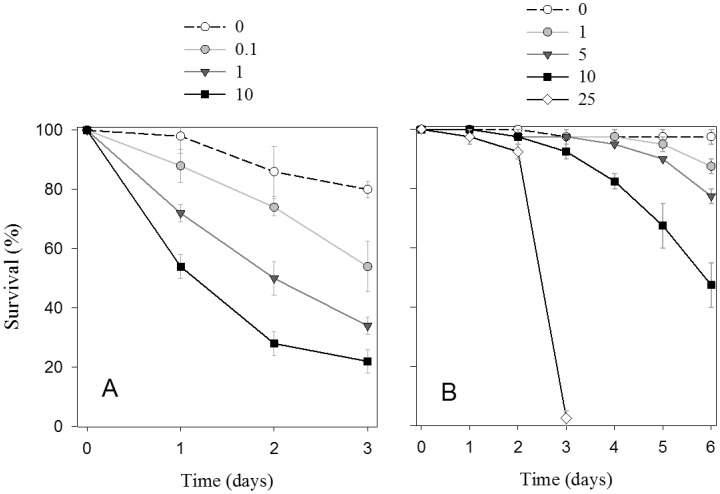
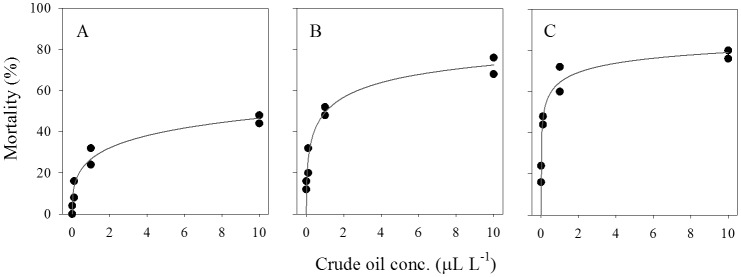
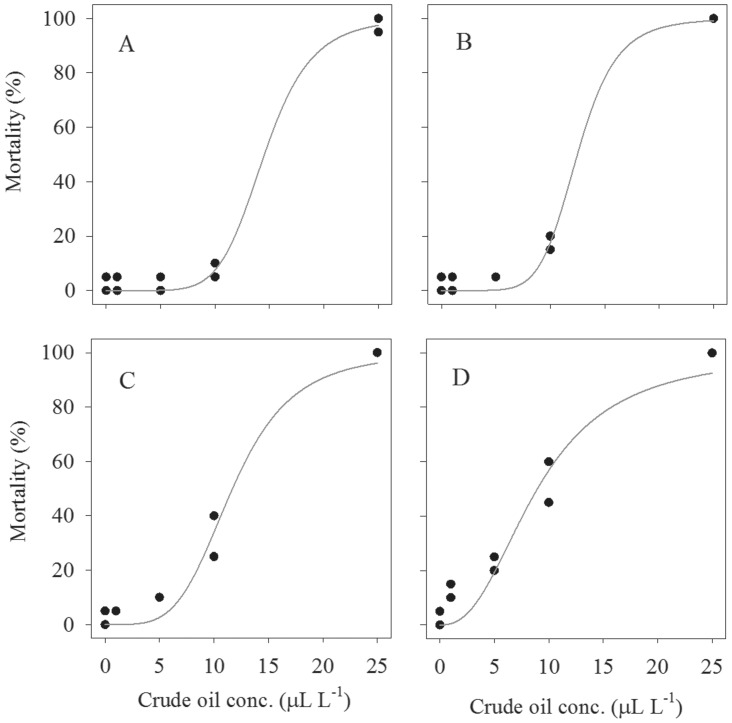
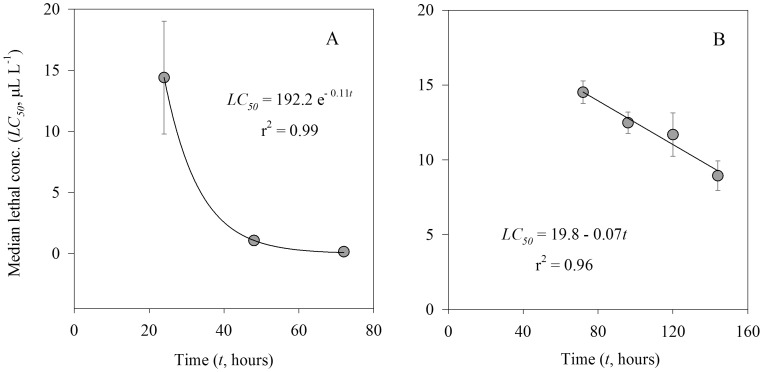
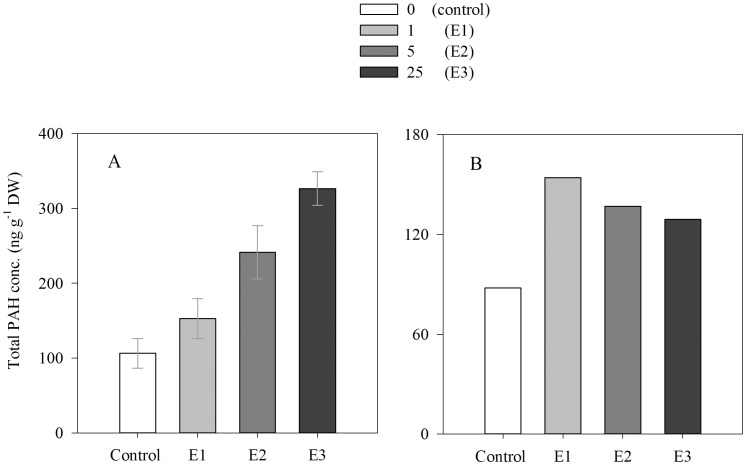
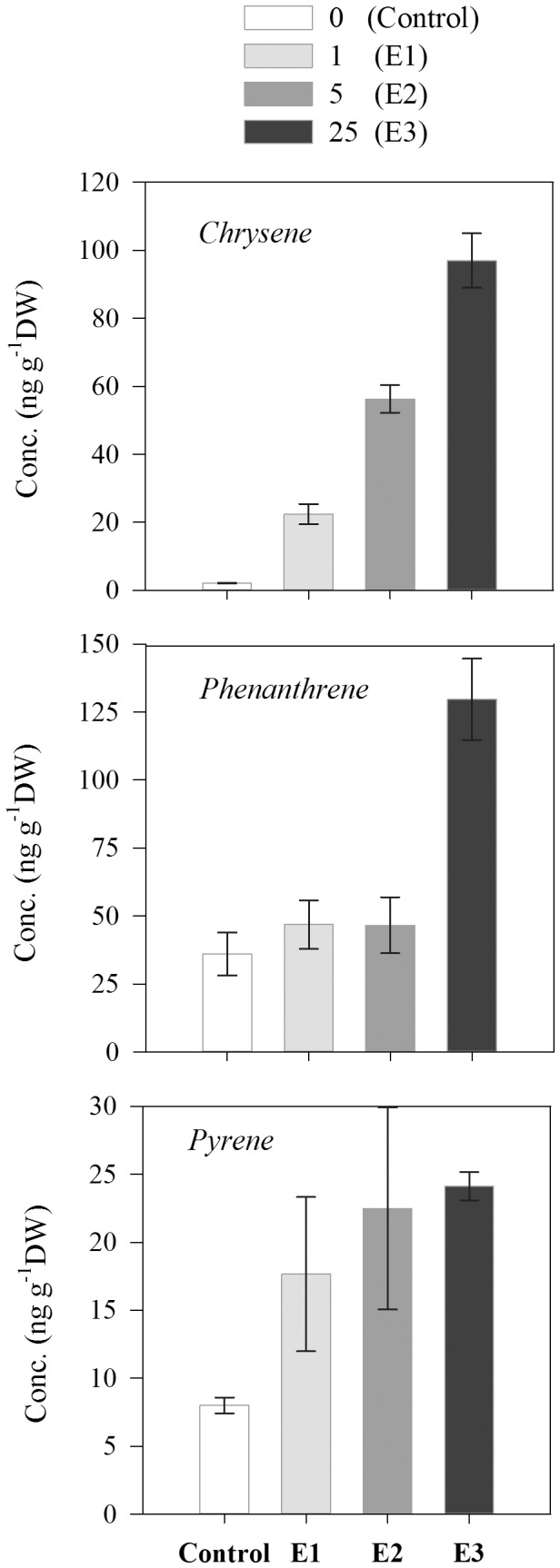
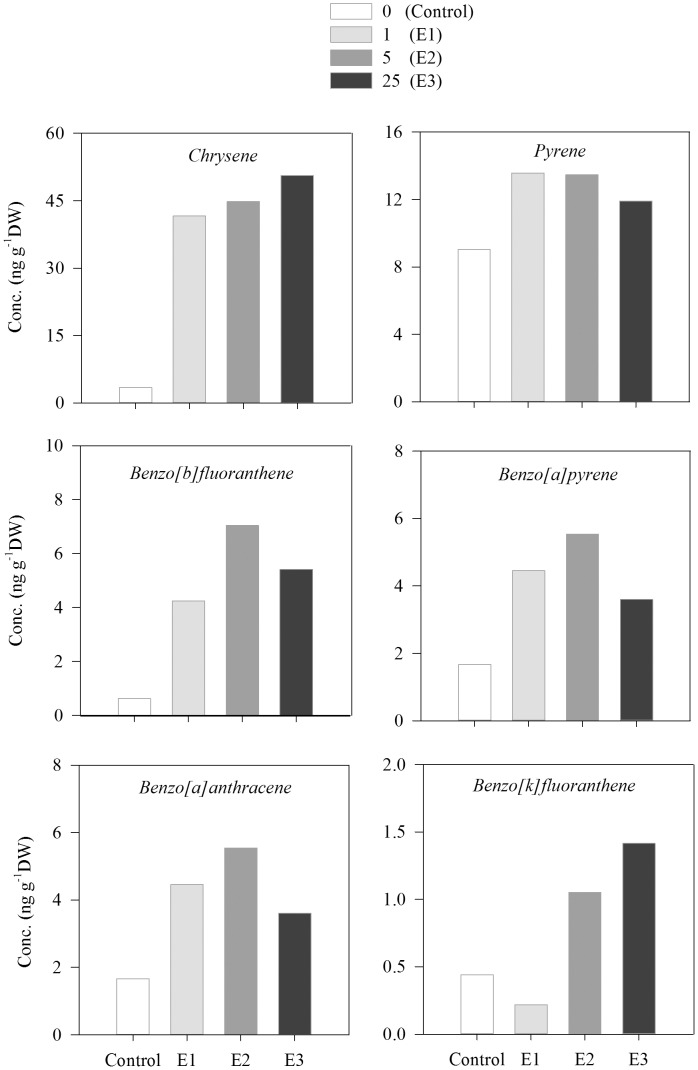
Gelatinous zooplankton play an important role in marine food webs both as major consumers of metazooplankton and as prey of apex predators (e.g., tuna, sunfish, sea turtles). However, little is known about the effects of crude oil spills on these important components of planktonic communities. We determined the effects of Louisiana light sweet crude oil exposure on survival and bioaccumulation of polycyclic aromatic hydrocarbons (PAHs) in adult stages of the scyphozoans Pelagia noctiluca and Aurelia aurita and the ctenophore Mnemiopsis leidyi, and on survival of ephyra larvae of A. aurita and cydippid larvae of M. leidyi, in the laboratory. Adult P. noctiluca showed 100% mortality at oil concentration ≥20 µL L(-1) after 16 h. In contrast, low or non-lethal effects were observed on adult stages of A. aurita and M. leidyi exposed at oil concentration ≤25 µL L(-1) after 6 days. Survival of ephyra and cydippid larva decreased with increasing crude oil concentration and exposition time. The median lethal concentration (LC50) for ephyra larvae ranged from 14.41 to 0.15 µL L(-1) after 1 and 3 days, respectively. LC50 for cydippid larvae ranged from 14.52 to 8.94 µL L(-1) after 3 and 6 days, respectively. We observed selective bioaccumulation of chrysene, phenanthrene and pyrene in A. aurita and chrysene, pyrene, benzo[a]pyrene, benzo[b]fluoranthene, benzo[k]fluoranthene, and benzo[a]anthracene in M. leidyi. Overall, our results indicate that (1) A. aurita and M. leidyi adults had a high tolerance to crude oil exposure compared to other zooplankton, whereas P. noctiluca was highly sensitive to crude oil, (2) larval stages of gelatinous zooplankton were more sensitive to crude oil than adult stages, and (3) some of the most toxic PAHs of crude oil can be bioaccumulated in gelatinous zooplankton and potentially be transferred up the food web and contaminate apex predators.
Conflict of interest statement
Figures
References
-
- National Research Council (NRC) (2003) Oil in the sea iii: inputs, fates, and effects. National Academy Press, Washington, DC. - PubMed
-
- Dalsøren SB, Endresen Ø, Isaksen ISA, Gravir G, Sørgård E (2007) Environmental impacts of the expected increase in sea transportation, with a particular focus on oil and gas scenarios for Norway and northwest Russia,. J Geophys Res 112: D02310.
-
- Kvenvolden KA, Cooper CK (2003) Natural seepage of crude oil into the marine environment. Geo-Mar Letters 23: 140–146.
-
- White HKP, Hsing Y, Cho W, Shank TM, Cordes EE, et al. (2012) Impact of the Deepwater Horizon oil spill on a deep-water coral community in the Gulf of Mexico. Proc Natl Acad Sci USA 10.1073/pnas. 1118029109 - DOI - PMC - PubMed
Publication types
MeSH terms
Substances
LinkOut - more resources
Full Text Sources
Other Literature Sources
Medical
Miscellaneous
