


Targeting neuroblastoma stem cells with retinoic acid and proteasome inhibitor
- PMID: 24116151
- PMCID: PMC3792090
- DOI: 10.1371/journal.pone.0076761
Targeting neuroblastoma stem cells with retinoic acid and proteasome inhibitor
Abstract
Background: Neuroblastma cell lines contain a side-population of cells which express stemness markers. These stem-like cells may represent the potential underlying mechanism for resistance to conventional therapy and recurrence of neuroblastoma in patients.
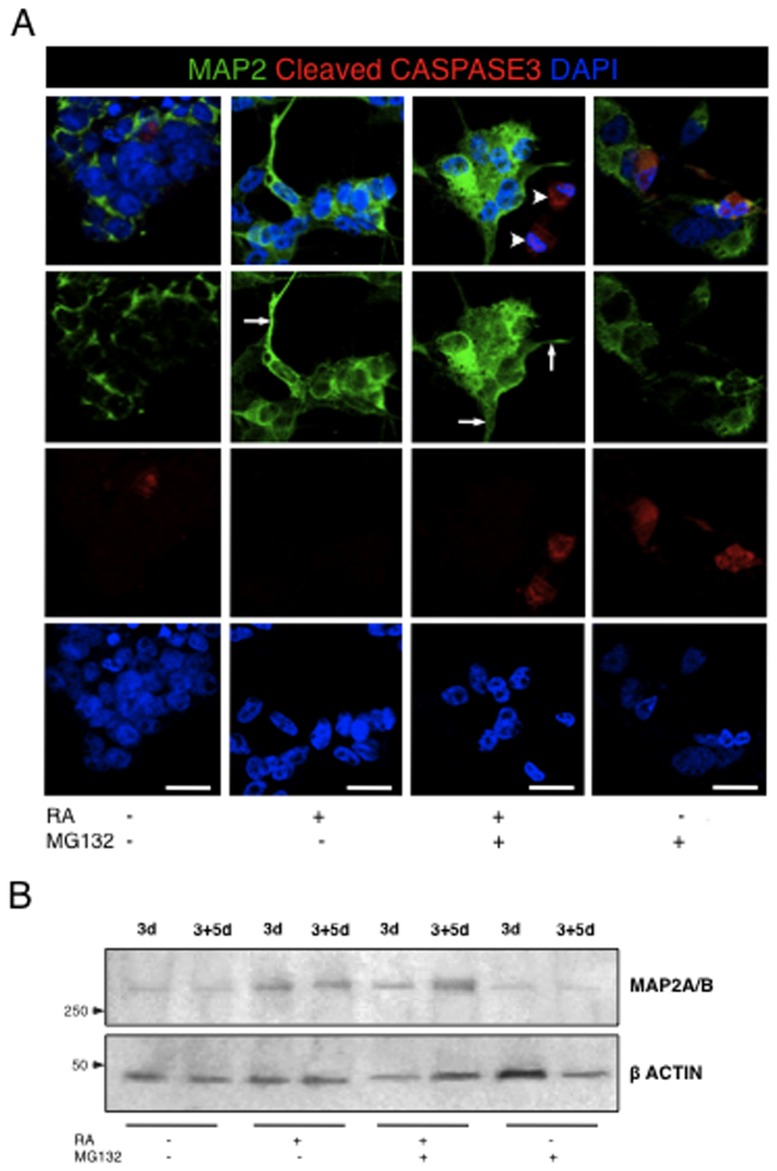
Methodology/principal findings: To develop novel strategies for targeting the side-population of neurobastomas, we analyzed the effects of 13-cis-retinoic acid (RA) combined with the proteasome inhibitor MG132. The short-term action of the treatment was compared with effects after a 5-day recovery period during which both chemicals were withdrawn. RA induced growth arrest and differentiation of SH-SY5Y and SK-N-BE(2) neuroblastoma cell lines. Inhibition of the proteasome caused apoptosis in both cell lines, thus, revealing the critical role of this pathway in the regulated degradation of proteins involved in neuroblastoma proliferation and survival. The combination of RA with MG132 induced apoptosis in a dose-dependent manner, in addition to promoting G2/M arrest in treated cultures. Interestingly, expression of stem cell markers such as Nestin, Sox2, and Oct4 were reduced after the recovery period of combined treatment as compared with untreated cells or treated cells with either compound alone. Consistent with this, neurosphere formation was significantly impaired by the combined treatment of RA and MG132.
Conclusions: Given that stem-like cells are associated with resistant to conventional therapy and are thought to be responsible for relapse, our results suggest that dual therapy of RA and proteasome inhibitor might be beneficial for targeting the side-population of cells associated residual disease in high-risk neuroblastoma.
Conflict of interest statement
Figures



References
-
- Canete A, Gerrard M, Rubie H, Castel V, Di Cataldo A et al. (2009) Poor survival for infants with MYCN-amplified metastatic neuroblastoma despite intensified treatment: the International Society of Paediatric Oncology European Neuroblastoma Experience. J Clin Oncol 27: 1014-1019. doi: 10.1200/JCO.2007.14.5839. PubMed: 19171715. - DOI - PubMed
-
- London WB, Castel V, Monclair T, Ambros PF, Pearson AD et al. (2011) Clinical and biologic features predictive of survival after relapse of neuroblastoma: a report from the International Neuroblastoma Risk Group project. J Clin Oncol 29: 3286-3292. doi: 10.1200/JCO.2010.34.3392. PubMed: 21768459. - DOI - PMC - PubMed
-
- Matthay KK, Villablanca JG, Seeger RC, Stram DO, Harris RE et al. (1999) Treatment of high-risk neuroblastoma with intensive chemotherapy, radiotherapy, autologous bone marrow transplantation, and 13-cis-retinoic acid. Children’s Cancer Group. N Engl J Med 341: 1165-1173 - PubMed
Publication types
MeSH terms
Substances
LinkOut - more resources
Full Text Sources
Other Literature Sources
