Review
. 2014 May;38(3):473-92.
doi: 10.1111/1574-6976.12046. Epub 2013 Oct 31.

Peptide pheromone signaling in Streptococcus and Enterococcus

Affiliations
Review

Peptide pheromone signaling in Streptococcus and Enterococcus

Laura C Cook et al. FEMS Microbiol Rev. 2014 May.

Abstract

Intercellular chemical signaling in bacteria, commonly referred to as quorum sensing (QS), relies on the production and detection of compounds known as pheromones to elicit coordinated responses among members of a community. Pheromones produced by Gram-positive bacteria are comprised of small peptides. Based on both peptide structure and sensory system architectures, Gram-positive bacterial signaling pathways may be classified into one of four groups with a defining hallmark: cyclical peptides of the Agr type, peptides that contain Gly-Gly processing motifs, sensory systems of the RNPP family, or the recently characterized Rgg-like regulatory family. The recent discovery that Rgg family members respond to peptide pheromones increases substantially the number of species in which QS is likely a key regulatory component. These pathways control a variety of fundamental behaviors including conjugation, natural competence for transformation, biofilm development, and virulence factor regulation. Overlapping QS pathways found in multiple species and pathways that utilize conserved peptide pheromones provide opportunities for interspecies communication. Here we review pheromone signaling identified in the genera Enterococcus and Streptococcus, providing examples of all four types of pathways.

Keywords: Firmicutes; biofilms; competence; gene regulation; intercellular communication; virulence.


Figures

Figure 1
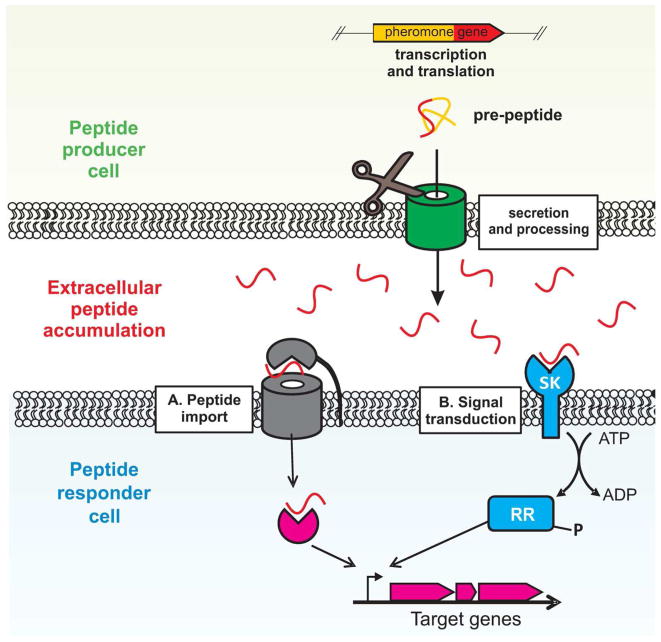
Figure 1. Peptide signaling in Gram-positive bacteria
Production of Gram-positive peptide pheromones involves transcription and translation of precursors followed by processing and secretion. Once in the extracellular environment, peptides are often further processed before interacting with surrounding cells. To exert effects on neighboring cells, peptides are either A. directly imported into the cell where they interact with their cognate receptor or B. interact with a surface exposed senor kinase (SK). Following peptide interaction with an SK, a signal is transmitted intracellularly in the form of phosphorylation of a response regulator (RR). The phosphorylated RR or peptide/receptor combination can then alter gene expression by either directly binding DNA or interacting with transcriptional regulators such as sigma factors and RNA polymerase.
Figure 2
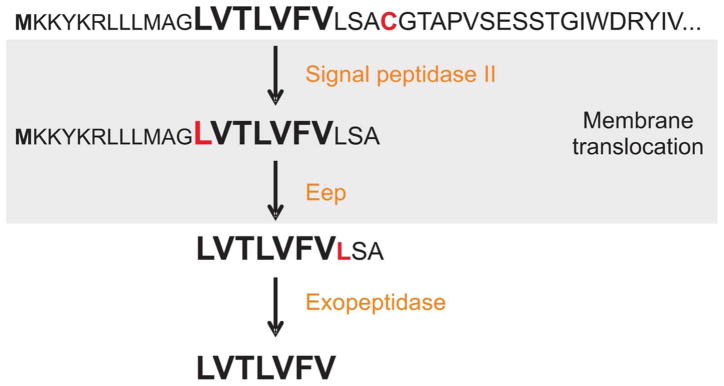
Figure 2. Processing of the E. faecalis conjugation peptide cCF10
Processing of the CcfA lipoprotein involves at least three separate cleavage events that occur upstream of the amino acids indicated in red. First, Signal peptidase II cleaves the lipoprotein upstream of a cysteine residue. The peptide precursor is then cleaved sometime during the transport process, likelyby a metalloprotease, Eep, possibly assisted by other proteases. The pro-peptide is secreted into the extracellular environment where it is further cleaved by an exopeptidase, removing the terminal three amino acids to give the mature cCF10 peptide pheromone which is now free to interact with neighboring cells.
Figure 3
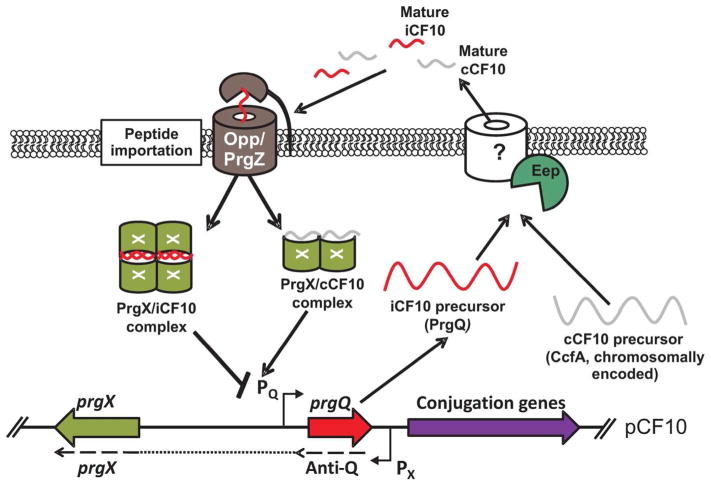
Figure 3. Peptide regulation of pCF10 conjugation in E. faecalis
During non-inducing conditions, PrgQ is produced constitutively from the PQ promoter. PrgQ, the precursor for the iCF10 peptide, is processed by Eep immediately before or during secretion. Mature iCF10 pheromone in the extracellular milieu is sensed by surrounding cells and taken up via PrgZ and the Opp system where the peptide interacts with the PrgX regulator. PrgX-iCF10 complexes are thought to form a tetrameric structure allowing binding of PrgX to DNA adjacent to PQ, effectively shutting off transcription by blocking RNA polymerase access. Concurrently, cells are constitutively producing CcfA from the chromosome. CcfA, the cCF10 peptide precursor, is processed, secreted, and reimported similarly to iCF10. Once exported, mature cCF10 pheromone has been re-internalized, it competes with iCF10 to bind to PrgX. When cCF10 is in abundance, the system favors PrgX-cCF10 complexes destabilizing the DNA binding tetramer and allowing for increased RNA polymerase access to PQ and transcription of the downstream conjugation genes.
Figure 4
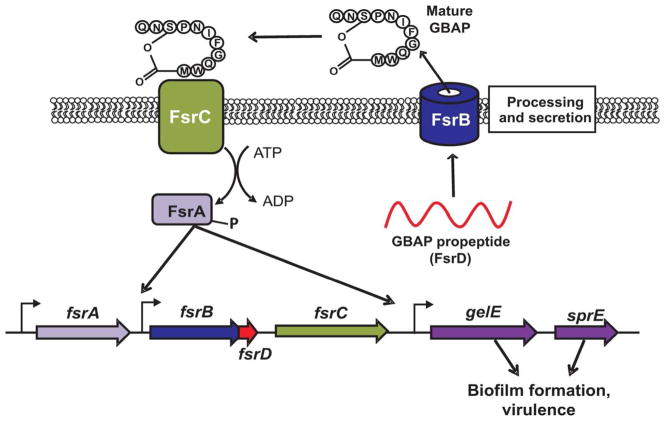
Figure 4. The Fsr QS system of E. faecalis
FsrD, the gelatinase biosynthesis activating pheromone (GBAP) precursor, is processed to a cyclical peptide during secretion by FsrB. Mature GBAP pheromone interacts with the FsrC sensor kinase on the surface of surrounding cells causing phosphorylation of the DNA-binding response regulator, FsrA. Phosphorylated FsrA binds to promoters, including those of fsrB and gelE/sprE, and upregulates gene expression.
Figure 5
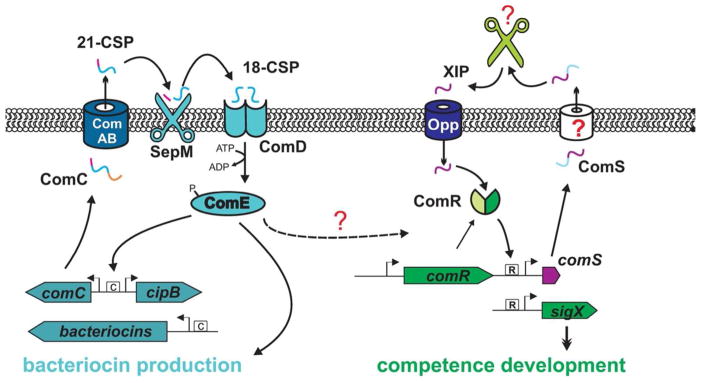
Figure 5. Competence development in streptococci
Left panel: Competence development in Anginosus and Mitis groups of streptococci uses the ComAB/ComCDE system and requires production and processing of ComC to the competence stimulating peptide CSP. CSP interaction with the surface sensor kinase ComD allows phosphorylation of ComE. Phosphorylated ComE binds to conserved CIN (C) box motifs upstream of late competence genes in streptococci of the Mitis and Anginosus groups as well as bacteriocins in S. mutans. Right panel: In the Pyogenic, Bovis, Salivarius and Mutans groups of streptococci, the most proximal regulator of competence genes is the ComRS system. ComS is secreted and processed to the SigX inducing peptide (XIP) via an unknown mechanism. XIP is imported into the cell by the Opp transporter system where it directly interacts with ComR. ComR binds to DNA and upregulates expression of comS as well as sigX, an alternative sigma factor controlling expression of later competence genes. In S. mutans, these two pathways interact although the mechanism and reason for this interaction is not understood. The figure is a modified reproduction (Federle & Morrison, 2012)
Figure 6
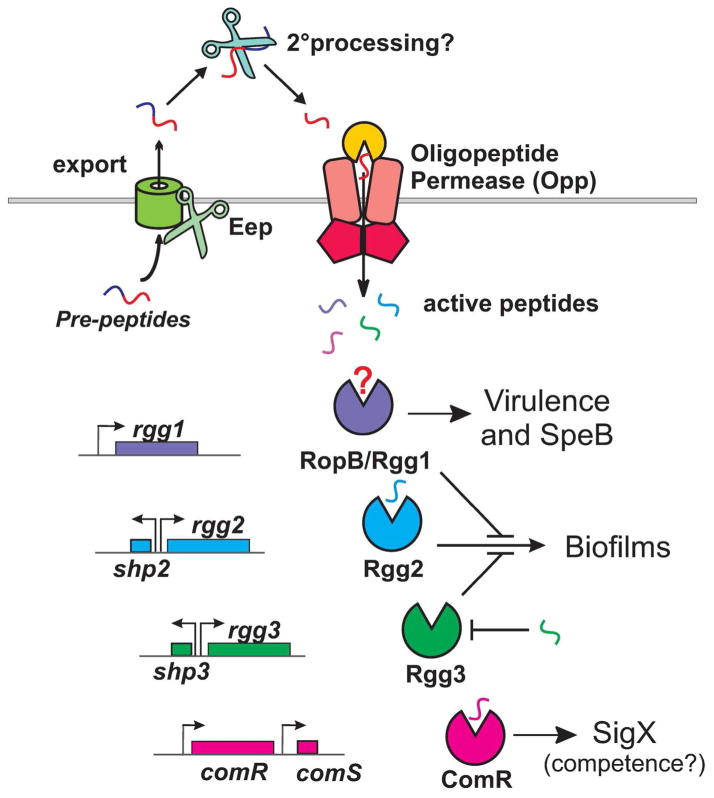
Figure 6. Rgg/SHP pathways in S. pyogenes
All sequenced species of S. pyogenes contain four Rgg paralogs. Rgg1 (RopB) controls expression of SpeB and other virulence factors. The putative Rgg1 cognate peptide is unknown. Divergently transcribed from rgg2 and rgg3 are the short hydrophobic peptide genes shp2 and shp3, respectively. The comS gene is located downstream of comR, encoded on the same DNA strand. The pheromones are translated as pre-peptides prior to processing by Eep, secretion, and further extracellular processing. Mature peptides are imported into the cell where they can interact with their Rgg receptor to influence cellular behaviors such as biofilm formation and competence development. The figure is a modified reproduction (Federle, 2012).

References

    1. Ahn SJ, Wen ZT, Burne RA. Multilevel control of competence development and stress tolerance in Streptococcus mutans UA159. Infect Immun. 2006;74:1631–1642. - PMC - PubMed
    1. An F, Sulavik M, Clewell D. Identification and characterization of a determinant (eep) on the Enterococcus faecalis chromosome that is involved in production of the peptide sex pheromone cAD1. Journal of Bacteriology. 1999;181:5915–5921. - PMC - PubMed
    1. An FY, Clewell DB. Identification of the cAD1 sex pheromone precursor in Enterococcus faecalis. J Bacteriol. 2002;184:1880–1887. - PMC - PubMed
    1. Antiporta M, Dunny G. ccfA, the genetic determinant for the cCF10 peptide pheromone in Enterococcus faecalis. J Bacteriol. 2002;184:1155–1162. - PMC - PubMed
    1. Aspiras MB, Ellen RP, Cvitkovitch DG. ComX activity of Streptococcus mutans growing in biofilms. FEMS Microbiol Lett. 2004;238:167–174. - PubMed

MeSH terms